Formaldehyde → HCID 12577737, compound
Reaction equation

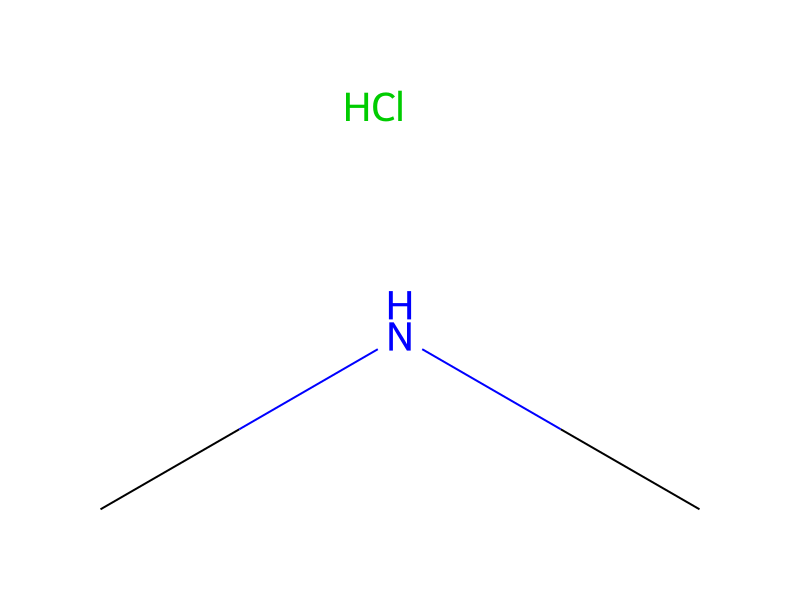
[NH:1]([C:8]1[CH2:13][C:12]([CH3:15])([CH3:14])[CH2:11][C:10](=[O:16])[CH:9]=1)[C:2]1[CH:7]=[CH:6][CH:5]=[CH:4][CH:3]=1.[CH2:17]=O.[ClH:19].[CH3:20][NH:21][CH3:22]>CO.C(O)(=O)C>[ClH:19].[NH:1]([C:8]1[CH2:13][C:12]([CH3:14])([CH3:15])[CH2:11][C:10](=[O:16])[C:9]=1[CH2:20][N:21]([CH3:17])[CH3:22])[C:2]1[CH:7]=[CH:6][CH:5]=[CH:4][CH:3]=1Participants
Reactant 3


Product 1

Reagents, catalysts & solvents 2


Procedure
2.15 Parts of 3-anilino-5,5-dimethyl-2-cyclohexen-1-one is dissolved in 10 volume parts of methanol under warming and, then, to the resulting solution 0.9 part of a 37 weight % aqueous solution of formaldehyde, 0.81 part of dimethylamine hydrochloride and 1 drop of glacial acetic acid are added. The whole mixture is allowed to stand at room temperature for 1 hour, and after which time, the methanol is distilled off under reduced pressure. To the resulting residue is added, a small amount of isopropyl ether, followed by cooling, whereupon colorless crystals separate. The crystals are collected by filtration and recrystallized from acetone. The procedure yields colorless needles of 3-anilino-5,5-dimethyl-2-dimethylaminomethyl-2-cyclohexen-1-one hydrochloride. Melting point: 169°-170° C
Workup
- temperatureunder warming
- distillationafter which time, the methanol is distilled off under reduced pressure
- additionTo the resulting residue is added
- temperatureby cooling, whereupon colorless crystals
- customseparate
- filtrationThe crystals are collected by filtration
- customrecrystallized from acetone
Sources & evidence
- ORD record
- ord-b3d53ead68834760893b835523ee1225
- Source dataset
- uspto-grants-1977_12
- Patent number
- US04064133
Reaction notes
Loading…