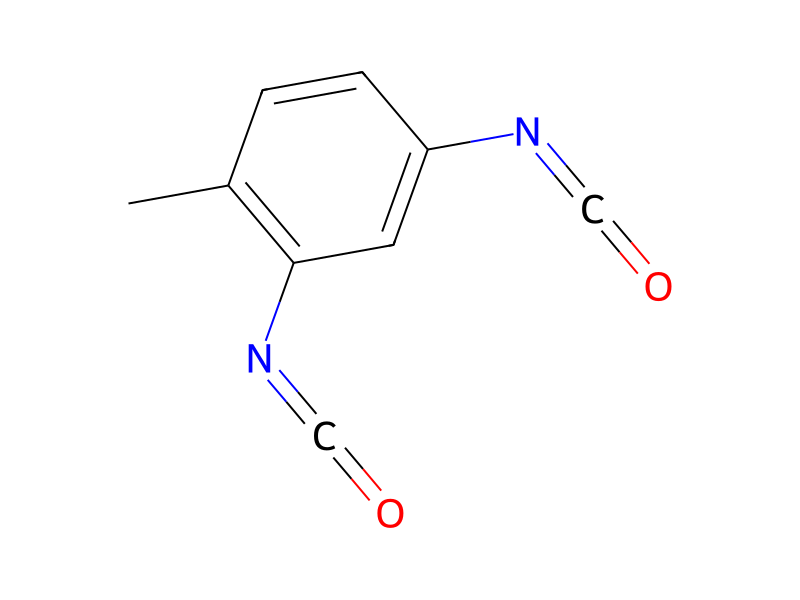
Toluene 2,4-Diisocyanate → 1-phenyl-3-n-heptyl-2-S-ethyl isothiourea toluene-2,4-diisocyanate
Reaction equation

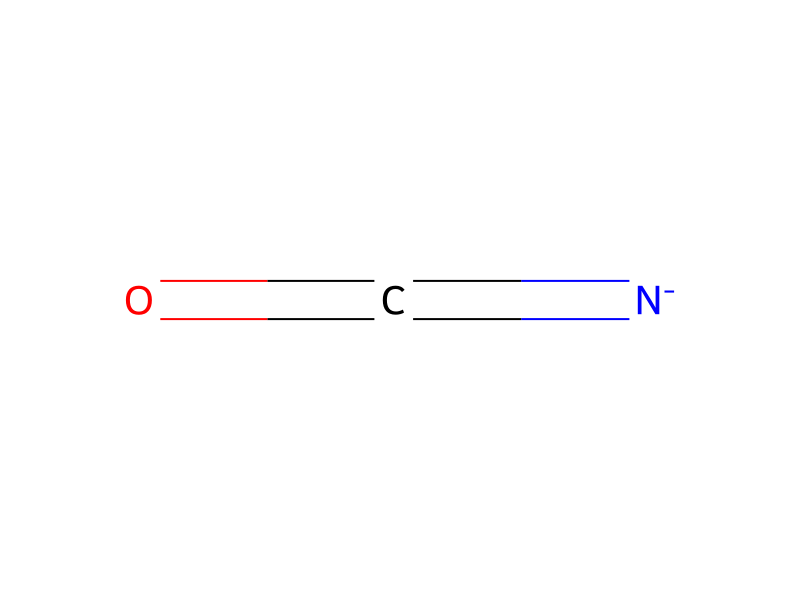
[C:1]1([NH:7][C:8](=[N:12][CH2:13][CH2:14][CH2:15][CH2:16][CH2:17][CH2:18][CH3:19])[S:9][CH2:10][CH3:11])[CH:6]=[CH:5][CH:4]=[CH:3][CH:2]=1.[CH3:20][C:21]1[CH:26]=[CH:25][C:24]([N:27]=[C:28]=[O:29])=[CH:23][C:22]=1[N:30]=[C:31]=[O:32].[N-]=C=O>O1CCCC1.NC(=N)S>[C:1]1([NH:7][C:8](=[N:12][CH2:13][CH2:14][CH2:15][CH2:16][CH2:17][CH2:18][CH3:19])[S:9][CH2:10][CH3:11])[CH:6]=[CH:5][CH:4]=[CH:3][CH:2]=1.[CH3:20][C:21]1[CH:26]=[CH:25][C:24]([N:27]=[C:28]=[O:29])=[CH:23][C:22]=1[N:30]=[C:31]=[O:32]Participants
6
Reactant 3

Product 1

Reagents, catalysts & solvents 2


Procedure
The equipment was the same as used in Example 26. 2.78 g (0.01 mole) 1-phenyl-3-n-heptyl-2-S-ethyl isothiourea in 35 ml of tetrahydrofuran were mixed with 0.87 g (0.005 mole) toluene-2,4-diisocyanate. The reaction mixture was then refluxed on a steam bath for 1 hour, then 15 drops of the isothiourea was added, and the reaction mixture was refluxed for an additional hour to react all the isocyanate. The reaction mixture was vacuum evaporated to produce 4.1 g of a viscous, yellow liquid having a nD30 of 1.5737. The product was identified as the title product by IR and NMR spectra analyses. Compound No. 151 in Table I.
Workup
- temperatureThe reaction mixture was then refluxed on a steam bath for 1 hour
- temperaturethe reaction mixture was refluxed for an additional hour
- customevaporated
- customto produce 4.1 g of a viscous, yellow liquid
Sources & evidence
- ORD record
- ord-5b2fc316f8214265894e582d4f54d27f
- Source dataset
- uspto-grants-1985_05
- Patent number
- US04515813
Reaction notes
Loading…