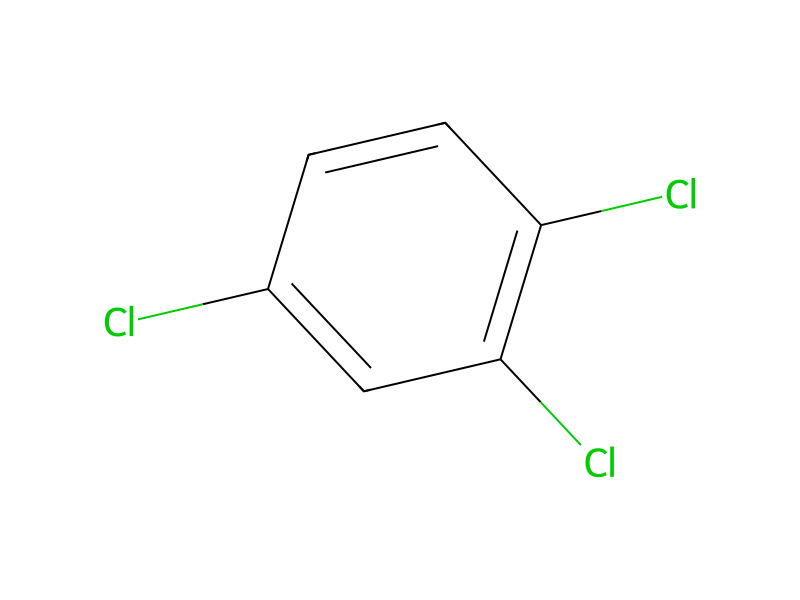
1,2,4-Trichlorobenzene → 1,3-Isobenzofurandione, 5-fluoro-
Reaction equation

[F:1][C:2]1(F)[CH2:12][CH2:11][CH:5]2[C:6]([O:8][C:9](=[O:10])[CH:4]2[CH2:3]1)=[O:7].ClC1C=CC(Cl)=CC=1Cl>[Pd]>[F:1][C:2]1[CH:3]=[C:4]2[C:9](=[O:10])[O:8][C:6](=[O:7])[C:5]2=[CH:11][CH:12]=1Participants
4
Reactant 2

Product 1

Reagents, catalysts & solvents 1

Procedure
A mixture of 50.0 parts of 4,4-difluorohexahydrophthalic anhydride and 10 parts of 5 percent palladium of carbon (Pd/C) catalyst in 578 parts of 1,2,4-trichlorobenzene was heated to reflux conditions and maintained at reflux for about 16 hours, with stirring. The reaction mixture was then cooled to about room temperature. Analysis of the reaction product using gas chromatographic techniques, indicated a yield of about 25 percent of 4-fluorophthalic anhydride, based on the difluorohexahydrophthalic anhydride reactant.
Workup
- temperaturewas heated
- temperatureto reflux conditions
- temperaturemaintained
- temperatureat reflux for about 16 hours
- temperatureThe reaction mixture was then cooled to about room temperature
Sources & evidence
- ORD record
- ord-c68a104204e6427b98c520213301f31e
- Source dataset
- uspto-grants-1985_05
- Patent number
- US04517372
Reaction notes
Loading…