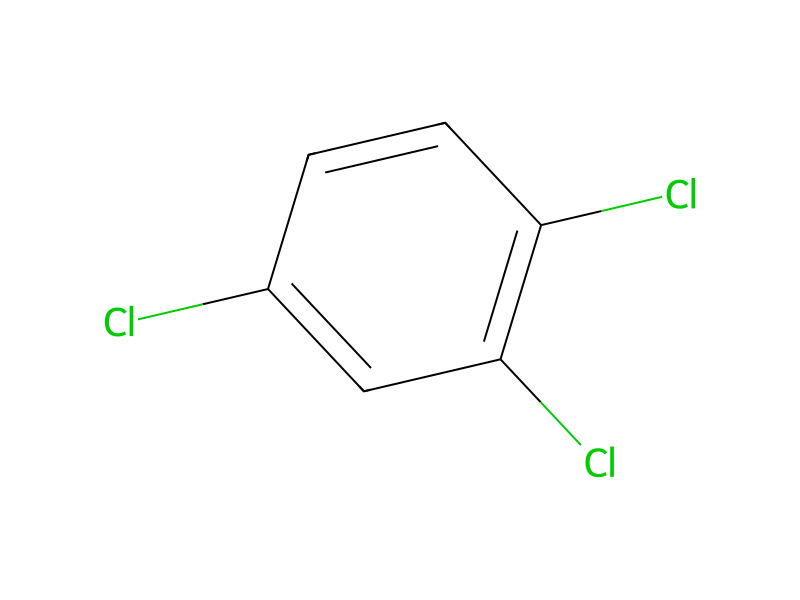
1,2,4-Trichlorobenzene → 1,3-Isobenzofurandione, 5-fluoro-
Reaction equation

[F:1][C:2]1(F)[CH2:12][CH2:11][CH:5]2[C:6]([O:8][C:9](=[O:10])[CH:4]2[CH2:3]1)=[O:7].ClC1C=CC(Cl)=CC=1Cl>[Pd]>[F:1][C:2]1[CH:3]=[C:4]2[C:9](=[O:10])[O:8][C:6](=[O:7])[C:5]2=[CH:11][CH:12]=1Participants
4
Reactant 2

Product 1

Reagents, catalysts & solvents 1

Procedure
A mixture of 600 parts of 4,4-difluorohexahydrophthalic anhydride and 120 parts of 5 percent Pd/C catalyst in 2130 parts of 1,2,4-trichlorobenzene was charged to an autoclave reactor. The autoclave atmosphere was purged with nitrogen. The autoclave was then sealed, heated to 270°-305° and maintained thereat for about 14 hours, during which time the pressure was allowed to build gradually and was released intermittently to lower the pressure to about 115 pounds per square inch (gage), then cooled to about room temperature. Analysis of the reaction product, by gas chromatographic techniques indicated a 80 percent yield of 4-fluorophthalic anhydride, based on the difluorohexahydrophthalic anhydride reactant.
Workup
- additionwas charged to an autoclave reactor
- customThe autoclave atmosphere was purged with nitrogen
- customThe autoclave was then sealed
- temperatureheated to 270°-305°
- temperaturemaintained
- temperaturecooled to about room temperature
Sources & evidence
- ORD record
- ord-723f23187caf44ebbe41335fb4e20ec8
- Source dataset
- uspto-grants-1985_05
- Patent number
- US04517372
Reaction notes
Loading…