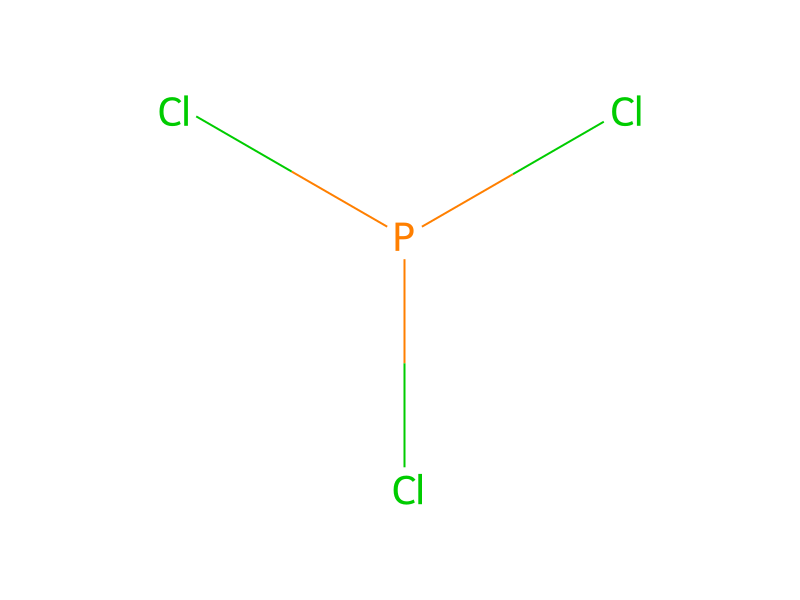
Phosphorus trichloride → 2-Benzhydryloxycarbonyl-3-{2-[(2-methyl-1,3,4-thiadiazol-5-yl)-thio]-prop-1-en-1-yl}-7-[2-methoxyimino-2-(2-tritylaminothiazol-4-yl)-acetamido]-8-oxo-5-thia-1-azabicyclo[4.2.0]oct-2-ene
Reaction equation

[CH:1]([O:14][C:15]([C:17]1[N:18]2[CH:21]([S:22](=O)[CH2:23][C:24]=1[CH:25]=[C:26]([S:28][C:29]1[S:33][C:32]([CH3:34])=[N:31][N:30]=1)[CH3:27])[CH:20]([NH:36][C:37](=[O:67])[C:38](=[N:64][O:65][CH3:66])[C:39]1[N:40]=[C:41]([NH:44][C:45]([C:58]3[CH:63]=[CH:62][CH:61]=[CH:60][CH:59]=3)([C:52]3[CH:57]=[CH:56][CH:55]=[CH:54][CH:53]=3)[C:46]3[CH:51]=[CH:50][CH:49]=[CH:48][CH:47]=3)[S:42][CH:43]=1)[C:19]2=[O:68])=[O:16])([C:8]1[CH:13]=[CH:12][CH:11]=[CH:10][CH:9]=1)[C:2]1[CH:7]=[CH:6][CH:5]=[CH:4][CH:3]=1.CN(C)C(=O)C.P(Cl)(Cl)Cl.C(=O)(O)[O-].[Na+]>C(Cl)Cl.O.C(OCC)(=O)C>[CH:1]([O:14][C:15]([C:17]1[N:18]2[CH:21]([S:22][CH2:23][C:24]=1[CH:25]=[C:26]([S:28][C:29]1[S:33][C:32]([CH3:34])=[N:31][N:30]=1)[CH3:27])[CH:20]([NH:36][C:37](=[O:67])[C:38](=[N:64][O:65][CH3:66])[C:39]1[N:40]=[C:41]([NH:44][C:45]([C:46]3[CH:51]=[CH:50][CH:49]=[CH:48][CH:47]=3)([C:52]3[CH:53]=[CH:54][CH:55]=[CH:56][CH:57]=3)[C:58]3[CH:59]=[CH:60][CH:61]=[CH:62][CH:63]=3)[S:42][CH:43]=1)[C:19]2=[O:68])=[O:16])([C:2]1[CH:3]=[CH:4][CH:5]=[CH:6][CH:7]=1)[C:8]1[CH:9]=[CH:10][CH:11]=[CH:12][CH:13]=1Participants
Reactant 4



Product 1

Reagents, catalysts & solvents 3



Conditions
- Temperature
- -10 °C
Procedure
A solution of the Z form of the syn isomer of 2-benzhydryloxycarbonyl-3-{2-[(2-methyl-1,3,4-thiadiazol-5-yl)-thio]-prop-1-en-1-yl}-7-[2-methoxyimino-2-(2-tritylaminothiazol-4-yl)-acetamido]-8-oxo-5-thia-1-azabicyclo[4.2.0]oct-2-ene-5-oxide (2.52 g) in methylene chloride (40 cc) is cooled to -10° C. N,N-Dimethylacetamide (0.95 cc) and phosphorus trichloride (0.7 g) are added successively. The solution is stirred for 20 minutes at -10° C. and then poured into a saturated aqueous solution of sodium bicarbonate (50 cc). It is diluted with distilled water (200 cc) and extraction is carried out with ethyl acetate (300 cc). The organic phase is dried over sodium sulphate and concentrated to dryness under reduced pressure (20 mm Hg; 2.7 kPa) at 20° C. The residue is chromatographed on a column of Merck silica gel (0.06-0.20) (25 g) (diameter of the column: 2 cm; height: 15 cm). Elution is carried out with a 50/50 (by volume) ethyl acetate/cyclohexane mixture (500 cc), 30 cc fractions being collected. Fractions 4 to 13 are concentrated to dryness under reduced pressure (20 mm Hg; 2.7 kPa) at 20° C. This yields the Z form of the syn isomer of 2-benzhydryloxycarbonyl-3-{2-[(2-methyl-1,3,4-thiadiazol-5-yl)-thio]-prop-1-en-1-yl}-7-[2-methoxyimino-2-(2-tritylaminothiazol-4-yl)-acetamido]-8-oxo-5-thia-1-azabicyclo[4.2.0]oct-2-ene (0.77 g) in the form of a hard white foam.
Workup
- dry with materialThe organic phase is dried over sodium sulphate
- concentrationconcentrated to dryness under reduced pressure (20 mm Hg; 2.7 kPa) at 20° C
- customThe residue is chromatographed on a column of Merck silica gel (0.06-0.20) (25 g) (diameter of the column
- washElution
- custombeing collected
- concentrationFractions 4 to 13 are concentrated to dryness under reduced pressure (20 mm Hg; 2.7 kPa) at 20° C
Sources & evidence
- ORD record
- ord-e2660ce8f61d43fca5b95acb71323d09
- Source dataset
- uspto-grants-1985_05
- Patent number
- US04520193
Reaction notes
Loading…