Triethyl phosphite → 5-(2-Chloro-4-trifluoromethylphenoxy)benzo-2,1,3-oxadiazole
Reaction equation
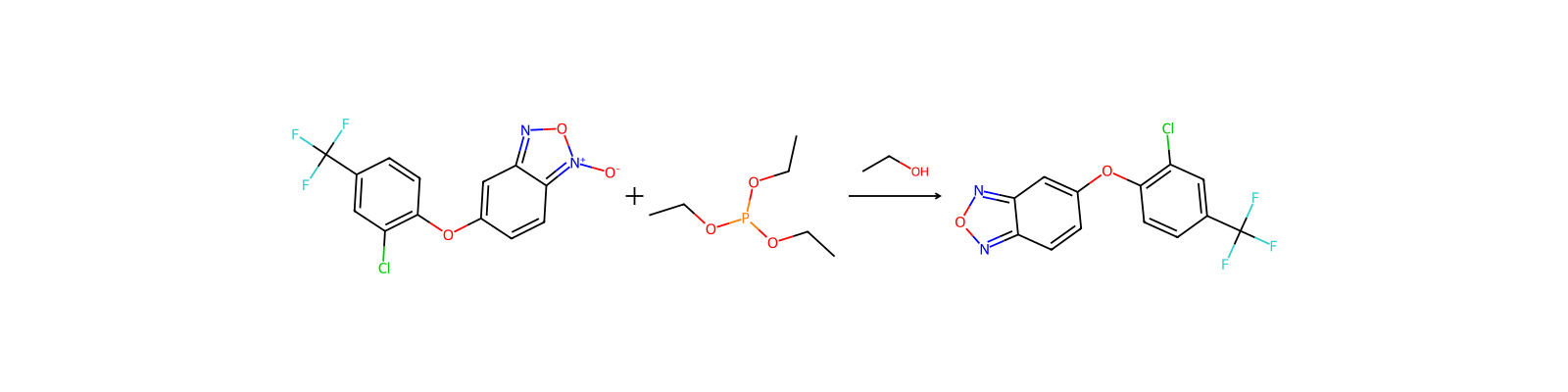
[Cl:1][C:2]1[CH:18]=[C:17]([C:19]([F:22])([F:21])[F:20])[CH:16]=[CH:15][C:3]=1[O:4][C:5]1[CH:14]=[CH:13][C:8]2=[N+:9]([O-])[O:10][N:11]=[C:7]2[CH:6]=1.P(OCC)(OCC)OCC>C(O)C>[Cl:1][C:2]1[CH:18]=[C:17]([C:19]([F:22])([F:20])[F:21])[CH:16]=[CH:15][C:3]=1[O:4][C:5]1[CH:14]=[CH:13][C:8]2=[N:9][O:10][N:11]=[C:7]2[CH:6]=1Participants
4
Reactant 2
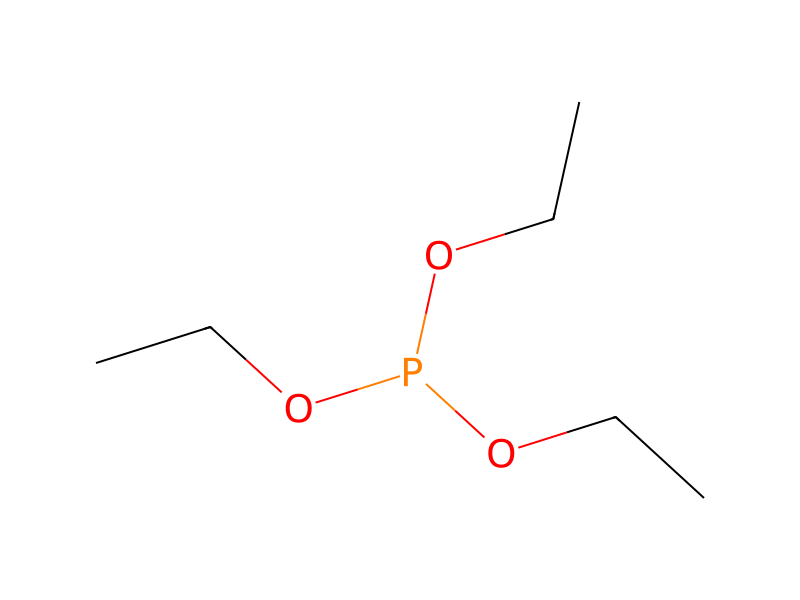

Product 1

Reagents, catalysts & solvents 1

Procedure
A mixture of 5-(2-chloro-4-trifluoromethylphenoxy)benzo-2,1,3-oxadiazole N-oxide (2.0 g) and triethyl phosphite (10 ml) is heated under reflux in ~150 ml of ethanol for 4 hours. The reaction is cooled and stripped, and the crude product is purified by prep. TLC (15% ethyl acetate/hexane) to give 5-(2-chloro-4-trifluoromethylphenoxy)benzo-2,1,3-oxadiazole, m.p. 65°-66°.
Workup
- temperatureis heated
- temperatureThe reaction is cooled
- customthe crude product is purified by prep
Sources & evidence
- ORD record
- ord-cf310e67826c4446abb932517a161b5c
- Source dataset
- uspto-grants-1985_10
- Patent number
- US04544400
Reaction notes
Loading…