Formaldehyde → (E)-5-Dimethylamino-1-phenyl-pent-1-en-3-one; hydrochloride
Reaction equation

[C:1]1(/[CH:7]=[CH:8]/[C:9](=[O:11])[CH3:10])[CH:6]=[CH:5][CH:4]=[CH:3][CH:2]=1.[ClH:12].[CH3:13][NH:14][CH3:15].[CH2:16]=O>C(O)C>[ClH:12].[CH3:13][N:14]([CH3:16])[CH2:15][CH2:10][C:9](=[O:11])[CH:8]=[CH:7][C:1]1[CH:6]=[CH:5][CH:4]=[CH:3][CH:2]=1Participants
5
Reactant 3

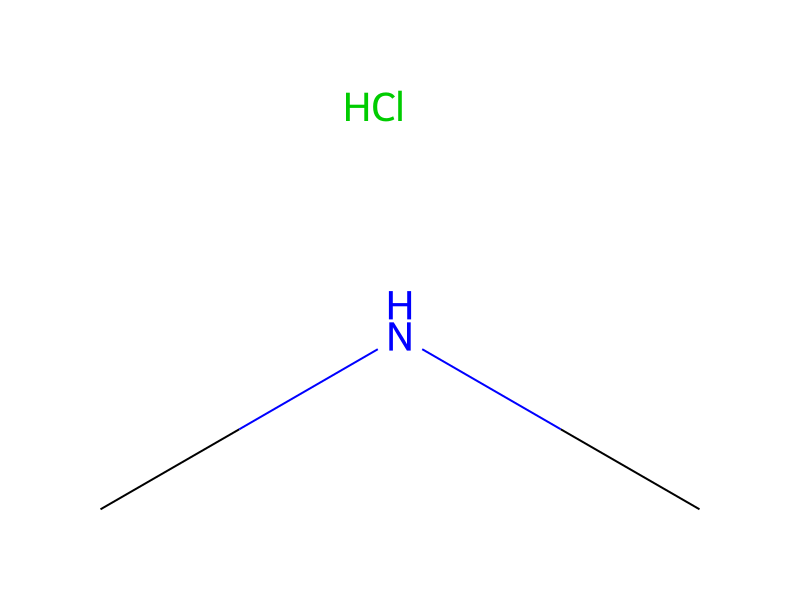

Product 1

Reagents, catalysts & solvents 1

Procedure
trans-4-Phenyl-3-buten-2-one (14.6 g, 0.1 mole), dimethylamine hydrochloride (9.0 g, 0.1 mole) and paraformaldehyde (5.8 g, 0.2 mole) are heated at reflux in 150 ml of absolute ethanol for 3 hours. The reaction mixture is concentrated in vacuo, then washed with ether. Addition of ethyl acetate causes crystallization. The product is recrystallized from acetonitrile to yield 6.9 g, m.p. 150°-154° C.
Workup
- concentrationThe reaction mixture is concentrated in vacuo
- washwashed with ether
- additionAddition of ethyl acetate
- customcrystallization
- customThe product is recrystallized from acetonitrile
- customto yield 6.9 g, m.p. 150°-154° C.
Sources & evidence
- ORD record
- ord-f3e5da1636a14bf7a4e253b7767463fe
- Source dataset
- uspto-grants-1979_11
- Patent number
- US04173649
Reaction notes
Loading…