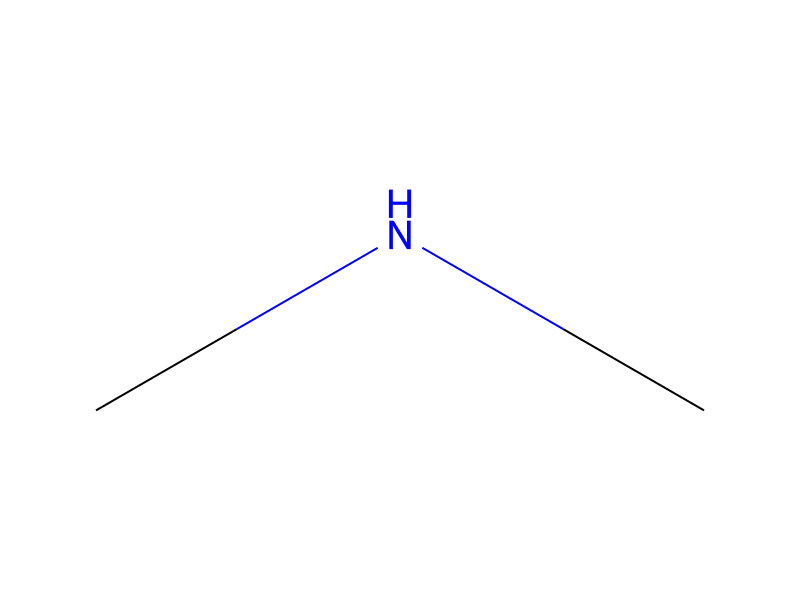
Dimethylamine → 6-Ethoxycarbonyl-2-dimethylaminomethylbenzothiazole
Reaction equation

[CH2:1]([O:3][C:4]([C:6]1[CH:15]=[CH:14][C:9]2[N:10]=[C:11]([CH3:13])[S:12][C:8]=2[CH:7]=1)=[O:5])[CH3:2].C1[C:21](=O)[N:20](Br)[C:18](=O)C1.CNC>C(Cl)(Cl)(Cl)Cl>[CH2:1]([O:3][C:4]([C:6]1[CH:15]=[CH:14][C:9]2[N:10]=[C:11]([CH2:13][N:20]([CH3:21])[CH3:18])[S:12][C:8]=2[CH:7]=1)=[O:5])[CH3:2]Participants
5



Procedure
6-ethoxycarbonyl-2-methylbenzothiazole (2.09 g) prepared according to the method described in J. Gen. Chem. vol. 5, pp. 260-266 (1945) was subjected to bromination with NBS (1.78 g) in carbon tetrachloride (30 mg). Then, the product was caused to react with dimethylamine to yield a new compound of 6-ethoxycarbonyl-2-dimethylaminomethylbenzothiazole (0.8 g). Then, the compound was provided with the same treatment as that described in Examples 49-51 to yield 6-[(2-aminoethyl)thiomethyl]-2-(dimethylaminomethyl)benzothiazole.2hydrobromide (1.2 g).
Sources & evidence
- ORD record
- ord-e5b996a123ce4f00ab642a722feae493
- Source dataset
- uspto-grants-1985_10
- Patent number
- US04550118
Reaction notes
Loading…