Cyclohexene → methyl (R)-8-hydroxy-4-[3-(3-pyridyl)propyl]octanoate
Reaction equation

[N:1]1[CH:6]=[CH:5][CH:4]=[C:3]([CH2:7][CH2:8][CH2:9][C@H:10]([CH2:17][CH2:18][CH2:19][CH2:20][O:21]CC2C=CC=CC=2)[CH2:11][CH2:12][C:13]([O:15][CH3:16])=[O:14])[CH:2]=1.C1CCCCC=1>C(O)C.[OH-].[OH-].[Pd+2]>[OH:21][CH2:20][CH2:19][CH2:18][CH2:17][C@@H:10]([CH2:9][CH2:8][CH2:7][C:3]1[CH:2]=[N:1][CH:6]=[CH:5][CH:4]=1)[CH2:11][CH2:12][C:13]([O:15][CH3:16])=[O:14]Participants
5
Reactant 2


Product 1

Reagents, catalysts & solvents 2
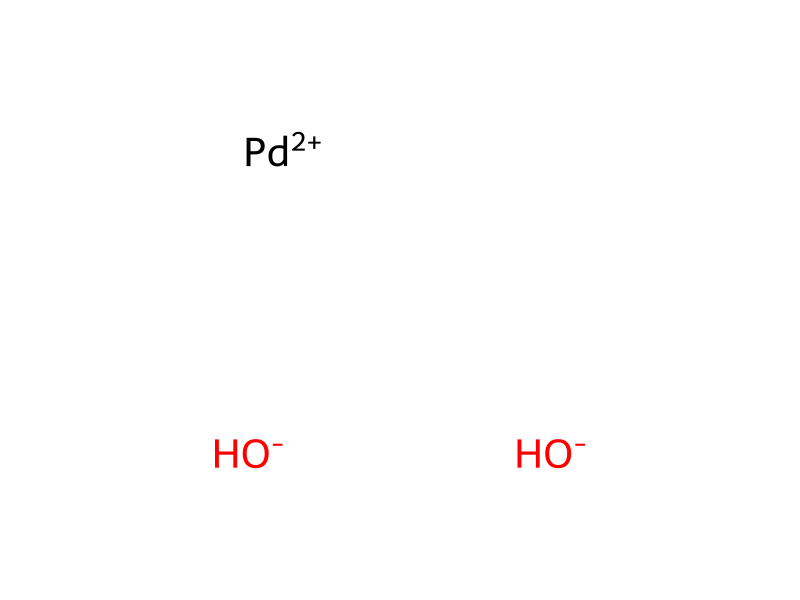

Procedure
To a solution of methyl 4(R)-[3-(3-pyridyl)propyl]-8-(benzyloxy)octanoate (1.67 g, 4.2 mmol) in ethanol (30 ml) is added 20% palladium hydroxide on carbon (0.43 g) followed by cyclohexene (15.6 ml). The mixture is refluxed for 25 hours and then filtered to remove the catalyst. The catalyst is washed with ethanol, the combined filtrate is evaporated, and the residue is purified by flash chromatography on silica gel using 9:1 ethyl acetate/hexane to obtain methyl (R)-8-hydroxy-4-[3-(3-pyridyl)propyl]octanoate; IR (CH2Cl2): 3617, 1732, 1197, 1174, 1027 cm- 1.
Workup
- temperatureThe mixture is refluxed for 25 hours
- filtrationfiltered
- customto remove the catalyst
- washThe catalyst is washed with ethanol
- customthe combined filtrate is evaporated
- customthe residue is purified by flash chromatography on silica gel using 9:1 ethyl acetate/hexane
Sources & evidence
- ORD record
- ord-0c63ff3714ab416794d346d1f9eaf0a6
- Source dataset
- uspto-grants-1992_10
- Patent number
- US05153214
Reaction notes
Loading…