p-Toluenesulfonic acid → 6-Chloro-8-propyl-9H-purine
Reaction equation

[NH2:1][C:2]1[C:7]([NH2:8])=[C:6]([Cl:9])[N:5]=[CH:4][N:3]=1.CO[C:12](OC)(OC)[CH2:13][CH2:14][CH3:15].C1(C)C=CC(S(O)(=O)=O)=CC=1>COCCO>[Cl:9][C:6]1[N:5]=[CH:4][N:3]=[C:2]2[C:7]=1[NH:8][C:12]([CH2:13][CH2:14][CH3:15])=[N:1]2Participants
5
Reactant 3

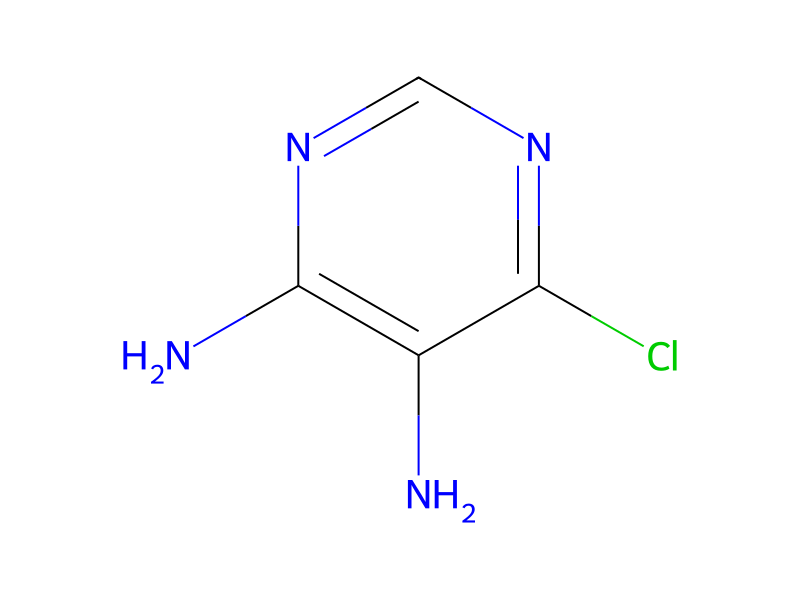

Product 1

Reagents, catalysts & solvents 1

Procedure
To a solution of 4,5-diamino-6-chloropyrimidine (0.289 g, 2 mmol) in 2-methoxyethanol (10 ml) were added trimethylorthobutyrate (0.5 ml, 3 mmol) and p-toluenesulfonic acid (0.03 g), and the mixture was refluxed for 18 hours and then concentrated in vacuo. The residue was partitioned between water and and ethylacetate. The organic phase was then washed with brine and dried (MgSO4). The crude product obtained after evaporation of the solvent was purified by flash column chromatography on silica-gel using ethylacetate/hexane (1:1). The fractions containing pure product were pooled and concentrated in vacuo, and then allowed to stand at room temperature overnight. The crystalline product was filtered and dried.
Workup
- temperaturethe mixture was refluxed for 18 hours
- concentrationconcentrated in vacuo
- customThe residue was partitioned between water and and ethylacetate
- washThe organic phase was then washed with brine
- dry with materialdried (MgSO4)
Sources & evidence
- ORD record
- ord-8e2f8f548bd0487ba0c22f452c391f51
- Source dataset
- uspto-grants-1992_10
- Patent number
- US05157026
Reaction notes
Loading…