Water → HCID 57321242, compound
Reaction equation

[OH:1][C:2]1[CH:7]=[CH:6][CH:5]=[CH:4][C:3]=1[CH2:8][CH:9]=[CH2:10].C(=O)([O-])[O-].[K+].[K+].[CH2:17](Br)[CH:18]=[CH2:19].O>CC(C)=O>[CH:17]([O:1][C:2]1[CH:7]=[CH:6][CH:5]=[CH:4][C:3]=1[CH2:8][CH:9]=[CH2:10])=[CH:18][CH3:19]Participants
Reactant 4

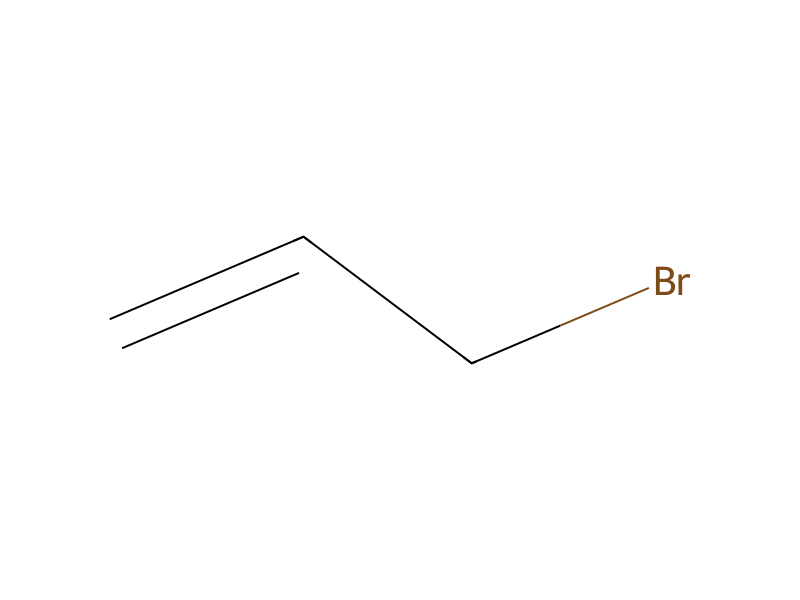


Product 1

Reagents, catalysts & solvents 1

Procedure
200 g of 3-(2-hydroxyphenyl)propene, 226 g of potassium carbonate and 180 g of allyl bromide were stirred in 490 ml of acetone at reflux temperature for hours and then cooled. One liter of water was added and the resultant layers were separated. The aqueous layer extracted with two volumes of diethyl ether, dried and stripped of solvent to give 256 g of 3-(2-propenyloxyphenyl)propene which was subsequently rearranged as described in Examples 55 and 56 to the 2,6-di-propenylphenol intermediate. 52.2 g of said intermediate was dissolved in 500 ml of THF and chilled to -5° C. 300 ml of one molar borane was added over 15 minutes (maximum temperature not exceeding 18° C.), after which the mixture was stirred for 36 hours and chilled to 0° C. 80 ml of water was added over a 5 minute period, after which 120 ml of 5N sodium hydroxide was added all at once. When the temperature of the reaction mixture reached 1° C., 81 ml of 30% hydrogen peroxide was added over a 25 minute period and the mixture stirred for one hour and then concentrated. An additional 500 ml of water and 250 ml of ethyl acetate were added which, following workup, gave about 54 g of the desired 2,6-di(3-hydroxypropyl)phenol intermediate, m.p. 176-187° C.
Workup
- temperatureat reflux temperature for hours
- temperaturecooled
- customthe resultant layers were separated
- extractionThe aqueous layer extracted with two volumes of diethyl ether
- customdried
Sources & evidence
- ORD record
- ord-bbd9fcbae39042e8a8787c001a6be3b2
- Source dataset
- uspto-grants-1992_10
- Patent number
- US05158966
Reaction notes
Loading…