2H-Indol-2-one, 1,3-dihydro-7-methyl- → 5-(6-Chloro-pyrimidine-4-carbonyl)-7-methyl-1,3-dihydro-indol-2-one
Reaction equation

[Cl:1][C:2]1[N:7]=[CH:6][N:5]=[C:4]([C:8](Cl)=[O:9])[CH:3]=1.[CH3:11][C:12]1[CH:13]=[CH:14][CH:15]=[C:16]2[C:20]=1[NH:19][C:18](=[O:21])[CH2:17]2.[Cl-].[Cl-].[Cl-].[Al+3]>CCOC(C)=O>[Cl:1][C:2]1[N:7]=[CH:6][N:5]=[C:4]([C:8]([C:14]2[CH:15]=[C:16]3[C:20](=[C:12]([CH3:11])[CH:13]=2)[NH:19][C:18](=[O:21])[CH2:17]3)=[O:9])[CH:3]=1Participants
5


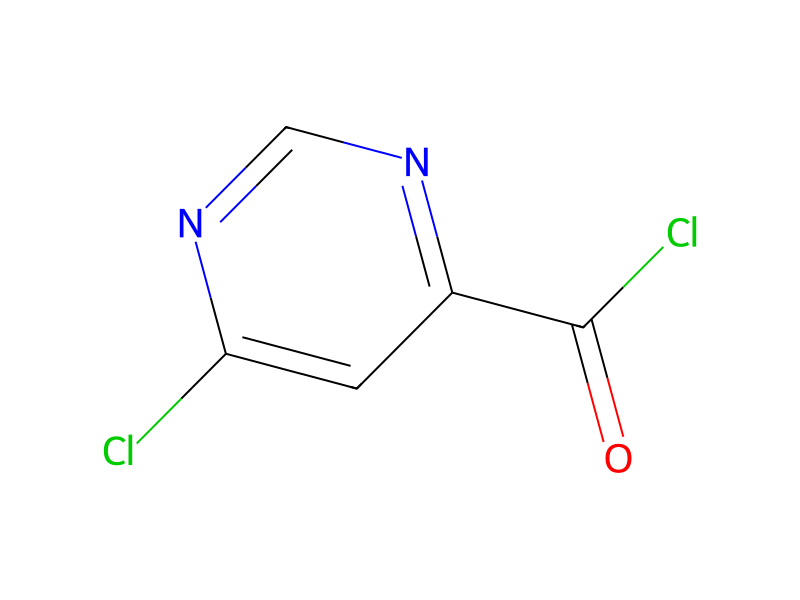


Procedure
1.92 g (10.9 mmol) 6-chloropyrimidine-4-carboxylic acid chloride, 1.60 g (10.9 mmol) 7-methyl-1,3-dihydro-indol-2-one and 7.33 g (55.0 mmol) aluminium trichloride were heated to 130° C. for 3 h with stirring. The mixture was combined first with ice water and then with EtOAc. The precipitate formed as black flakes was suction filtered and the phases were separated. The aqueous phase was extracted several times with EtOAc. The combined organic phases were dried on sodium sulphate, filtered and evaporated down i. vac.
Workup
- customThe precipitate formed as black flakes
- filtrationfiltered
- customthe phases were separated
- extractionThe aqueous phase was extracted several times with EtOAc
- customThe combined organic phases were dried on sodium sulphate
- filtrationfiltered
- customevaporated down i
Sources & evidence
- ORD record
- ord-6479643787ae47c59e586dda64d16ad0
- Source dataset
- uspto-grants-2014_01
- Patent number
- US08629137B2
Reaction notes
Loading…