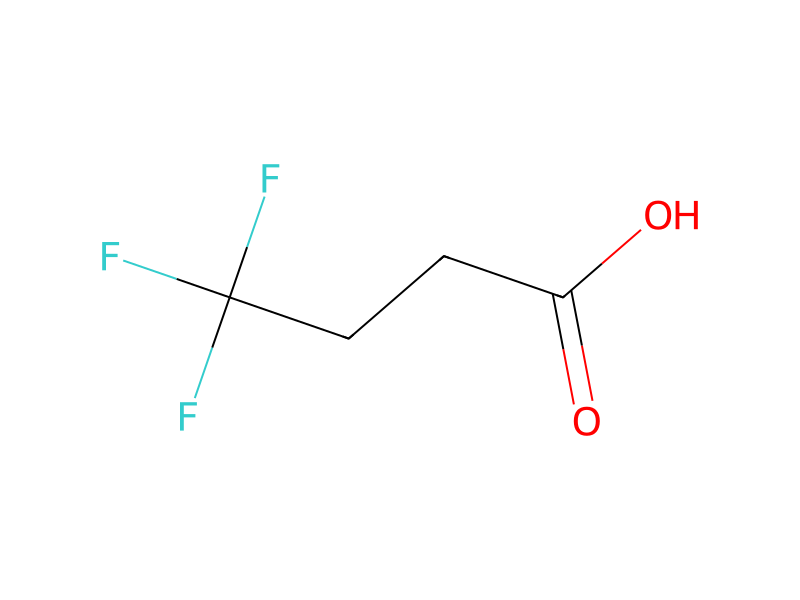
4,4,4-Trifluorobutanoic acid → HCID 67160313, compound
Reaction equation

[NH2:1][N:2]1[N:11]=[C:10]([C:12]2[CH:17]=[CH:16][C:15]([Cl:18])=[CH:14][CH:13]=2)[C:9]2[C:4](=[CH:5][CH:6]=[CH:7][CH:8]=2)[C:3]1=[O:19].[F:20][C:21]([F:28])([F:27])[CH2:22][CH2:23][C:24](O)=[O:25]>>[Cl:18][C:15]1[CH:16]=[CH:17][C:12]([C:10]2[C:9]3[C:4](=[CH:5][CH:6]=[CH:7][CH:8]=3)[C:3](=[O:19])[N:2]([NH:1][C:24](=[O:25])[CH2:23][CH2:22][C:21]([F:28])([F:27])[F:20])[N:11]=2)=[CH:13][CH:14]=1Participants
3


Procedure
The product from Example 86A and 4,4,4-trifluorobutanoic acid were treated using a method similar to that described in Example 57 to give the title compound. 1H NMR (500 MHz, DMSO-d6/Deuterium Oxide) δ ppm 8.40-8.43 (m, 1H), 7.89-8.05 (m, 2H), 7.73-7.75 (m, 1H), 7.60-7.70 (m, 4H), 2.58-2.71 (m, 4H); MS (ESI−) M/Z 394 (M−H)−.
Sources & evidence
- ORD record
- ord-5425e3eddcfb4c0880e0077eb841d21a
- Source dataset
- uspto-grants-2014_01
- Patent number
- US08629143B2
Reaction notes
Loading…