3-Bromoaniline → 1-(3-Bromophenyl)-2,4-imidazolidinedione
Reaction equation

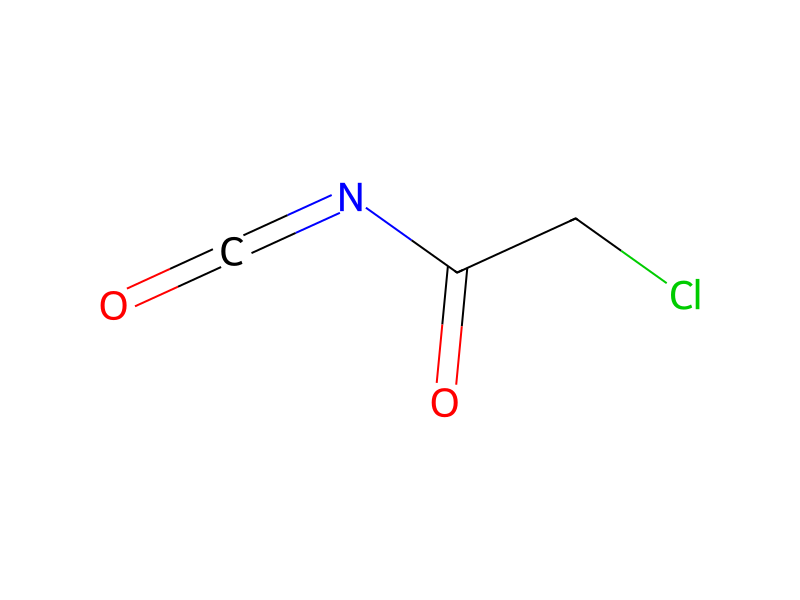
[Br:1][C:2]1[CH:3]=[C:4]([CH:6]=[CH:7][CH:8]=1)[NH2:5].Cl[CH2:10][C:11]([N:13]=[C:14]=[O:15])=[O:12].C1CCN2C(=NCCC2)CC1>O1CCOCC1>[Br:1][C:2]1[CH:3]=[C:4]([N:5]2[CH2:10][C:11](=[O:12])[NH:13][C:14]2=[O:15])[CH:6]=[CH:7][CH:8]=1Participants
Reactant 3


Product 1

Reagents, catalysts & solvents 1

Procedure
A solution of 3-bromoaniline (1.0 mL, 9.18 mmol) and chloroacetyl isocyanate (0.780 mL, 9.18 mmol) in dioxane (100 mL) was stirred at room temperature for 2 hr. Dioxane (50 mL) and DBU (3.40 mL, 23.0 mmol) were added and the solution stirred at room temperature for 16 hr. The solution was concentrated in vacuo and the residue taken up in EtOAc and H2O. The mixture was then acidified with 1N HCl, then the aqueous phase extracted with EtOAc. The combined organics were then washed with H2O and brine and dried over Na2SO4. The solution was concentrated in vacuo and the residue recrystallized from EtOAc/hexanes to give 1-(3-bromophenyl)-2,4-imidazolidinedione as a tan solid. 1H NMR (400 MHz, DMSO-d6) δ ppm 4.42 (s, 2H), 7.24-7.30 (m, 2H), 7.50-7.52 (m, 1H), 7.87 (s, 1H), 11.27 (s, 1H).
Workup
- concentrationThe solution was concentrated in vacuo
- extractionthe aqueous phase extracted with EtOAc
- washThe combined organics were then washed with H2O and brine
- dry with materialdried over Na2SO4
- concentrationThe solution was concentrated in vacuo
- customthe residue recrystallized from EtOAc/hexanes
Sources & evidence
- ORD record
- ord-d5a1382a5ec845199b121b1a86a5fb36
- Source dataset
- uspto-grants-2014_01
- Patent number
- US08633175B2
Reaction notes
Loading…