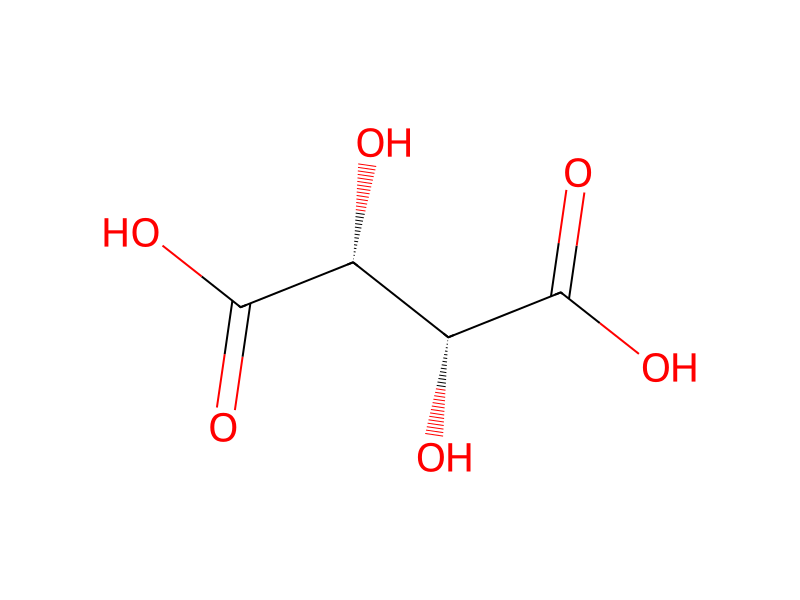
2,3-Dihydroxybutanedioic Acid → L-Tartaric acid
Reaction equation

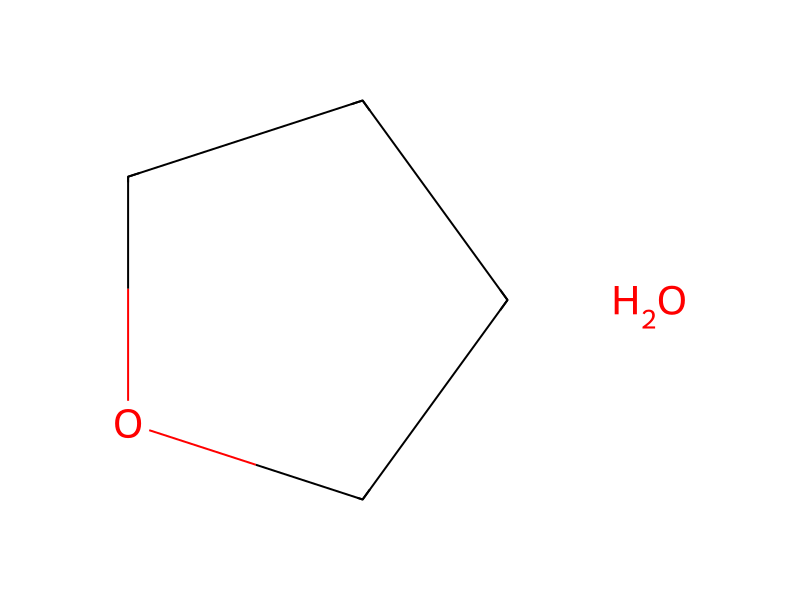
[C:1]([OH:10])(=[O:9])[CH:2]([CH:4]([C:6]([OH:8])=[O:7])[OH:5])[OH:3].NC1C2C(C3C=CC(NC(NC4C=CC=C(F)C=4)=O)=CC=3)=CSC=2C(C2C=NN(CCO)C=2)=CN=1>C1COCC1.O>[C:1]([OH:10])(=[O:9])[C@@H:2]([C@H:4]([C:6]([OH:8])=[O:7])[OH:5])[OH:3]Participants
Reactant 2


Product 1
Reagents, catalysts & solvents 1
Procedure
A saturated solution of l-tartaric acid was prepared at 25 C by dissolving tartaric acid in a 85/15 v/v THF/water mixture. This solution (2 mL) was heated 2 to 65 C. Approximately 200 mg of N-(4-{4-amino-7-[1-(2-hydroxyethyl)-1H-pyrazol-4-yl]thieno[3,2-c]pyridin-3-yl}phenyl)-N′-(3-fluorophenyl)urea free base solid was then added, which readily dissolved. N-(4-{4-amino-7-[1-(2-hydroxyethyl)-1H-pyrazol-4-yl]thieno[3,2-c]pyridin-3-yl}phenyl)-N′-(3-fluorophenyl)urea L-bitartrate crystallized within 30 minutes from this clear solution. The slurry was then diluted with the saturated solution (at 25° C.) of l-tartaric acid and cooled to ambient temperatures. The slurry was continue to be stirred overnight and the solids were isolated via filtration. The filtered solids were washed with 85/15 v/v mixture of THF/water to remove excess l-tartaric acid and then dried in the oven at 45° C.
Workup
- dissolutionwhich readily dissolved
- customN-(4-{4-amino-7-[1-(2-hydroxyethyl)-1H-pyrazol-4-yl]thieno[3,2-c]pyridin-3-yl}phenyl)-N′-(3-fluorophenyl)urea L-bitartrate crystallized within 30 minutes from this clear solution
- additionThe slurry was then diluted with the saturated solution (at 25° C.) of l-tartaric acid
- temperaturecooled to ambient temperatures
- customthe solids were isolated via filtration
- washThe filtered solids were washed with 85/15 v/v mixture of THF/water
- customto remove excess l-tartaric acid
- customdried in the oven at 45° C.
Sources & evidence
- ORD record
- ord-778fb59ef0a3477da7892785237e6397
- Source dataset
- uspto-grants-2014_01
- Patent number
- US08633317B2
Reaction notes
Loading…