2,5-Dihydrofuran → N-(4-(3-(2,3-Dihydrofuran-3-YL)pyridin-2-yloxy)phenyl)pyridin-2-amine
Reaction equation

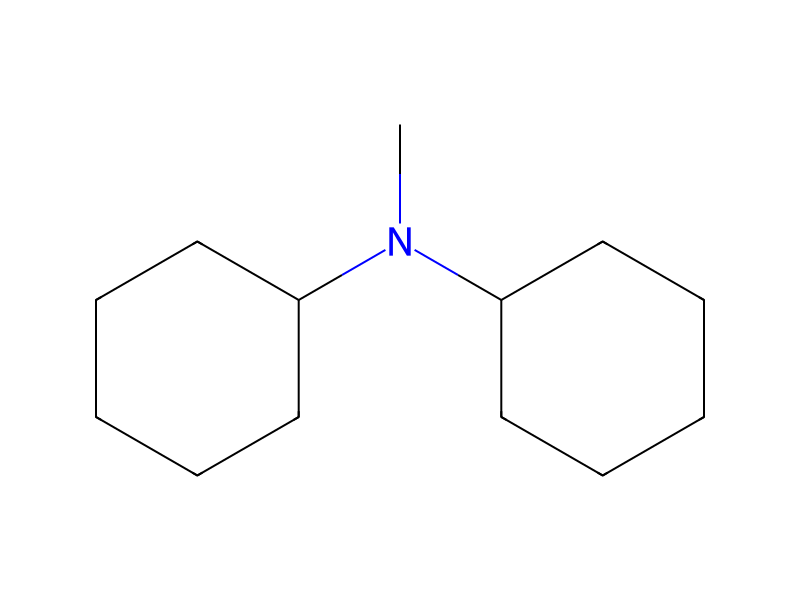
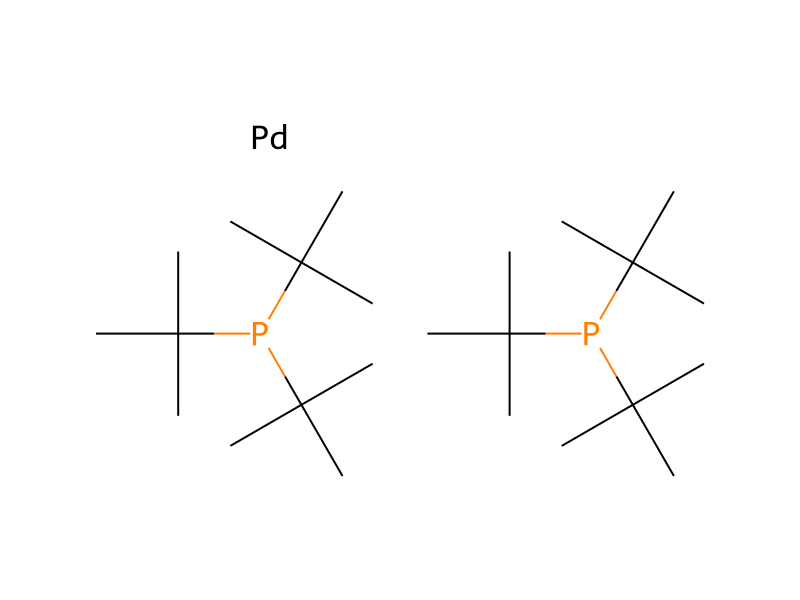
Cl.Br[C:3]1[C:4]([O:9][C:10]2[CH:15]=[CH:14][C:13]([NH:16][C:17]3[CH:22]=[CH:21][CH:20]=[CH:19][N:18]=3)=[CH:12][CH:11]=2)=[N:5][CH:6]=[CH:7][CH:8]=1.C1(N(C)C2CCCCC2)CCCCC1.[O:37]1[CH2:41][CH:40]=[CH:39][CH2:38]1>[Pd].C(P(C(C)(C)C)C(C)(C)C)(C)(C)C.C(P(C(C)(C)C)C(C)(C)C)(C)(C)C.O1CCOCC1>[O:37]1[CH:38]=[CH:39][CH:40]([C:3]2[C:4]([O:9][C:10]3[CH:15]=[CH:14][C:13]([NH:16][C:17]4[CH:22]=[CH:21][CH:20]=[CH:19][N:18]=4)=[CH:12][CH:11]=3)=[N:5][CH:6]=[CH:7][CH:8]=2)[CH2:41]1Participants
Reactant 3


Product 1

Reagents, catalysts & solvents 2

Conditions
- Temperature
- 80 °C
Procedure
To a 25 mL microwave vial was added Bis(tri-tert-butylphosphine) palladium (0) (121 mg, 0.238 mmol) and N-(4-(3-bromopyridin-2-yloxy)phenyl)pyridin-2-amine hydrochloride (900 mg, 2.377 mmol) before sealing and evacuating and backfilling with nitrogen. After addition of dioxane (11.900 ml), N-cyclohexyl-N-methylcyclohexanamine (1.008 ml, 4.75 mmol), and 2,5-dihydrofuran (0.701 ml, 9.51 mmol), the black suspension was heated to 80° C. for 5 h. The reaction mixture was cooled to room temperature, transferred to a 100 mL round bottom flask, and concentrated under reduced pressure. The material was taken up in DCM and adsorbed onto silica before purifying by flash chromatography (0 to 75% ethyl acetate/hexanes), affording a mixture of 2- and 3-dihydrofuranyl products that was used without separation.
Workup
- customevacuating
- temperatureThe reaction mixture was cooled to room temperature
- customtransferred to a 100 mL round bottom flask
- concentrationconcentrated under reduced pressure
- custombefore purifying by flash chromatography (0 to 75% ethyl acetate/hexanes)
- customaffording
- customwas used without separation
Sources & evidence
- ORD record
- ord-373e858c11d54b288e40d39fbc572e0a
- Source dataset
- uspto-grants-2014_01
- Patent number
- US08637500B2
Reaction notes
Loading…