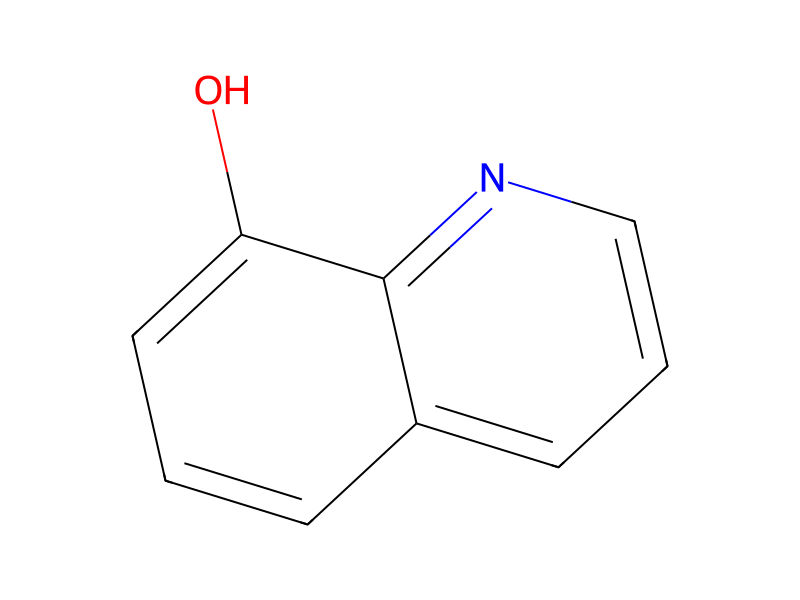
8-Hydroxyquinoline → tert-butyl 6-methyl-8-(6-oxo-4-((6-(trifluoromethyl)pyridin-3-yl)methoxy)pyridazin-1(6H)-yl)-3,4,5,6-tetrahydroazepino[4,3-b]indole-2(1H)-carboxylate
Reaction equation

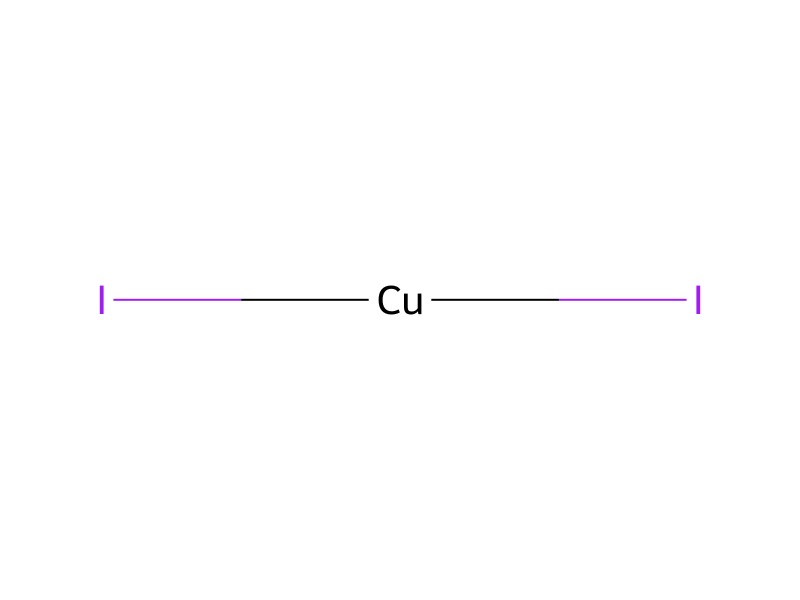
Br[C:2]1[CH:3]=[CH:4][C:5]2[C:6]3[CH2:16][N:15]([C:17]([O:19][C:20]([CH3:23])([CH3:22])[CH3:21])=[O:18])[CH2:14][CH2:13][CH2:12][C:7]=3[N:8]([CH3:11])[C:9]=2[CH:10]=1.[F:24][C:25]([F:42])([F:41])[C:26]1[N:31]=[CH:30][C:29]([CH2:32][O:33][C:34]2[CH:39]=[N:38][NH:37][C:36](=[O:40])[CH:35]=2)=[CH:28][CH:27]=1.C([O-])([O-])=O.[Cs+].[Cs+].OC1C=CC=C2C=1N=CC=C2>CS(C)=O.[Cu](I)I>[CH3:11][N:8]1[C:9]2[CH:10]=[C:2]([N:37]3[C:36](=[O:40])[CH:35]=[C:34]([O:33][CH2:32][C:29]4[CH:30]=[N:31][C:26]([C:25]([F:24])([F:41])[F:42])=[CH:27][CH:28]=4)[CH:39]=[N:38]3)[CH:3]=[CH:4][C:5]=2[C:6]2[CH2:16][N:15]([C:17]([O:19][C:20]([CH3:23])([CH3:22])[CH3:21])=[O:18])[CH2:14][CH2:13][CH2:12][C:7]1=2Participants
Reactant 4



Product 1

Reagents, catalysts & solvents 2

Conditions
- Temperature
- 110 °C
Procedure
tert-Butyl 8-bromo-6-methyl-3,4,5,6-tetrahydroazepino[4,3-b]indole-2(1H)-carboxylate (0.13 g, 0.34 mmol), 5-((6-(trifluoromethyl)pyridin-3-yl)methoxy)pyridazin-3(2H)-one (0.10 g, 0.67 mmol), and Cs2CO3 (0.14 g, 0.44 mmol) were suspended in DMSO (2.0 mL), and the air was removed under vacuum for 15 min. The system was flushed with Ar, and 8-hydroxyquinoline (15 mg, 0.10 mmol) and copper iodide (0.16 g, 0.84 mmol) were added to the suspension. The evacuation/Ar flushing process was repeated twice more, and the reaction mixture was heated at 110° C. for 48 h under N2. The mixture was cooled, diluted with 5.0:3.5:1.5 NH4C1(aq.)/NH4OH/H2O (30 mL), and the resulting suspension was stirred at ambient temperature for 30 min. The resulting solids were collected by filtration, dissolved in CH2Cl2 (30 mL) and washed with 5.0:3.5:1.5 NH4Cl (aq.)/NH4OH/H2O (40 mL) (2×20 mL). The resulting organic solution was dried over Na2SO4, filtered and concentrated to dryness under reduced pressure. Flash chromatography (12 g ISCO column, CH2Cl2/(80:18:2 CH2Cl2/MeOH/NH4OH), 100:0 for 4 column volumes, increased to 50:50 over 20 column volumes and held for 4 column volumes) gave the title compound (46 mg, 24%) as an orange film: 1H NMR (500 MHz, DMSO-d6) δ 8.92 (s, 1H), 8.23 (d, J=8.5 Hz, 1H), 8.01 (d, J=8.0 Hz, 1H), 7.99 (d, J=3.0 Hz, 1H), 7.48 (d, J=8.0 Hz, 2H), 7.05 (dd, J=8.5, 1.5 Hz, 1H), 6.56 (d, J=2.5 Hz, 1H), 5.41 (s, 2H), 4.59-4.57 (m, 2H), 3.68-3.64 (m, 5H), 3.01-2.98 (m, 2H), 1.97-1.90 (m, 2H), 1.36-1.27 (m, 9H).
Workup
- customthe air was removed under vacuum for 15 min
- additionwere added to the suspension
- customThe evacuation/Ar flushing process
- temperatureThe mixture was cooled
- additiondiluted with 5.0:3.5:1.5 NH4C1(aq.)/NH4OH/H2O (30 mL)
- filtrationThe resulting solids were collected by filtration
- dissolutiondissolved in CH2Cl2 (30 mL)
- washwashed with 5.0:3.5:1.5 NH4Cl (aq.)/NH4OH/H2O (40 mL) (2×20 mL)
- dry with materialThe resulting organic solution was dried over Na2SO4
- filtrationfiltered
- concentrationconcentrated to dryness under reduced pressure
- temperatureFlash chromatography (12 g ISCO column, CH2Cl2/(80:18:2 CH2Cl2/MeOH/NH4OH), 100:0 for 4 column volumes, increased to 50:50 over 20 column volumes and held for 4 column volumes)
Sources & evidence
- ORD record
- ord-a6a5dfd218844db2acc55c3010b1bb6e
- Source dataset
- uspto-grants-2014_01
- Patent number
- US08637501B2
Reaction notes
Loading…