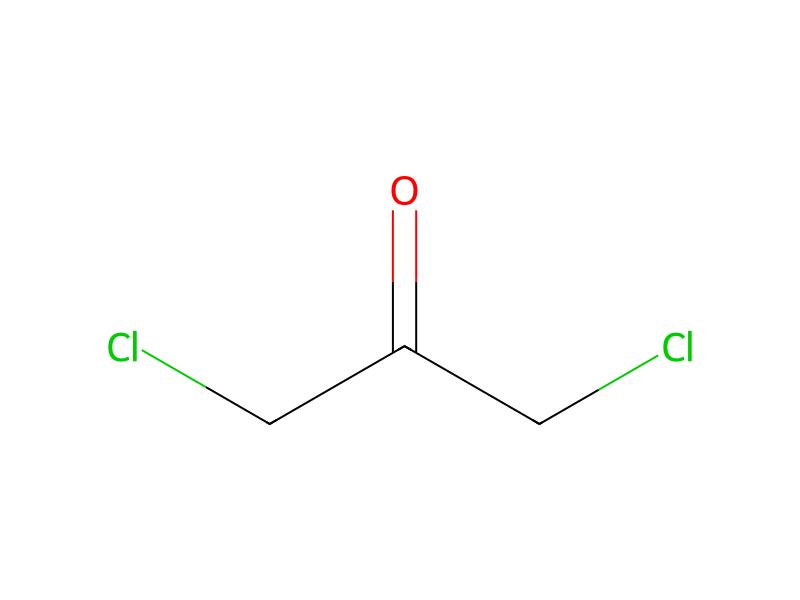
1,3-Dichloroacetone → HCID 68981663, compound
Reaction equation

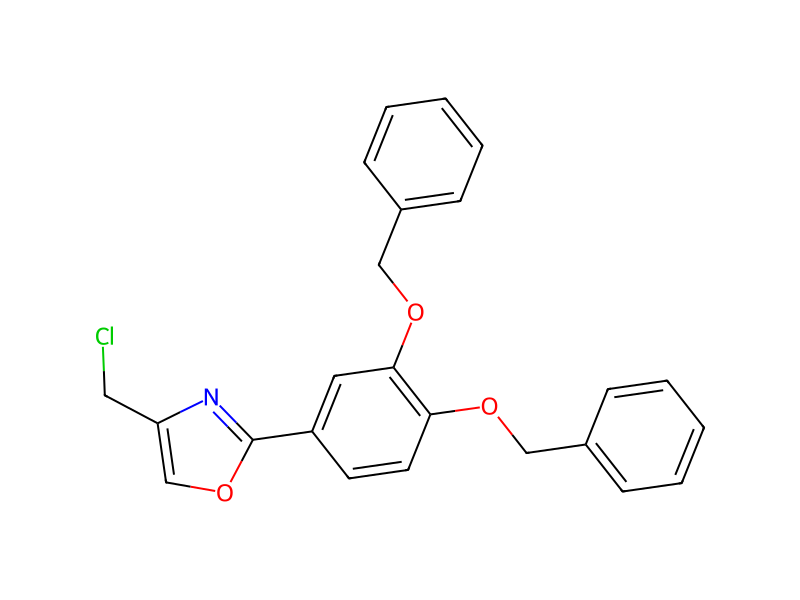
[CH2:1]([O:8][C:9]1[CH:10]=[C:11]([CH:15]=[CH:16][C:17]=1[O:18][CH2:19][C:20]1[CH:25]=[CH:24][CH:23]=[CH:22][CH:21]=1)[C:12]([NH2:14])=[O:13])[C:2]1[CH:7]=[CH:6][CH:5]=[CH:4][CH:3]=1.[Cl:26][CH2:27][C:28](=O)[CH2:29]Cl>C(O)CC>[CH2:1]([O:8][C:9]1[CH:10]=[C:11]([C:12]2[O:13][CH:29]=[C:28]([CH2:27][Cl:26])[N:14]=2)[CH:15]=[CH:16][C:17]=1[O:18][CH2:19][C:20]1[CH:25]=[CH:24][CH:23]=[CH:22][CH:21]=1)[C:2]1[CH:3]=[CH:4][CH:5]=[CH:6][CH:7]=1Participants
4
Reactant 2

Product 1
Reagents, catalysts & solvents 1

Procedure
A 37.9 g quantity of 3,4-dibenzyloxybenzamide and 28.8 g of 1,3-dichloro-2-propanone were suspended in 500 ml of propanol, and the suspension was heated and refluxed for 3 days. After cooling, the reaction mixture was concentrated to half its original volume under reduced pressure and 300 ml of diisopropyl ether was added. The precipitated crystals were collected by filtration and recrystallized from acetone-methanol-diisopropyl ether. The obtained crystals were dried under reduced pressure to give 20.1 g of colorless powdery 2-(3,4-bis(benzyloxy)phenyl)-4-chloromethyloxazole.
Workup
- temperaturethe suspension was heated
- temperaturerefluxed for 3 days
- temperatureAfter cooling
- concentrationthe reaction mixture was concentrated to half its original volume under reduced pressure and 300 ml of diisopropyl ether
- additionwas added
- filtrationThe precipitated crystals were collected by filtration
- customrecrystallized from acetone-methanol-diisopropyl ether
- customThe obtained crystals were dried under reduced pressure
Sources & evidence
- ORD record
- ord-459b2b5435984085af6de8be3a9e496d
- Source dataset
- uspto-grants-2014_01
- Patent number
- US08637559B2
Reaction notes
Loading…