Piperazine → Ammonia
Reaction equation

[NH:1]1[CH2:6][CH2:5][NH:4][CH2:3][CH2:2]1.Cl[C:8]1[O:9][C:10]2[CH:16]=[CH:15][CH:14]=[CH:13][C:11]=2[N:12]=1>C(O)C>[NH3:1].[O:9]1[C:10]2[CH:16]=[CH:15][CH:14]=[CH:13][C:11]=2[N:12]=[C:8]1[N:1]1[CH2:6][CH2:5][NH:4][CH2:3][CH2:2]1Participants
5
Reactant 2

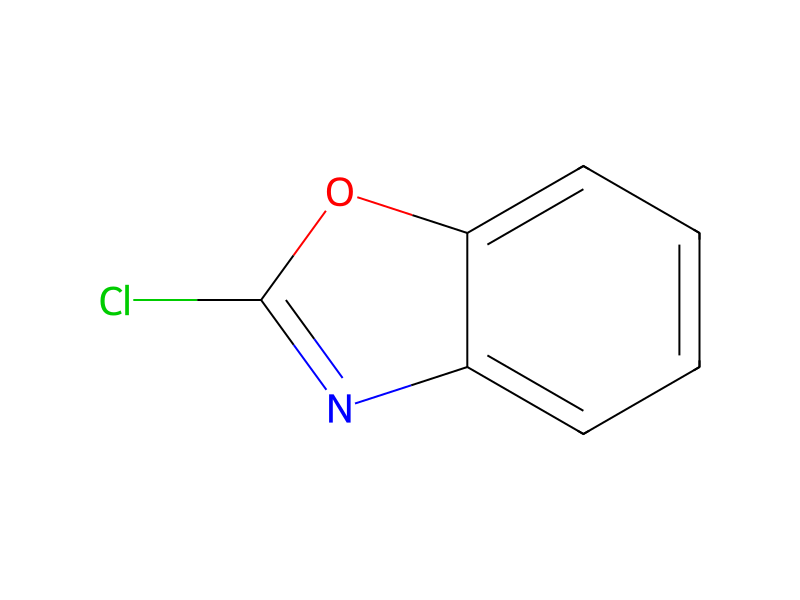
Product 2


Reagents, catalysts & solvents 1

Procedure
To a stirred solution of piperazine (8 g, 93 mmole) in ethanol (30 ml) was added 2-chlorobenzoxazole (3 g, 19.5 mmole) dropwise. The resulting reaction was exothermic. The mixture was then stirred for 18 hours at room temperature, quenched by the addition of methylene chloride (50 ml) and the resulting precipitate removed by filtration. The filtrate was concentrated under reduced pressure then purified by flash column chromatography on silica gel eluting with methylene chloride: methanol: 0.88 ammonia solution (90:10:1) to yield the title compound, m.p. 70°-72° (1.8 g, 46%), which was used directly.
Workup
- customThe resulting reaction
- customquenched by the addition of methylene chloride (50 ml)
- customthe resulting precipitate removed by filtration
- concentrationThe filtrate was concentrated under reduced pressure
- customthen purified by flash column chromatography on silica gel eluting with methylene chloride
Sources & evidence
- ORD record
- ord-0f46eb497d1e4b0d92da8198fd4c23c4
- Source dataset
- uspto-grants-1989_12
- Patent number
- US04885294
Reaction notes
Loading…