Caprolactam → 2H-Azepin-2-one, hexahydro-N-lauroyl-
Reaction equation

[H-].[Na+].[NH:3]1[CH2:9][CH2:8][CH2:7][CH2:6][CH2:5][C:4]1=[O:10].[C:11](Cl)(=[O:23])[CH2:12][CH2:13][CH2:14][CH2:15][CH2:16][CH2:17][CH2:18][CH2:19][CH2:20][CH2:21][CH3:22]>C1(C)C=CC=CC=1>[C:11]([N:3]1[CH2:9][CH2:8][CH2:7][CH2:6][CH2:5][C:4]1=[O:10])(=[O:23])[CH2:12][CH2:13][CH2:14][CH2:15][CH2:16][CH2:17][CH2:18][CH2:19][CH2:20][CH2:21][CH3:22]Participants
Reactant 3
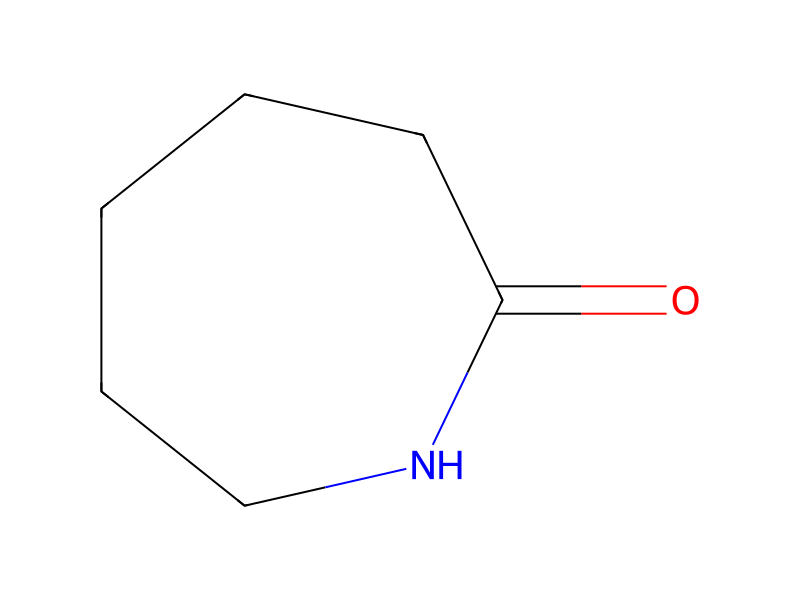


Product 1

Reagents, catalysts & solvents 1

Procedure
Sodium hydride [5.14 g (50% oil dispersion); 0.107 mol] in 100 ml of dry toluene was added to a 500 ml, 3-necked flask fitted with a mechanical stirrer. Azacycloheptan-2-one (10.07 g; 0.089 mol) was dissolved in 50 ml of dry toluene with slight warming and added to the sodium hydride suspension dropwise at room temperature. The suspension was stirred at room temperature for 1 hour. n-Dodecanoyl chloride (19.39 g; 0.089 mol) in 10 ml of dry toluene was added dropwise to the mixture and after the addition was complete, the mixture was stirred overnight at room temperature. The mixture was then washed with water, and the organic layer separated, dried with MgSO4, and concentrated. The resulting yellow oil was distilled 160° C./0.35 mm to yield 1-n-dodecanoylazacycloheptan-2-one as clear oil.
Workup
- customfitted with a mechanical stirrer
- temperaturewith slight warming
- additionafter the addition
- stirringthe mixture was stirred overnight at room temperature
- washThe mixture was then washed with water
- customthe organic layer separated
- dry with materialdried with MgSO4
- concentrationconcentrated
- distillationThe resulting yellow oil was distilled 160° C./0.35 mm
Sources & evidence
- ORD record
- ord-5012b362bf294a969c10d91a923bcbd3
- Source dataset
- uspto-grants-1989_12
- Patent number
- US04886545
Reaction notes
Loading…