Acetate → 3-Bromo-2,4-dichloro-5-fluoronitrobenzene
Reaction equation

[Cl:1][C:2]1[CH:7]=[C:6]([Cl:8])[C:5]([F:9])=[CH:4][C:3]=1[N+:10]([O-:12])=[O:11].C([O-])(=O)C.BrBr.S(=O)(=O)(O)O.[Br:24]([O-])(=O)=O.[K+].S(=O)(O)[O-].[Na+]>O>[Br:24][C:7]1[C:2]([Cl:1])=[C:3]([N+:10]([O-:12])=[O:11])[CH:4]=[C:5]([F:9])[C:6]=1[Cl:8]Participants
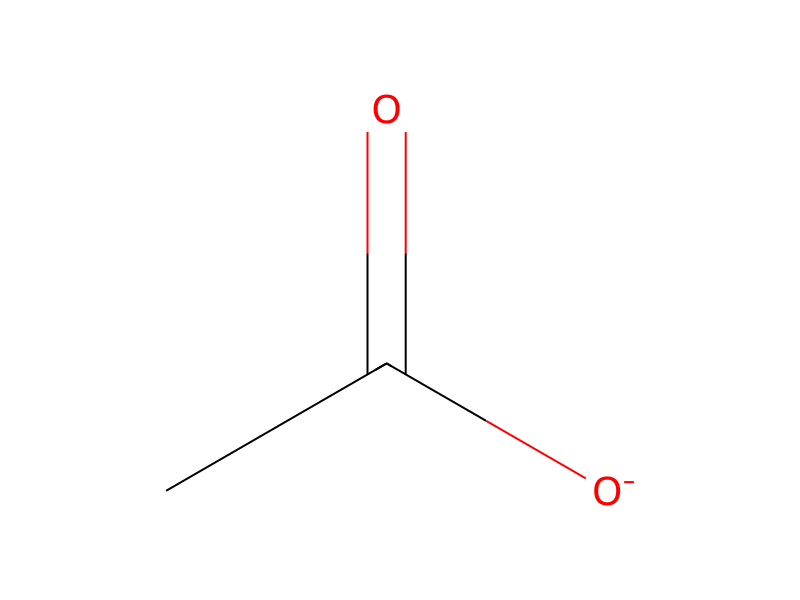







Procedure
96.6 g of 2,4-dichloro-5-fluoronitrobenzene (0.46 mol) was stirred with 1150 ml of glacial acetate acid containing 9.7 ml of bromine. Then, a solution consisting of 690 ml of concentrated sulfuric acid and 464 ml of water was added thereto. To the resultant was added 67.5 g of potassium bromate seven times (9.65 g each) at 40° C. over around 2 hours. The reaction was ceased after 8 hours. The reacting mixture was slowly poured into 3000 ml of water containing 46.0 g of sodium bisulfite, and kept overnight. The resultant was filtered, and washed with warm water (about 30° C.) from three to four times, and dried to give a primrose crystal of 3-bromo-2,4-dichloro-5-fluoronitrobenzene, 122.1 g (0.423 mol), mp 51-53.5° C., in 91.9% yield.
Workup
- additionwas added
- waitkept overnight
- filtrationThe resultant was filtered
- washwashed with warm water (about 30° C.) from three to four times
- customdried
Sources & evidence
- ORD record
- ord-3cbbc7f99fd74cb9bce2bd7d65319c37
- Source dataset
- uspto-grants-2004_03
- Patent number
- US06699992B2
Reaction notes
Loading…