Hydrochloric Acid → Neotame
Reaction equation

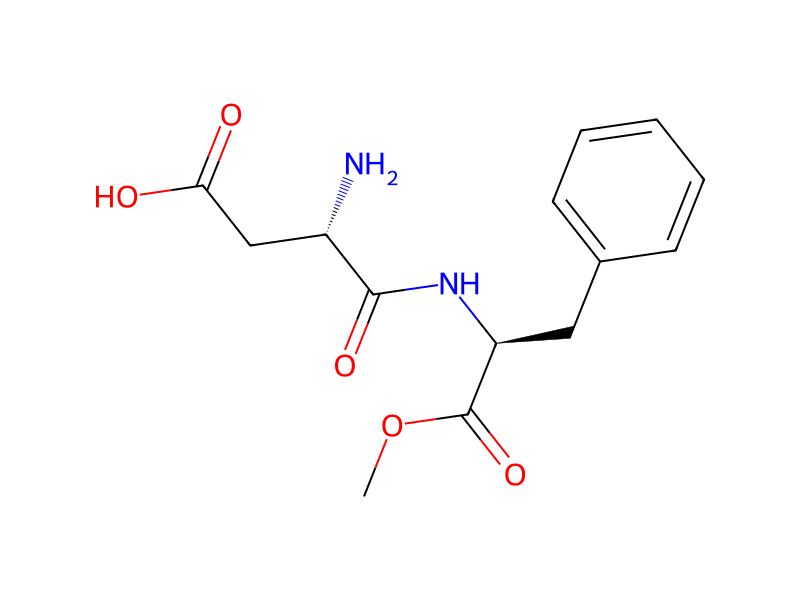
[CH3:1][O:2][C:3]([C@@H:5]([NH:13][C:14]([C@@H:16]([NH2:21])[CH2:17][C:18]([OH:20])=[O:19])=[O:15])[CH2:6][C:7]1[CH:8]=[CH:9][CH:10]=[CH:11][CH:12]=1)=[O:4].Cl.[CH3:23][C:24]([CH3:29])([CH3:28])[CH2:25][CH:26]=O>CO>[CH3:23][C:24]([CH2:25][CH2:26][NH:21][C@H:16]([C:14]([NH:13][C@H:5]([C:3]([O:2][CH3:1])=[O:4])[CH2:6][C:7]1[CH:12]=[CH:11][CH:10]=[CH:9][CH:8]=1)=[O:15])[CH2:17][C:18]([OH:20])=[O:19])([CH3:29])[CH3:28]Participants
Reactant 3

Product 1

Reagents, catalysts & solvents 1
Procedure
Aspartame (7.86 g) and methanol (100 ml) were charged to a hydrogenation vessel. The pH was adjusted to 1.3 with 5 ml of 1 N hydrochloric acid, followed by the addition of 3,3-dimethylbutyraldehyde (2.60 g). The vessel was pressure purged with nitrogen (4×), and 0.34 g of 4% palladium on carbon (containing 50% water) was added. After pressure purging the reactor with nitrogen (4×), followed by hydrogen (4×), the mixture was hydrogenated at 50 psig for 12 hours at room temperature. After completion of the reaction, the vessel was pressure purged with nitrogen (4×). The catalyst was removed from the reaction mixture by filtration through powdered cellulose. Methanol (20 ml) was used to rinse the reaction vessel and the filter cake. The filtrate and wash were combined, and methanol was evaporated under reduced pressure. The solution was reduced to 50 ml total volume, and 25 g of deionized water was added. Methanol was again evaporated from the solution under reduced pressure until the methanol content was 25-30%. The crystallized solid was isolated by filtration and washed with 20 ml deionized water. The wet product was dried under vacuum at 40° C. to give 6.5 g neotame (>98% by HPLC).
Workup
- custompurged with nitrogen (4×), and 0.34 g of 4% palladium on carbon (containing 50% water)
- additionwas added
- customAfter pressure purging the reactor with nitrogen (4×)
- customAfter completion of the reaction
- custompurged with nitrogen (4×)
- customThe catalyst was removed from the reaction mixture by filtration through powdered cellulose
- washto rinse the reaction vessel
- washThe filtrate and wash
- custommethanol was evaporated under reduced pressure
- additionwas added
- customMethanol was again evaporated from the solution under reduced pressure until the methanol content
- customThe crystallized solid was isolated by filtration
- washwashed with 20 ml
- customThe wet product was dried under vacuum at 40° C.
Sources & evidence
- ORD record
- ord-f4b299ae56bf4af09b45ad58e0468948
- Source dataset
- uspto-grants-2003_11
- Patent number
- US06642406B2
Reaction notes
Loading…