Terephthalic Acid → Terephthalic Acid
Reaction equation

[C:1]([OH:12])(=[O:11])[C:2]1[CH:10]=[CH:9][C:5]([C:6]([OH:8])=[O:7])=[CH:4][CH:3]=1.C(O)CCCO>O1CCCC1>[CH:6]([OH:8])([OH:7])[CH2:5][CH2:4][CH3:3].[C:1]([OH:12])(=[O:11])[C:2]1[CH:10]=[CH:9][C:5]([C:6]([OH:8])=[O:7])=[CH:4][CH:3]=1Participants
5
Reactant 2

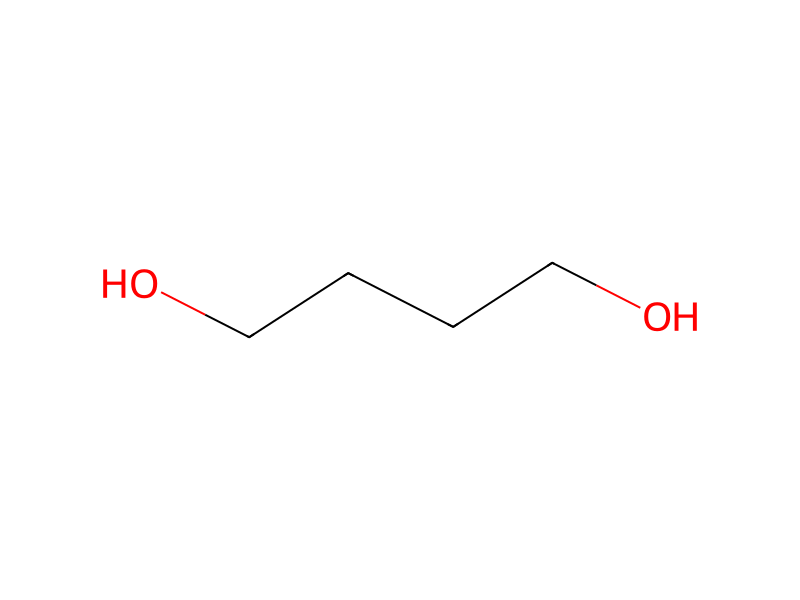
Product 2

Reagents, catalysts & solvents 1

Procedure
First, terephthalic acid and 1,4-butanediol (the latter in an excess of 150-220 mol %, preferably 70-100 mol %) are reacted with each other in a conventional manner at temperatures within the range from 150° to 220° C. and pressures within the range from 0.7 to 1.5 bar over a period of from 30 to 90, preferably from 40 to 70, minutes. An esterification takes place and resulting THF (tetrahydrofuran) together with excess butanediol (BD) and small amounts of oligomeric and polymeric compounds and also residual terephthalic acid are transferred with the vapors (a1, a2 and a3) into a column A). The point of addition is preferably located in the middle or the lower part of the column.
Workup
- waitpressures within the range from 0.7 to 1.5 bar over a period of from 30 to 90
Sources & evidence
- ORD record
- ord-97cb105e01af405bb68f4c7f7a50dfd0
- Source dataset
- uspto-grants-1998_08
- Patent number
- US05789500
Reaction notes
Loading…