Phenylacetyl chloride → 5,6-Dihydro-4-hydroxy-6-(3-methylbutyl)-6-phenyl-3-(2-phenylethyl)-2H-pyran-2-one
Reaction equation

[OH:1][C:2]1[CH2:7][C:6]([CH2:14][CH2:15][CH:16]([CH3:18])[CH3:17])([C:8]2[CH:13]=[CH:12][CH:11]=[CH:10][CH:9]=2)[O:5][C:4](=[O:19])[CH:3]=1.[C:20]1([CH2:26][C:27](Cl)=O)[CH:25]=[CH:24][CH:23]=[CH:22][CH:21]=1.C(N(CC)CC)C.C1COCC1>CN(C1C=CN=CC=1)C.C1(C)C=CC=CC=1>[OH:1][C:2]1[CH2:7][C:6]([CH2:14][CH2:15][CH:16]([CH3:17])[CH3:18])([C:8]2[CH:9]=[CH:10][CH:11]=[CH:12][CH:13]=2)[O:5][C:4](=[O:19])[C:3]=1[CH2:27][CH2:26][C:20]1[CH:25]=[CH:24][CH:23]=[CH:22][CH:21]=1Participants
7
Reactant 4
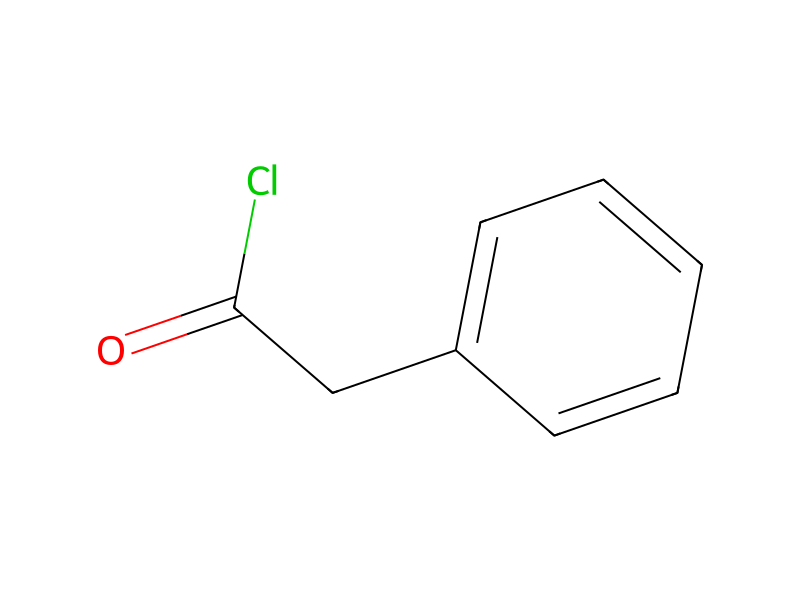



Product 1

Reagents, catalysts & solvents 2


Procedure
The title compound was prepared as described in General Method 5 using 2.0 mmol of 5,6-dihydro-4-hydroxy-6-(3-methylbutyl)-6-phenyl-2H-pyran-2-one, 2.1 mmol of phenylacetyl chloride, 2.1 mmol of triethylamine, and 10 mL of THF, followed by 10 mL of toluene and catalytic DMAP. Chromatography of the residue afforded 1.0 mmol of the intermediate acyl compound. Reduction of this intermediate was effected with 2 mmol of sodium cyanoborohydride. The product was obtained as a solid (m.p. 125°-126° C.). 1H NMR (DMSO-d6) δ0.76 (m, 7H), 1.12 (m, 1H), 1.38 (m, 1H), 1.87 (m, 2H), 2.27-2.46 (m, 4H), 2.97 (q, 2H), 6.98-7.38 (m, 10H).
Sources & evidence
- ORD record
- ord-50c3bfb7b578480ba216e5cd6e695ee0
- Source dataset
- uspto-grants-1998_08
- Patent number
- US05789440
Reaction notes
Loading…