Dimethylcarbamoyl Chloride → HCID 20242633, compound
Reaction equation

[Cl:1][C:2]1[CH:7]=[CH:6][CH:5]=[CH:4][C:3]=1[CH:8]1[C:17]2[C:12](=[CH:13][CH:14]=[CH:15][CH:16]=2)[CH2:11][C:10](=O)[NH:9]1.[CH3:19][N:20](C)[C:21](Cl)=O>>[ClH:1].[Cl:1][C:2]1[CH:7]=[CH:6][CH:5]=[CH:4][C:3]=1[CH:8]1[C:17]2[C:12](=[CH:13][CH:14]=[CH:15][CH:16]=2)[CH2:11][C:10]([N:20]([CH3:21])[CH3:19])=[N:9]1Participants
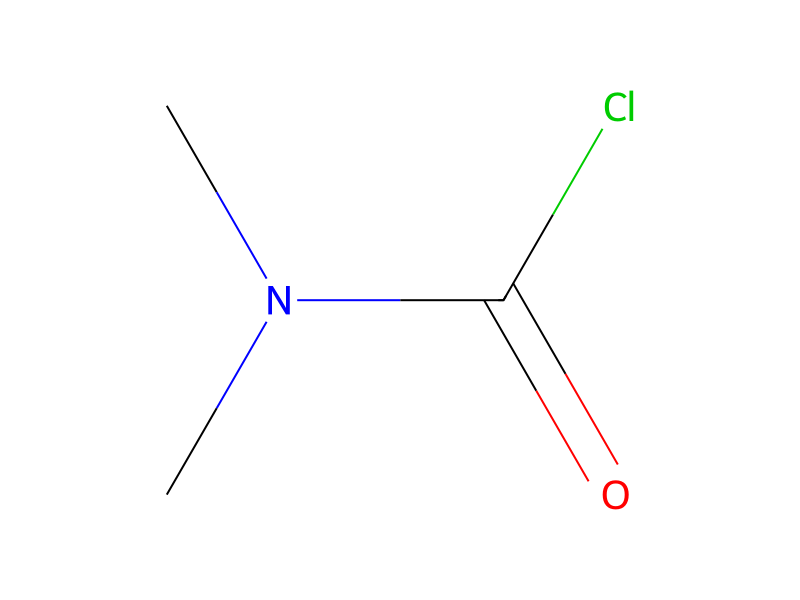


Procedure
1-(2-Chlorophenyl)-1,4-dihydroisoquinol-3-one (11.0 g, 43 mmol) was dissolved in dimethylcarbamyl chloride (50 g) on an oil bath (bath temperature 160°-170° C.) for 1 and three quarter hours. The mixture was cooled, evaporated under reduced pressure and partitioned between water (150 ml), 5M hydrochloric acid, ethyl acetate (100 ml) and chloroform (100 ml). The organic layer was separated and extracted with a portion of water (50 ml). The combined aqueous extracts were washed with ethyl acetate (3×25 ml) and basified (10% sodium hydroxide) to pH 14. The oil so formed was extracted with ethyl acetate (2×100 ml) and the combined ethyl acetate layers were washed with brine (50 ml) and dried over sodium sulphate. The solution was filtered and reduced to 100 ml under reduced pressure. Ethereal hydrogen chloride was added to precipitate the salt. After trituration, the solid was filtered off and dried in the vacuum over (90° C., 1 mm). This gave 1-(2-chlorophenyl)-3-dimethylamino-1,4-dihydroisoquinoline hydrochloride (5.7 g, 42%) m.p. 162°-6° C. (soften then hardened and remelted 252°-5° C.). I.R. νmax (Nujol) 1650 cm-1.
Workup
- temperatureThe mixture was cooled
- customevaporated under reduced pressure
- custompartitioned between water (150 ml), 5M hydrochloric acid, ethyl acetate (100 ml) and chloroform (100 ml)
- customThe organic layer was separated
- extractionextracted with a portion of water (50 ml)
- washThe combined aqueous extracts were washed with ethyl acetate (3×25 ml)
- customThe oil so formed
- extractionwas extracted with ethyl acetate (2×100 ml)
- washthe combined ethyl acetate layers were washed with brine (50 ml)
- dry with materialdried over sodium sulphate
- filtrationThe solution was filtered
- additionEthereal hydrogen chloride was added
- customto precipitate the salt
- filtrationAfter trituration, the solid was filtered off
- customdried in the vacuum over (90° C., 1 mm)
- customremelted 252°-5° C.
Sources & evidence
- ORD record
- ord-28b2f888386d4624be7205fc6f258d21
- Source dataset
- uspto-grants-1986_03
- Patent number
- US04578393
Reaction notes
Loading…