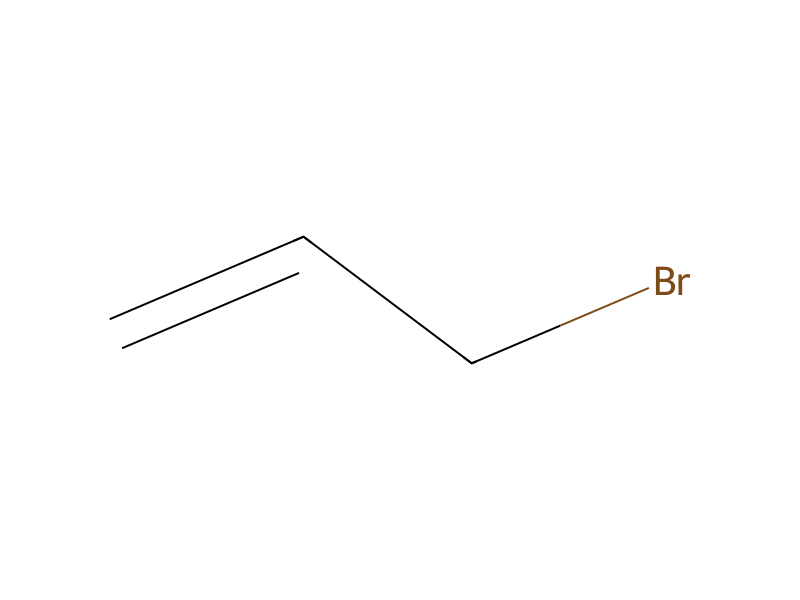
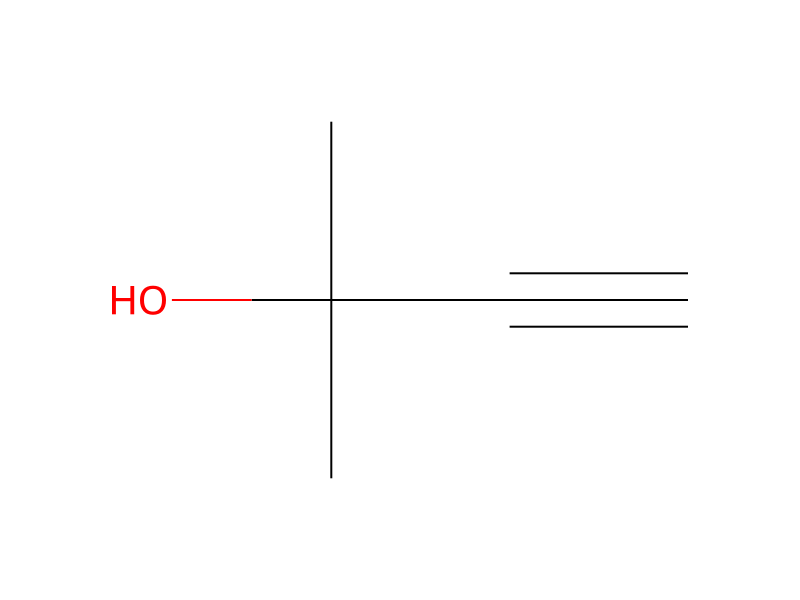
Allyl bromide → 2-Methyl-6-hepten-3-yn-2-ol
Reaction equation

[CH3:1][C:2]([OH:6])([C:4]#[CH:5])[CH3:3].[CH2:7](Br)[CH:8]=[CH2:9].C(=O)([O-])[O-].[K+].[K+]>[Cl-].C([N+](CC)(CC)CC)C1C=CC=CC=1.C(#N)C>[CH3:1][C:2]([OH:6])([C:4]#[C:5][CH2:9][CH:8]=[CH2:7])[CH3:3]Participants
6




Procedure
The coupling reaction was conducted in the manner described in the procedure of Example VI using the following reagents: 1.00 mL (10.3 mmoles) of 2-methyl-3-butyn-2-ol, 1.00 mL (11.6 mmoles) of allyl bromide (3-bromopropene), 2.21 g (16.0 mmoles) of anhydrous potassium carbonate, 93 mg (0.94 mmoles) of cuprous chloride, and 207 mg (0.91 mmole) of benzyltriethylammonium chloride in 3.00 mL of acetonitrile (HPLC-grade). Isolation of the product in the manner described in the procedure of Example III afforded, after removal of the volatile organic solvents at reduced pressure, 765 mg (60% yield) of the named alcohol, the identity and purity of which were ascertained by IR and proton NMR analysis.
Workup
- customThe coupling reaction
- customafforded
Sources & evidence
- ORD record
- ord-1a653cc41ebd4e76974b158533a9117a
- Source dataset
- uspto-grants-1993_07
- Patent number
- US05231232
Reaction notes
Loading…