Triethylamine → HCID 13503381, compound
Reaction equation

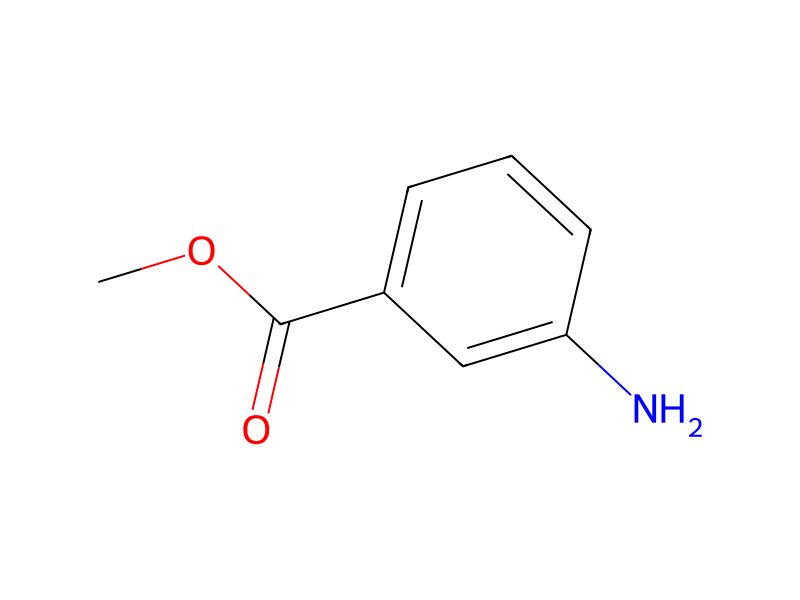
[Cl:1][C:2]1[CH:7]=[CH:6][C:5]([C:8]([C:13]2[CH:18]=[CH:17][C:16]([Cl:19])=[CH:15][CH:14]=2)=[CH:9][C:10](Cl)=[O:11])=[CH:4][CH:3]=1.[NH2:20][C:21]1[CH:22]=[C:23]([CH:28]=[CH:29][CH:30]=1)[C:24]([O:26][CH3:27])=[O:25].C(N(CC)CC)C>ClCCl>[Cl:1][C:2]1[CH:7]=[CH:6][C:5]([C:8]([C:13]2[CH:18]=[CH:17][C:16]([Cl:19])=[CH:15][CH:14]=2)=[CH:9][C:10]([NH:20][C:21]2[CH:22]=[C:23]([CH:28]=[CH:29][CH:30]=2)[C:24]([O:26][CH3:27])=[O:25])=[O:11])=[CH:4][CH:3]=1Participants
5
Reactant 3


Product 1

Reagents, catalysts & solvents 1

Procedure
A solution of 20.0 g. of bis(4-chlorophenyl)acryloyl chloride in 150 ml. of dichloromethane is added to a stirred solution of 10.3 g. of methyl 3-aminobenzoate and 12.2 ml. of triethylamine in 150 ml. of dichloromethane. This solution is stirred under reflux for 3 hours and then at room temperature overnight and evaporated. The residue is stirred with 300 ml. of boiling acetone, filtered white hot, and the filtrate is chilled. The resulting solid is collected and dried in vacuo, giving 13.8 g. of the desired product as a white solid, m.p. 155°-159° C.
Workup
- temperatureunder reflux for 3 hours
- customat room temperature overnight and evaporated
- stirringThe residue is stirred with 300 ml
- filtrationof boiling acetone, filtered white hot
- temperaturethe filtrate is chilled
- customThe resulting solid is collected
- customdried in vacuo
- customgiving 13.8 g
Sources & evidence
- ORD record
- ord-63243316e3db4dfcac373472e7c63e67
- Source dataset
- uspto-grants-1985_08
- Patent number
- US04536346
Reaction notes
Loading…