Water → 2-[(4-Carboxyphenyl)methylene]-1,3-dicyclopropyl-1,3-propanedione
Reaction equation

[C:1]([C:4]1[CH:11]=[CH:10][C:7]([CH:8]=O)=[CH:6][CH:5]=1)([OH:3])=[O:2].[CH:12]1([C:15](=[O:22])[CH2:16][C:17]([CH:19]2[CH2:21][CH2:20]2)=[O:18])[CH2:14][CH2:13]1.O>FC(F)(F)C(O)=O>[C:1]([C:4]1[CH:11]=[CH:10][C:7]([CH:8]=[C:16]([C:15]([CH:12]2[CH2:14][CH2:13]2)=[O:22])[C:17]([CH:19]2[CH2:21][CH2:20]2)=[O:18])=[CH:6][CH:5]=1)([OH:3])=[O:2]Participants
5
Reactant 3

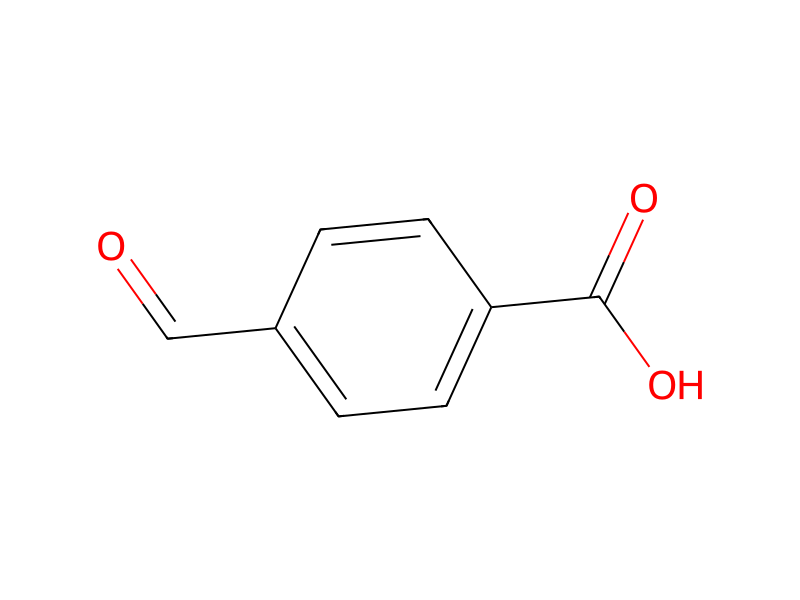

Product 1

Reagents, catalysts & solvents 1

Conditions
- Temperature
- 20 °C
Procedure
The procedure described in Example 19 was repeated by using 3.0 g 4-carboxybenzaldehyde and 3.06 g 1,3-dicyclopropyl-1,3-propanedione. Yield 1.7 g, mp 175°-178° C. in trifluoroacetic acid (10 ml) thionylchloride (4 ml) and catalytic amount of water (0,05 ml) were added at room temperature. The solution was stirred over right at 20° C. The solvent was evaporated and the residue was destilled in vacuo, bp 110° C./1,5 mbar. Yield 5,3 g (41%).
Workup
- customThe solvent was evaporated
Sources & evidence
- ORD record
- ord-e2c9b26bd64740098034d671cf78f239
- Source dataset
- uspto-grants-1994_03
- Patent number
- US05292771
Reaction notes
Loading…