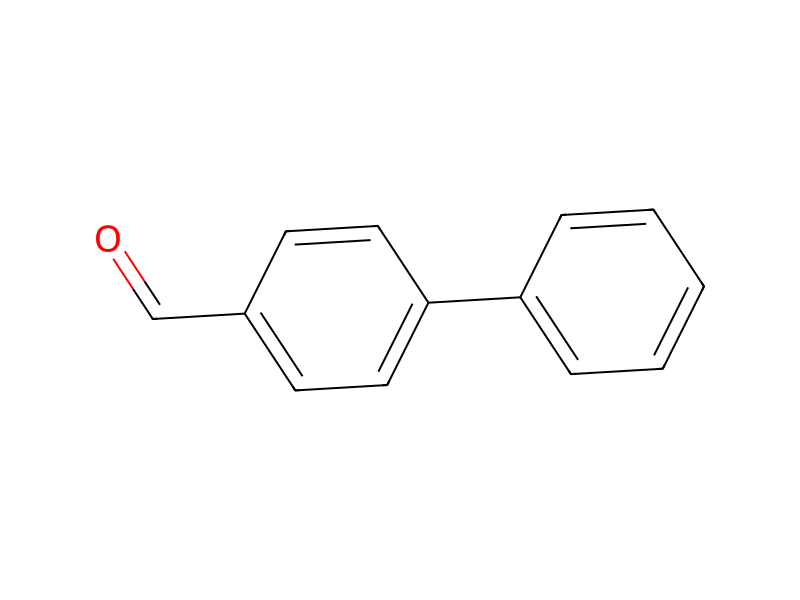
2,3-Dihydroxybutanedioic Acid → (1,1'-Biphenyl)-4-carboxaldehyde
Reaction equation

CO[C:3]([C:11]1[CH:16]=[CH:15][CH:14]=[CH:13][CH:12]=1)([C:7](F)(F)F)[C:4](O)=O.[CH2:17]1OC(=O)[C:19](O)=[C:18]1O.C(O)(C(O)=O)C(O)[C:27](O)=[O:28]>>[C:11]1([C:3]2[CH:4]=[CH:19][CH:18]=[CH:17][CH:7]=2)[CH:12]=[CH:13][C:14]([CH:27]=[O:28])=[CH:15][CH:16]=1Participants


Procedure
The successful use of relatively unexplored LiN(Cy)2 to provide 2-hydroxytetronic acid redox compounds of high enantiomeric purity is unprecedented. Furthermore, these intramolecular Claisen condensations are applicable for construction of a wide range of optically pure 4-substituted-2-hydroxytetronic acids of known absolute configuration. Such a chiron approach becomes all the more practical since methodologies for the preparation of α-hydroxy acid precursors of known absolute configuration are available. Optically pure, but commercially unavailable α-hydroxy ester precursors, are available using Evan's chiral oxazolidinone auxiliaries, Evans et al., J. Am. Chem. Soc., 1985, 107, 4346-4348. For example, we have prepared methyl (S)-α-hydroxy-α biphenylacetate in high optical yield (94% e.e) from 4-biphenylacetyl chloride, Logemann, W., Hoppe-Seylers Z. Physiol. Chem., 1952, 290, 61-66, and (S)-4-isopropyloxazolidin-2-one. Treatment of the resulting oxazolidinone carboximide (76%) with LiHMDA and dibenzylperoxy dicarbonate yielded the intermediate carbonate as a single diastereomer (71%, d.e.>98%). Lithium hydroperoxide, Evans et al., Tetrahedron Lett., 1987, 28, 6141-6144, hydrolysis afforded the protected hydroxy acid (78%). Removal of the chiral auxilliary with Mg(OCH3)2, Evans et al., J. Am. Chem. Soc., supra., (0.02M; 1.1 eq) at -15° C. to -20° C. followed by deprotection via transfer hydrogenation yielded partially racemized α-hydroxy ester [(35% e.e., [α]22D +49.1° (c 1.00, MeOH)] in 61% overall yield from the oxazolidinone carboximide. Transfer hydrogenation generated the (S)-α-hydroxyacetic acid (83%), and esterification (diazomethane) yielded the methyl acetate (91%), the enantiomeric purity of which was determined by conversion to the α-methoxy-α-trifluoromethyl phenyl acetic acid (MPTA) ester with (+)-MPTA-Cl, Dale et al., J. Org. Chem., 1969, 34, 2543-2549, and observing the benzylic proton signal [1H NMR (CDCl3), 250 MHZ] at δ6.15 (s, 1H) in comparison to the ester derived from racemic hydroxy ester. The racemic methyl α-hydroxyacetate, mp 104°-105° C., was prepared by CH2N2 esterification of the racemic acid which was synthesized as follows: in situ cyanosilylation, Rasmussen et al., Organic Syntheses, 1984, 62, 196-201, [Me3SiCl, KCN, Zn(CN)2 ] of 4-biphenylcarboxaldehyde furnished trimethylsilyl cyanohydrin ether which was hydrolysed with HCl, Grunewald et al., Tetrahedron Lett., 1980, 21, 1219-1220, to the hydroxy amide (m.p. 226°-227° C.) and finally to racemic α-hydroxy acid (m.p. 201°-202° C., Lit. mp 201°-203° C.) Blicke et al., J. Am. chem. Soc., 1943, 65, 1725-1728, with KOH/MeOH in 56% overall yield.
Workup
- customwas synthesized
Sources & evidence
- ORD record
- ord-f1d296b0989143378bd9ed55c3d6b67d
- Source dataset
- uspto-grants-1994_03
- Patent number
- US05298526
Reaction notes
Loading…