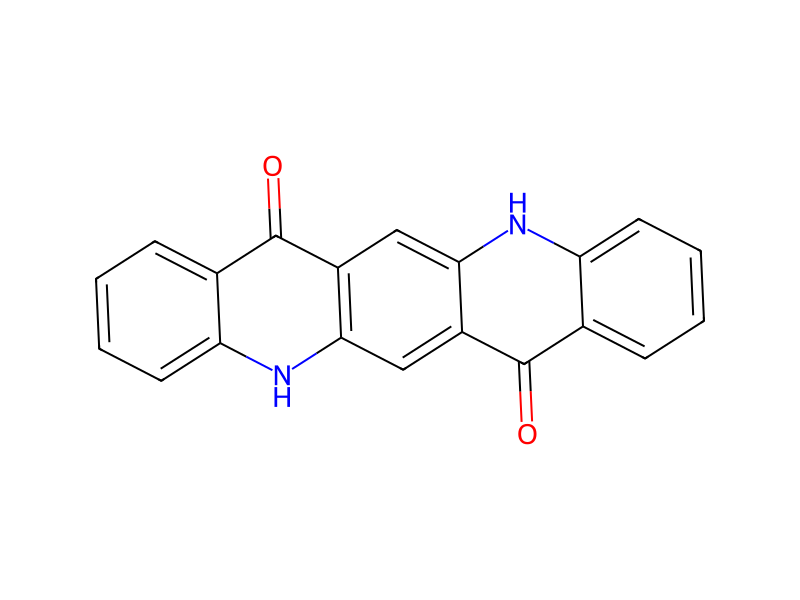
Water → Quinacridonequinone
Reaction equation

[CH:1]1[CH:6]=[C:5]2[C:7]([C:9]3[C:14]([NH:15][C:4]2=[CH:3][CH:2]=1)=[CH:13][C:12]1[C:16]([C:18]2[C:23]([NH:24][C:11]=1[CH:10]=3)=[CH:22][CH:21]=[CH:20][CH:19]=2)=[O:17])=[O:8].[OH-:25].[K+].S(OOS([O-])(=O)=O)([O-])(=O)=O.[Na+].[Na+].[OH2:39]>>[CH:20]1[CH:19]=[C:18]2[C:16]([C:12]3[C:13](=[O:39])[C:14]4[NH:15][C:4]5[C:5]([C:7](=[O:8])[C:9]=4[C:10](=[O:25])[C:11]=3[NH:24][C:23]2=[CH:22][CH:21]=1)=[CH:6][CH:1]=[CH:2][CH:3]=5)=[O:17]Participants
5




Conditions
- Temperature
- 65 °C
Procedure
Quinacridone (50 grams) was dispersed in water (1000 grams) and potassium hydroxide (50 grams) was added. The resulting slurry was then heated to 65° C. and sodium peroxydisulfate (200 grams) was added over a 6 hour period. The resulting slurry was stirred continuously for 8 hours at 65° C. then filtered. The resulting presscake was washed with water to neutral and dried. 55 grams of bright yellow highly pure quinacridonequinone was produced.
Workup
- filtrationthen filtered
- washThe resulting presscake was washed with water to neutral and
- customdried
Sources & evidence
- ORD record
- ord-2b06afe72a0a4301b6536c2e46d02387
- Source dataset
- uspto-grants-2005_12
- Patent number
- US06972333B2
Reaction notes
Loading…