Water → 3-[5-(2-Chlorophenyl)-[1,3,4]oxadiazol-2-yl]-benzoic acid methyl ester
Reaction equation

[CH3:1][O:2][C:3](=[O:15])[C:4]1[CH:9]=[CH:8][CH:7]=[C:6]([C:10]2[N:11]=[N:12]NN=2)[CH:5]=1.[Cl:16][C:17]1[CH:25]=[CH:24][CH:23]=[CH:22][C:18]=1[C:19](Cl)=[O:20].N1C(C)=CC(C)=CC=1C.O>C1(OC)C=CC=CC=1>[CH3:1][O:2][C:3](=[O:15])[C:4]1[CH:9]=[CH:8][CH:7]=[C:6]([C:10]2[O:20][C:19]([C:18]3[CH:22]=[CH:23][CH:24]=[CH:25][C:17]=3[Cl:16])=[N:12][N:11]=2)[CH:5]=1Participants



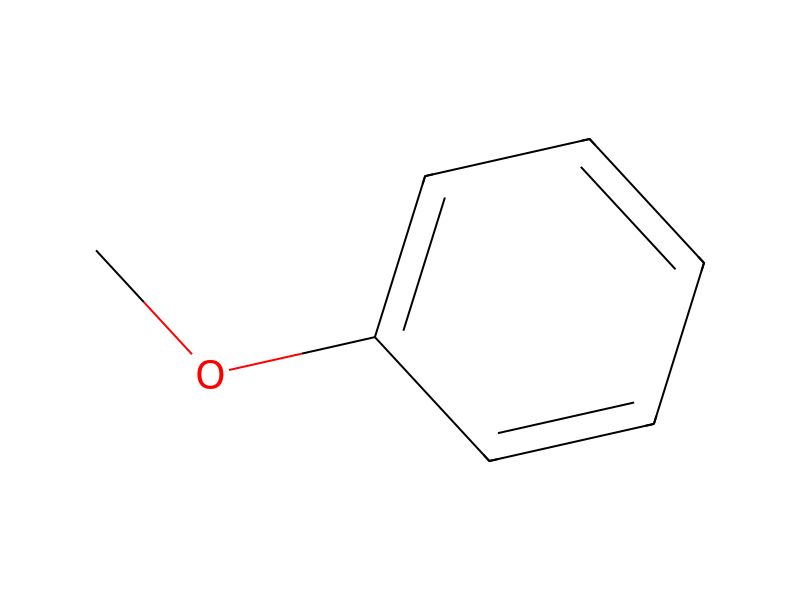
Conditions
- Temperature
- 100 °C
Procedure
3-(2H-Tetrazol-5-yl)-benzoic acid methyl ester (204 mg, 1 mmol) (prepared by the method of Tanaka et al, J. Med. Chem., 1998, 41(13), 2406) and 2-chlorobenzoyl chloride (175 mg, 1 mmol) were combined in anisole (10 mL) at room temperature and 2,4,6-collidine (121 mg, 1 mmol) in anisole (1 mL) was added. The reaction mixture was heated at 100° C. for 1 hour followed by 120° C. for 15 minutes, monitoring the evolution of gas by balloon [volume of gas evolved was measured by positive displacement of water, total =22 mL]. Cooled reaction mixture to room temperature, and concentrated to dryness in vacuo. The residue was subjected to flash column chromatography on silica with gradient dilution 5% to 40% ethyl acetate/heptane. 3-[5-(2-Chlorophenyl)-[1,3,4]oxadiazol-2-yl]-benzoic acid methyl ester was isolated as a colorless powder (229 mg, 73%). 1H NMR [CDCl3]: δ 8.79 (s, H); 8.36 (d, H); 8.25 (d, H); 8.14 (d, H); 7.72-7.57 (m, 2H); 7.57-7.41 (m, 2H); 4.00 (s, 3H). MS(Ion spray): 315 and 317 (M++1).
Workup
- temperatureCooled
- customreaction mixture to room temperature
- concentrationconcentrated to dryness in vacuo
Sources & evidence
- ORD record
- ord-f6ee51877f5349b8876c8f733e44136f
- Source dataset
- uspto-grants-2005_12
- Patent number
- US06977263B2
Reaction notes
Loading…