Hydrochloric Acid → 2-Chloro-6-ethylbenzoic acid
Reaction equation

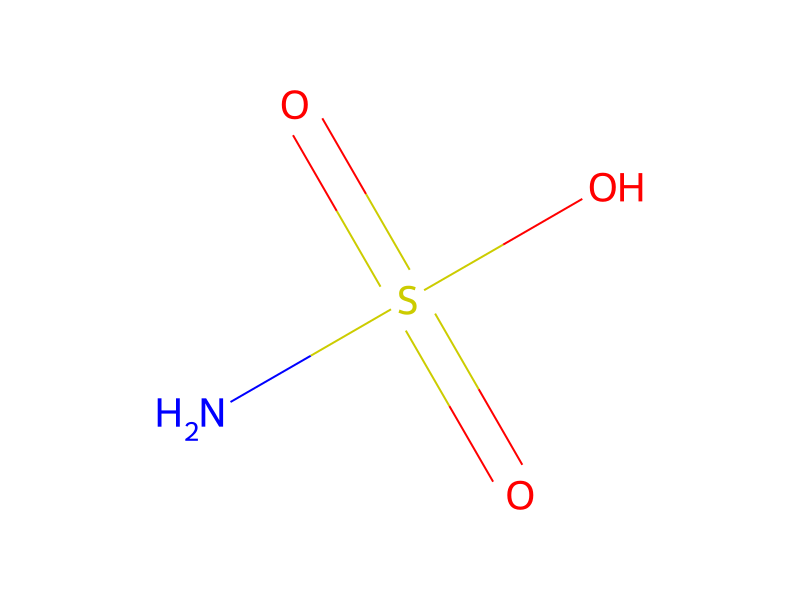
[Cl:1][C:2]1[CH:8]=[CH:7][CH:6]=[C:5]([CH2:9][CH3:10])[C:3]=1N.N([O-])=O.[Na+].S(=O)(=O)(O)O.CN(C)C1C=CC=CC=1.Cl.[C:30]([O:33]C(=O)C)(=[O:32])C>C(O)(=O)C.S(=O)(=O)(O)N.C(Cl)(Cl)Cl>[Cl:1][C:2]1[CH:8]=[CH:7][CH:6]=[C:5]([CH2:9][CH3:10])[C:3]=1[C:30]([OH:33])=[O:32]Participants
Reactant 6






Product 1

Reagents, catalysts & solvents 3


Conditions
- Temperature
- 6 °C
Procedure
3.60 g (21.2 mmol) of 2-chloro-6-ethylaniline in 60 ml of acetic acid is introduced into a reaction vessel and the clear, colourless solution is cooled to 6° C. At that temperature, 3.64 g (22.7 mmol) of a 43% aqueous sodium nitrite solution are added and then, in the course of 15 minutes, a solution of 4.32 g (42.4 mmol) of sulfuric acid (96%) in 7 ml of acetic acid is added dropwise. The resulting dark-red solution is then stirred for 30 minutes. When a diazo colour test, for example using dimethylaniline-coated indicator paper, is positive and a colour spot test, e.g. using KI indicator paper moistened with aqueous 1N hydrochloric acid solution, is negative, 15 mg of sulfamic acid are added and then, at a temperature of 10° C., 8.7 ml (91.6 mmol) of acetic anhydride are added. The reaction mixture is then transferred to a glass autoclave and rinsed with 20 ml of acetic acid. At a temperature of 20° C. the autoclave is flushed out three times with nitrogen and then flushed out three times with CO. 220 mg of Pd2(dba)3.CHCl3 (0.212 mmol) in 5 ml of acetic acid are then metered in using a cannula at a CO pressure of 1 bar, then a CO pressure of 8 bar is applied and the reaction mixture is stirred overnight at 45° C. When the pressure has been released, the resulting suspension is filtered and the acetic acid filtrate is concentrated by evaporation under reduced pressure using a rotary evaporator; 1M aqueous hydrochloric acid solution is added to the organic phase that remains and extraction is carried out three times with toluene. The combined organic phases are evaporated under reduced pressure using a rotary evaporator, yielding 4.43 g of crude product with a target compound content of 75% according to HPLC. Purification by means of vacuum distillation (b.p. 130-135° C./0.01 mbar) yields 3.31 g (yield 85% of theory) of the desired target compound.
Workup
- washrinsed with 20 ml of acetic acid
- customAt a temperature of 20° C. the autoclave is flushed out three times with nitrogen
- customflushed out three times with CO
- stirringthe reaction mixture is stirred overnight at 45° C
- filtrationthe resulting suspension is filtered
- concentrationthe acetic acid filtrate is concentrated by evaporation under reduced pressure
- customa rotary evaporator
- addition1M aqueous hydrochloric acid solution is added to the organic phase
- extractionextraction
- customThe combined organic phases are evaporated under reduced pressure
- customa rotary evaporator
Sources & evidence
- ORD record
- ord-803d344784cf48c0be2cbdc4c4bdf8e3
- Source dataset
- uspto-grants-2009_05
- Patent number
- US07528266B2
Reaction notes
Loading…