Hydrochloric Acid → 2-Chloro-6-ethylbenzoic acid
Reaction equation

[Cl:1][C:2]1[CH:8]=[CH:7][CH:6]=[C:5]([CH2:9][CH3:10])[C:3]=1N.S(=O)(=O)(O)O.N([O-])=O.[Na+].CN(C)C1C=CC=CC=1.Cl.S(=O)(=O)(O)N.[C:35]([O:38]C(=O)C)(=[O:37])C.C(Cl)(Cl)Cl>C(O)(=O)C>[Cl:1][C:2]1[CH:8]=[CH:7][CH:6]=[C:5]([CH2:9][CH3:10])[C:3]=1[C:35]([OH:38])=[O:37]Participants
Reactant 8



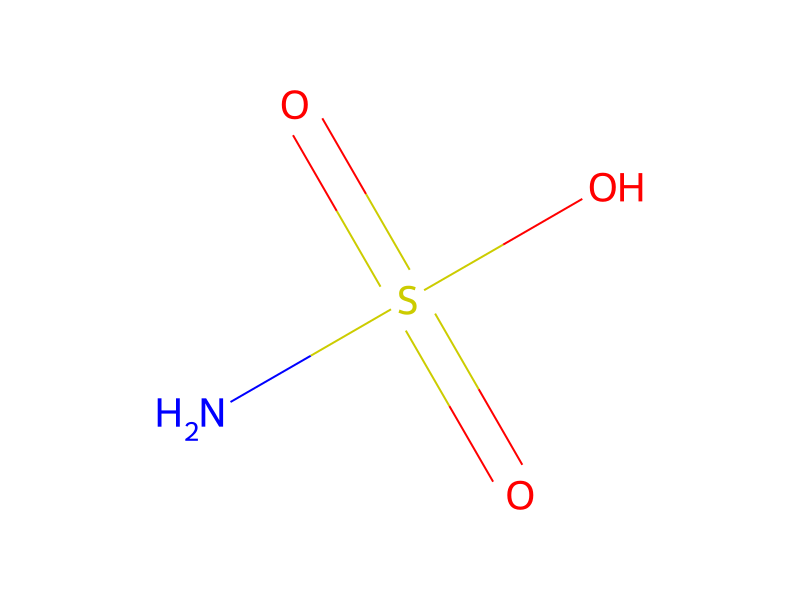




Product 1

Reagents, catalysts & solvents 1

Conditions
- Temperature
- 11 °C
Procedure
3.60 g (21.2 mmol) of 2-chloro-6-ethylaniline in 24 ml of acetic acid are introduced into a reaction vessel and the clear, colourless solution is cooled to 11° C. At that temperature, 3.25 g (31.8 mmol) of sulfuric acid (96%) are added and then, in the course of 15 minutes, 3.64 g (22.7 mmol) of a 43% aqueous sodium nitrite solution are added. The resulting dark-red solution is then stirred for 30 minutes. When a diazo colour test, e.g. using dimethylaniline-coated indicator paper, is positive and a colour spot test, e.g. using KI indicator paper moistened with aqueous 1N hydrochloric acid solution, is negative, 15 mg of sulfamic acid are added and then, at a temperature of 10° C., 8.7 ml (91.6 mmol) of acetic anhydride are added. The reaction mixture is then transferred to a glass autoclave and rinsed with 6 ml of acetic acid. At a temperature of 20° C. the autoclave is flushed out three times with nitrogen and then three times with CO. 220 mg of Pd2(dba)3.CHCl3 (0.212 mmol) in 3 ml of acetic acid are metered in using a cannula at a CO pressure of 1 bar, then a CO pressure of 8 bar is applied and the reaction mixture is stirred for 5 hours at 45° C.
Workup
- washrinsed with 6 ml of acetic acid
- customAt a temperature of 20° C. the autoclave is flushed out three times with nitrogen
- stirringthe reaction mixture is stirred for 5 hours at 45° C.
Sources & evidence
- ORD record
- ord-ca917d3bcc564b71a0771106fc662359
- Source dataset
- uspto-grants-2009_05
- Patent number
- US07528266B2
Reaction notes
Loading…