Cyanide → (R)-4-cyano-3-hydroxybutyric acid
Reaction equation

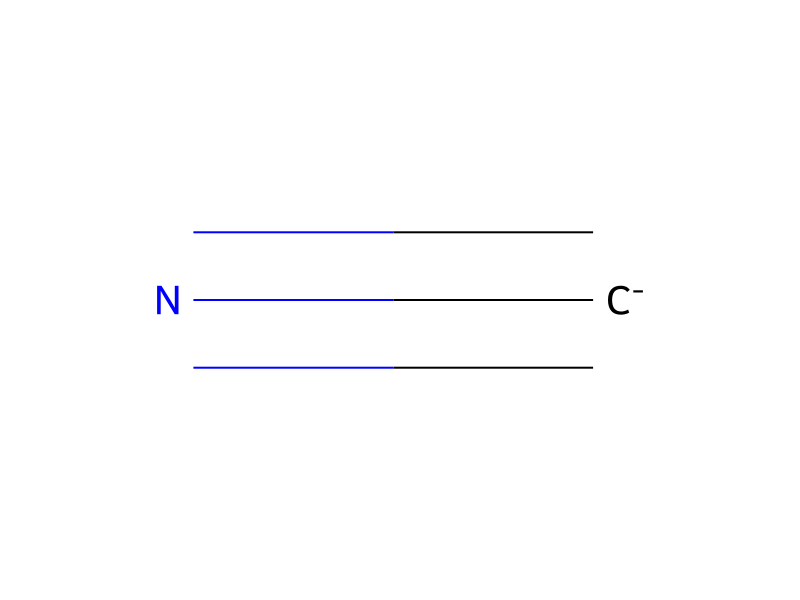
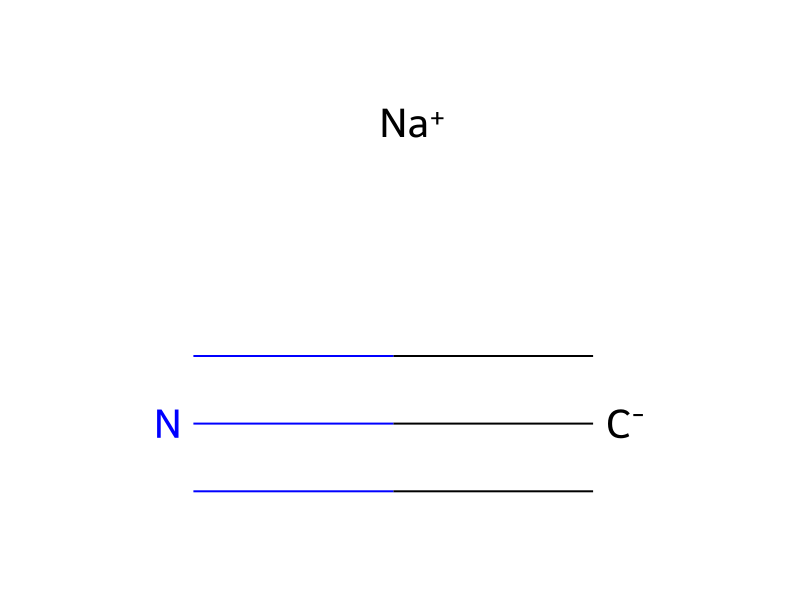
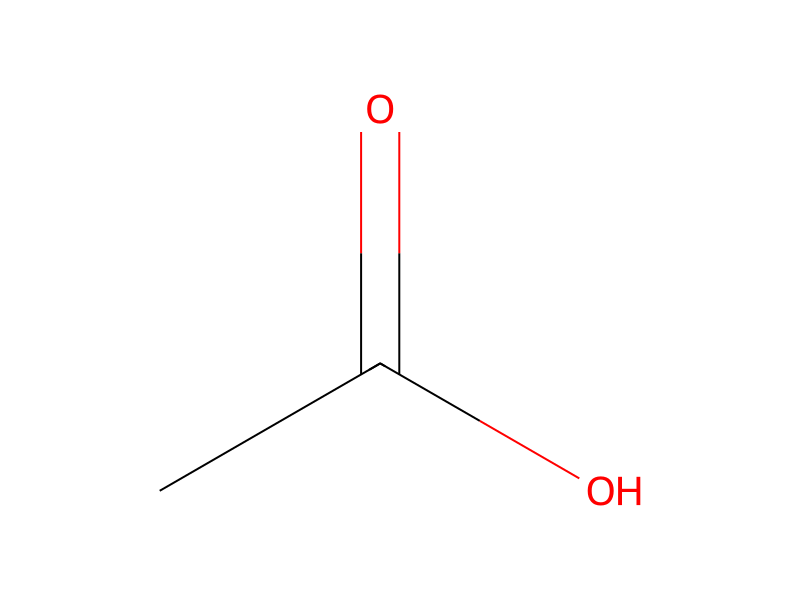
[C-:1]#[N:2].[Na+].C([O:6][C:7](=[O:13])[CH2:8][C@H:9]([OH:12])[CH2:10]Cl)C.[C-]#N>C(O)(=O)C>[C:1]([CH2:10][C@@H:9]([OH:12])[CH2:8][C:7]([OH:6])=[O:13])#[N:2]Participants
Reactant 3

Product 1

Reagents, catalysts & solvents 1
Procedure
A first feed tank was charged with a 15% (w/w) aqueous solution of sodium cyanide. A second feed tank was charged with an 80% w/w aqueous solution of acetic acid. A third feed tank was charged with (S)-ethyl-4-chloro-3-hydroxybutyrate. The sodium cyanide and acetic acid solutions were mixed at a molar ratio of 21:1 using a plug flow reactor element with a 1.4-second residence time at ambient temperature. The mixture was continuously fed into a two-stage plug flow reactor element into which (S)-ethyl-4-chloro-3-hydroxybutyrate was continuously fed such that the molar ratio of cyanide to substate was 2:1. The two stage reactor element consisted of an initial pre-mixer with a 4.5 second residence time and a secondary mixer with a 72 second residence time, both mixing elements being contained within a heat transfer medium such that the reaction temperature was maintained at between 105° C. and 110° C. The mixture was then continuously quenched using additional 80% acetic acid in a plug flow reactor element with a residence time of 4.0 seconds at ambient temperature. The quench acid flow rate was adjusted to maintain the crude product flow stream at a pH of between 5.0 and 5.5. The crude product was obtained as an aqueous solution, which was subjected to steam distillation to remove contaminants. The aqueous residue was then extracted with dichloromethane and the product (R)-4-cyano-3-hydroxybutyric acid was isolated in 80% chemical yield after solvent evaporation and simple vacuum distillation.
Workup
- customThe mixture was continuously fed into a two-stage plug flow reactor
- customwith a 4.5 second
- temperaturewas maintained at between 105° C. and 110° C
- customThe mixture was then continuously quenched
- customwith a residence time of 4.0 seconds
- customat ambient temperature
- temperatureto maintain the crude product flow stream at a pH of between 5.0 and 5.5
- customThe crude product was obtained as an aqueous solution, which
- distillationwas subjected to steam distillation
- customto remove contaminants
- extractionThe aqueous residue was then extracted with dichloromethane
Sources & evidence
- ORD record
- ord-a79bedd9283e400b9878c5b7f82c459a
- Source dataset
- uspto-grants-2009_05
- Patent number
- US07531683B2
Reaction notes
Loading…