7-Aminoquinoline → 4-bromo-N-quinolin-7-ylbenzamide
Reaction equation

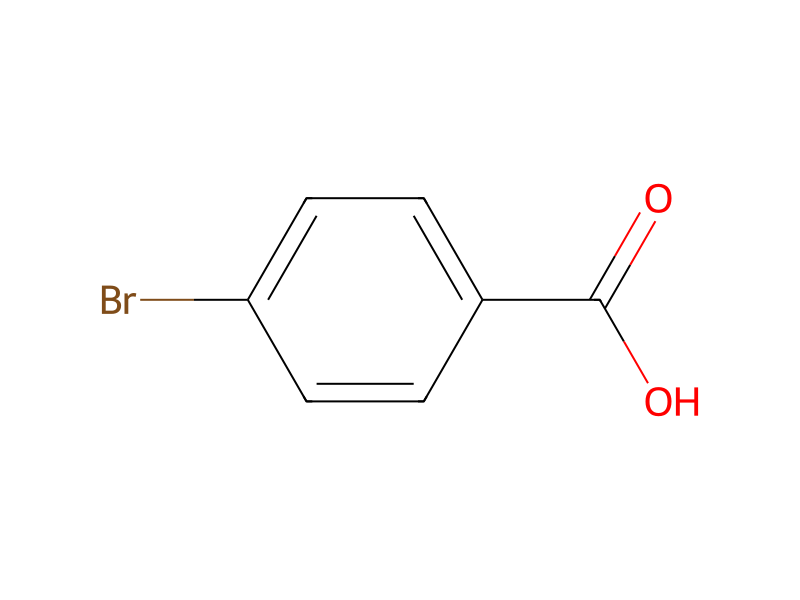
[NH2:1][C:2]1[CH:11]=[C:10]2[C:5]([CH:6]=[CH:7][CH:8]=[N:9]2)=[CH:4][CH:3]=1.[Br:12][C:13]1[CH:21]=[CH:20][C:16]([C:17](O)=[O:18])=[CH:15][CH:14]=1>>[Br:12][C:13]1[CH:21]=[CH:20][C:16]([C:17]([NH:1][C:2]2[CH:11]=[C:10]3[C:5]([CH:6]=[CH:7][CH:8]=[N:9]3)=[CH:4][CH:3]=2)=[O:18])=[CH:15][CH:14]=1Participants
3


Procedure
Using the procedure outlined in Example 56, the title compound was prepared from 7-aminoquinoline (D55) (720 mg, 5 mmol) and 4-bromobenzoic acid (1.51 g, 7.5 mmol) as a white solid. 1H NMR (400 MHz, CDCl3) δ (ppm): 8.91 (dd, 1H), 8.18 (d, 1H), 8.14 (dd, 1H), 8.06, (m, 2H), 7.85 (d, 1H), 7.81 (d, 2H), 7.67 (d, 2H), 7.37 (dd, 1H).
Sources & evidence
- ORD record
- ord-8a0919c9500840ee9eb23d82ea21d4bf
- Source dataset
- uspto-grants-2009_05
- Patent number
- US07538121B2
Reaction notes
Loading…