Propylamine → N-[3-Methyl-1-(2-pyridinyl)-1H-pyrazolo[3,4-b]quinolin-4-yl]-N-propylamine
Reaction equation

Cl[C:2]1[C:11]2[C:6](=[CH:7][CH:8]=[CH:9][CH:10]=2)[N:5]=[C:4]2[N:12]([C:16]3[CH:21]=[CH:20][CH:19]=[CH:18][N:17]=3)[N:13]=[C:14]([CH3:15])[C:3]=12.[CH2:22]([NH2:25])[CH2:23][CH3:24]>O>[CH3:15][C:14]1[C:3]2[C:4](=[N:5][C:6]3[C:11]([C:2]=2[NH:25][CH2:22][CH2:23][CH3:24])=[CH:10][CH:9]=[CH:8][CH:7]=3)[N:12]([C:16]2[CH:21]=[CH:20][CH:19]=[CH:18][N:17]=2)[N:13]=1Participants
4
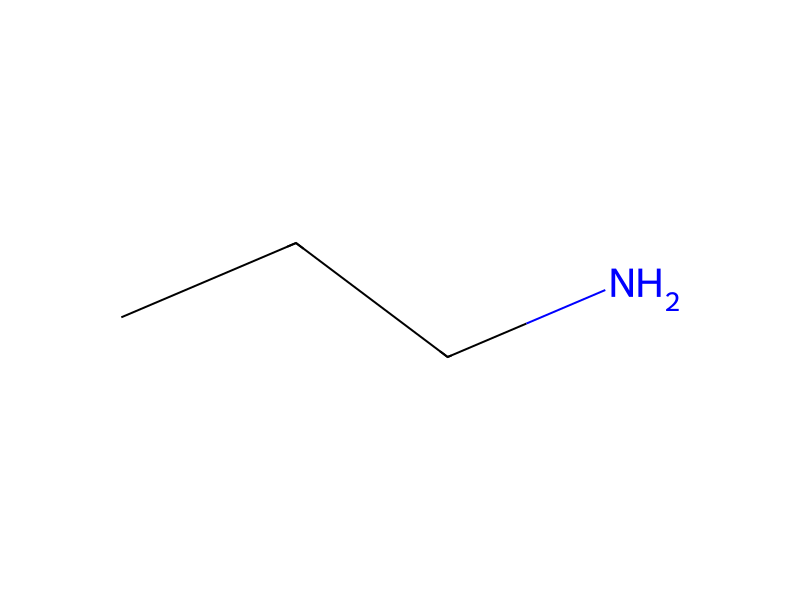



Conditions
- Temperature
- 100 °C
Procedure
A mixture of 4-chloro-3-methyl-1-(2-pyridinyl)-1H-pyrazolo[3,4-b]quinoline (1.47 g, 5.00 mmol) and propylamine (2.96 g, 50.0 mmol) was heated and stirred at 100° C. for 6 hours in a sealed stainless tube. The solution was allowed to cool to room temperature and poured into water, and the organic matter was extracted with ethyl acetate. The extract was washed with saturated brine, dried over anhydrous sodium sulfate, and evaporated under reduced pressure. The residue thus obtained was purified by basic silica gel column chromatography (hexane:ethyl acetate=1:1), and the resulting crystals were recrystallized from ethyl acetate/hexane to give the title compound (1.14 g, 72% yield).
Workup
- temperaturewas heated
- temperatureto cool to room temperature
- extractionthe organic matter was extracted with ethyl acetate
- washThe extract was washed with saturated brine
- dry with materialdried over anhydrous sodium sulfate
- customevaporated under reduced pressure
- customThe residue thus obtained
- customwas purified by basic silica gel column chromatography (hexane:ethyl acetate=1:1)
- customthe resulting crystals were recrystallized from ethyl acetate/hexane
Sources & evidence
- ORD record
- ord-f17486085ccc492c89affa76f8efdda9
- Source dataset
- uspto-grants-2005_09
- Patent number
- US06949648B2
Reaction notes
Loading…