Quinoline → 1-[4-(7-Trifluoromethyl-benzo[b]thiophen-3-yl)-piperidin-1-yl]-ethanone
Reaction equation

[C:1]([N:4]1[CH2:9][CH2:8][CH:7]([C:10]2[C:11]3[CH:21]=[CH:20][CH:19]=[C:18]([C:22]([F:25])([F:24])[F:23])[C:12]=3[S:13][C:14]=2C(O)=O)[CH2:6][CH2:5]1)(=[O:3])[CH3:2].N1C2C(=CC=CC=2)C=CC=1>C(OCC)(=O)C>[F:25][C:22]([F:23])([F:24])[C:18]1[C:12]2[S:13][CH:14]=[C:10]([CH:7]3[CH2:6][CH2:5][N:4]([C:1](=[O:3])[CH3:2])[CH2:9][CH2:8]3)[C:11]=2[CH:21]=[CH:20][CH:19]=1Participants
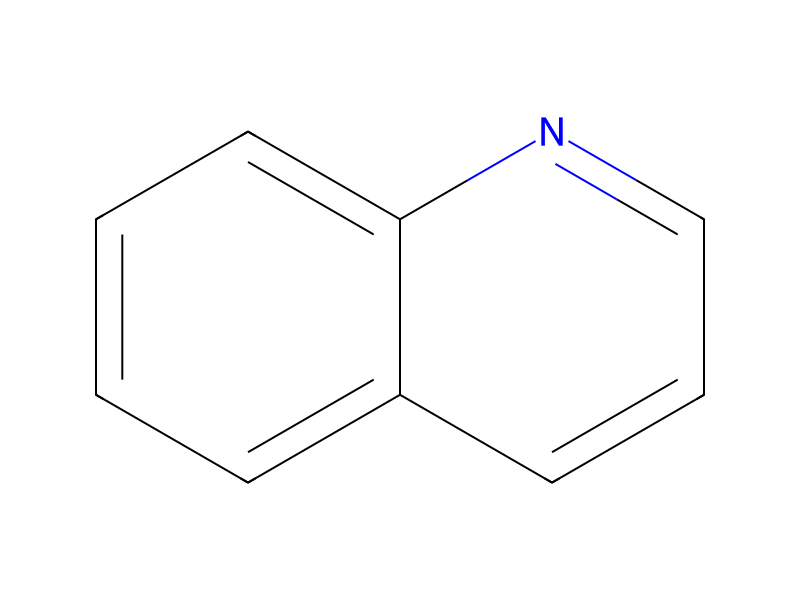



Conditions
- Temperature
- 200 °C
Procedure
A mixture of 3-(1-acetyl-piperidin-4-yl)-7-trifluoromethyl-benzo[b]thiophene-2-carboxylic acid (4.13 g, 1.1 mmol), Cu powder (0.706 g, 11.1 mmol), and quinoline (20 mL) was heated to 200° C. under nitrogen. After 10 min, no gas evolution was observed and the reaction cooled at room temperature. The mixture was diluted with ethyl acetate (100 mL), filtered through a Celite bed and the filtrate washed with 1 N HCl (2×100 mL), 5% aqueous potassium carbonate (100 mL), water (100 mL), and brine (100 mL) successively. The organics were dried over magnesium sulfate, filtered, and concentrated to give an amber oil. The oil was chromatographed on silica, eluting with 10% methanol/ethyl acetate to afford 2.69 g (74%) of the desired product as a tan solid.
Workup
- temperaturethe reaction cooled at room temperature
- filtrationfiltered through a Celite bed
- washthe filtrate washed with 1 N HCl (2×100 mL), 5% aqueous potassium carbonate (100 mL), water (100 mL), and brine (100 mL) successively
- dry with materialThe organics were dried over magnesium sulfate
- filtrationfiltered
- concentrationconcentrated
- customto give an amber oil
- customThe oil was chromatographed on silica
- washeluting with 10% methanol/ethyl acetate
Sources & evidence
- ORD record
- ord-7ade7fea02c1462aba4f77f659c9ef32
- Source dataset
- uspto-grants-2010_08
- Patent number
- US07772252B2
Reaction notes
Loading…