Water → 7-(4-bromobutoxy)-3,4-dihydro-2(1H)-quinolinone
Reaction equation

[Br:1][CH2:2][CH2:3][CH2:4][CH2:5]Br.[OH:7][C:8]1[CH:17]=[C:16]2[C:11]([CH2:12][CH2:13][C:14](=[O:18])[NH:15]2)=[CH:10][CH:9]=1.[OH-].[Na+].O>CC(N(C)C)=O.C1CCCCC1>[Br:1][CH2:2][CH2:3][CH2:4][CH2:5][O:7][C:8]1[CH:17]=[C:16]2[C:11]([CH2:12][CH2:13][C:14](=[O:18])[NH:15]2)=[CH:10][CH:9]=1Participants






Procedure
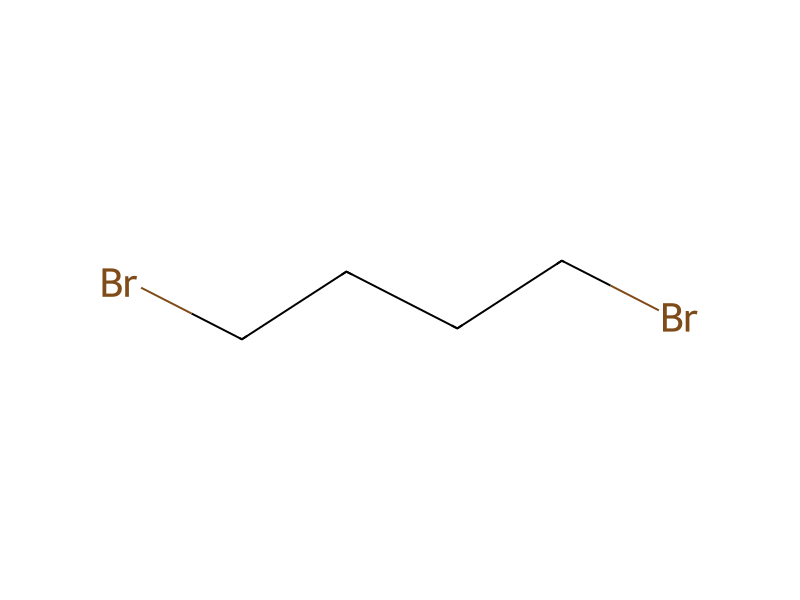
1,4-dibromo butane (509 ml) was added to a stirred solution of 7-hydroxy-3,4-dihydrocarbostyril (100 gm) in dimethylacetamide (500 ml) at ambient temperature. The reaction mixture was heated at 36° to 40° C. Sodium hydroxide (33.1 gm) was added to the reaction mixture at the interval of 30 min (Complete the addition of sodium hydroxide in 9 equal fractions in 4.0 hours). The reaction mixture was cooled at ambient temperature and D.M Water was added to it. The reaction mixture was extracted with ethylacetate. Organic layer was separated and washed with 5% brine and finally dried over sodium sulphate. The organic layer was evaporated to dryness under reduced pressure (10 mm) at 45° C. to obtain residue. To the residue cyclohexane (1000 ml) was added to give of 7-(4-bromobutoxy)-3,4-dihydrocarbostyril.
Workup
- temperatureThe reaction mixture was heated at 36° to 40° C
- extractionThe reaction mixture was extracted with ethylacetate
- customOrganic layer was separated
- washwashed with 5% brine
- dry with materialfinally dried over sodium sulphate
- customThe organic layer was evaporated to dryness under reduced pressure (10 mm) at 45° C.
- customto obtain residue
Sources & evidence
- ORD record
- ord-a2ac5476bbdb4390a7c999ce2e318aa0
- Source dataset
- uspto-grants-2010_08
- Patent number
- US07777039B2
Reaction notes
Loading…