Ammonia → 6-Chloro-3-methyl-5-nitroquinoline
Reaction equation

[Cl:1][C:2]1[CH:3]=[C:4]2[C:9](=[CH:10][CH:11]=1)[N:8]=[CH:7][C:6]([CH3:12])=[CH:5]2.[N+:13]([O-])([O-:15])=[O:14].[K+].N>OS(O)(=O)=O>[Cl:1][C:2]1[C:3]([N+:13]([O-:15])=[O:14])=[C:4]2[C:9](=[CH:10][CH:11]=1)[N:8]=[CH:7][C:6]([CH3:12])=[CH:5]2Participants
Reactant 3

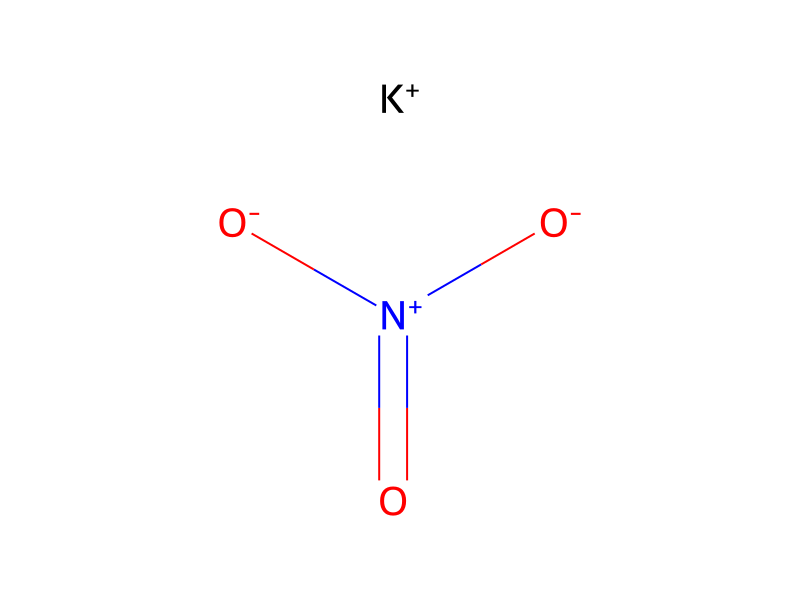

Product 1

Reagents, catalysts & solvents 1

Conditions
- Temperature
- 0 °C
Procedure
To a solution of 6-chloro-3-methylquinoline (6.3 g, 35.6 mmol) in concentrated H2SO4 (22 mL) was added dropwise a solution of KNO3 (3.77 g, 37.2 mmol) in concentrated H2SO4 (22 mL) at 0° C. Care was taken that the temperature of the reaction mixture did not rise above 10° C. The reaction mixture was stirred for 1 h at 0° C. and 12 h at room temperature. It was then poured onto ice (150 g) and rendered basic (pH=10) with a 33% aqueous ammonia solution. A dark yellow precipitate was formed, which was filtered off, thoroughly rinsed with water and dried in vacuo to afford the title compound as a brown solid (7.1 g, 31.9 mmol, 90%). 1H NMR (400 MHz, CDCl3, 298 K): δ=8.89 (s, 1H), 8.20 (d, J=9.0 Hz, 1H), 7.82 (s, 1H), 7.72 (s, 1H), 2.59 (s, 3H). MS (ES+): 223 (M(C10H735ClN2O2)+H)+.
Workup
- customdid not rise above 10° C
- additionIt was then poured onto ice (150 g)
- customA dark yellow precipitate was formed
- filtrationwhich was filtered off
- washthoroughly rinsed with water
- customdried in vacuo
Sources & evidence
- ORD record
- ord-272b148aceb748feaa71967785c7b85f
- Source dataset
- uspto-grants-2010_08
- Patent number
- US07781438B2
Reaction notes
Loading…