Benzene → Octylbenzene
Reaction equation

[CH2:1]=[CH:2][CH2:3][CH2:4][CH2:5][CH2:6][CH2:7][CH3:8].[CH:9]1[CH:14]=[CH:13][CH:12]=[CH:11][CH:10]=1>>[CH2:1]([C:9]1[CH:14]=[CH:13][CH:12]=[CH:11][CH:10]=1)[CH2:2][CH2:3][CH2:4][CH2:5][CH2:6][CH2:7][CH3:8]Participants
3
Reactant 2

Product 1

Procedure
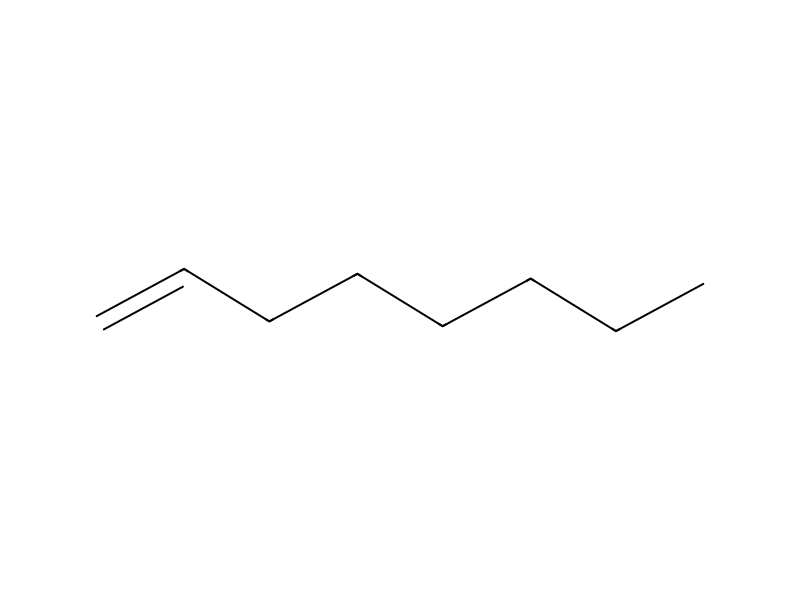
The alkylation of benzene with oct-1-ene. The reaction gave a 70% yield (by GC) of three isomers of octylbenzene. The isomer ratio was determined to be 0.75:1.00:2.03, with the 4-phenyloctene as the major product and 2-phenyloctene as the minor product. During the course of the reaction, isomeration of oct-1-ene to a number of isomers of octene was observed, and the rate of this isomerisation process was considerably faster that the alkylation reaction. It was found that the ionic liquid/catalyst combination remained active on a second run. To confirm that the minor product of the reaction was an octene dimer, the same reaction was performed, but without any benzene present (shown below).
Sources & evidence
- ORD record
- ord-2b3edca29a174aeb8a615a414de909fd
- Source dataset
- uspto-grants-2010_08
- Patent number
- US07781625B2
Reaction notes
Loading…