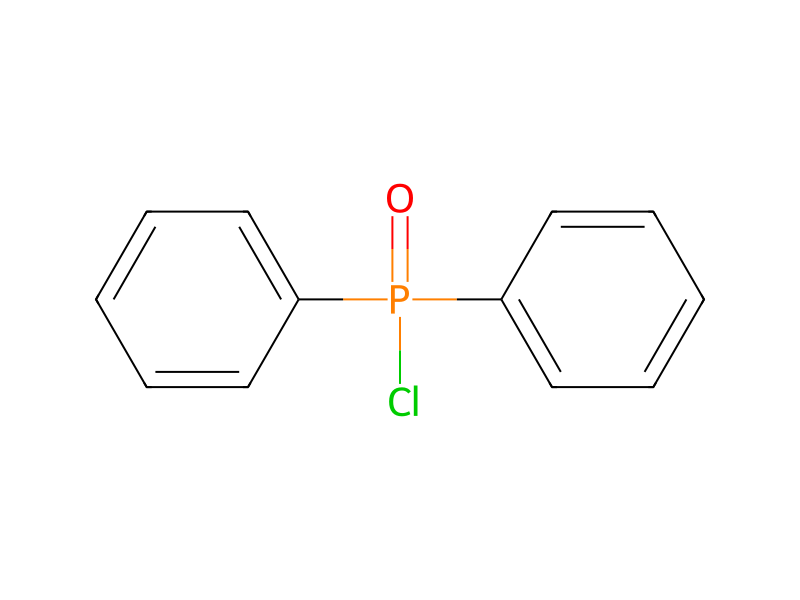
Diphenylphosphinic chloride → (5R, 6S)-2-[(2S, 4S)-2-Carbamoyl-1,1-dimethylpyrrolidinium-4-ylthio]-6-[(1R)-1-hydroxyethyl]-1-carbapen-2-em-3-carboxylate
Reaction equation

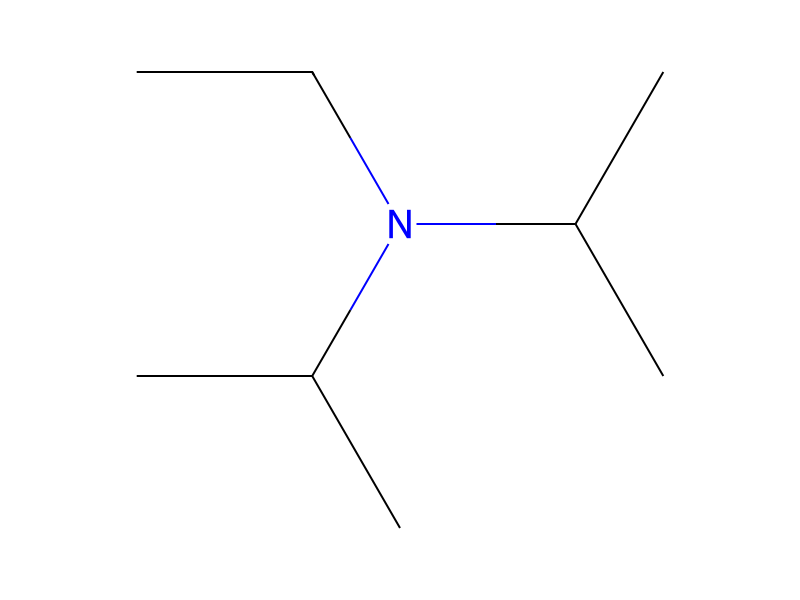
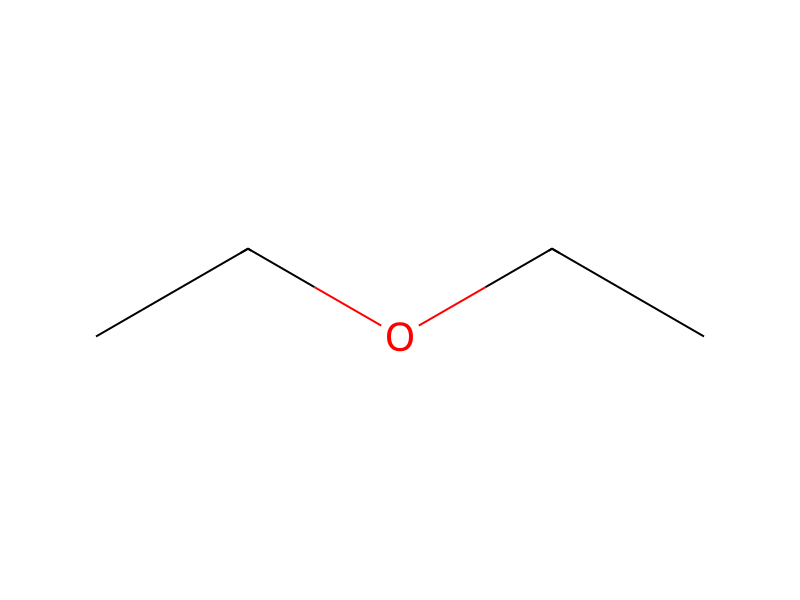
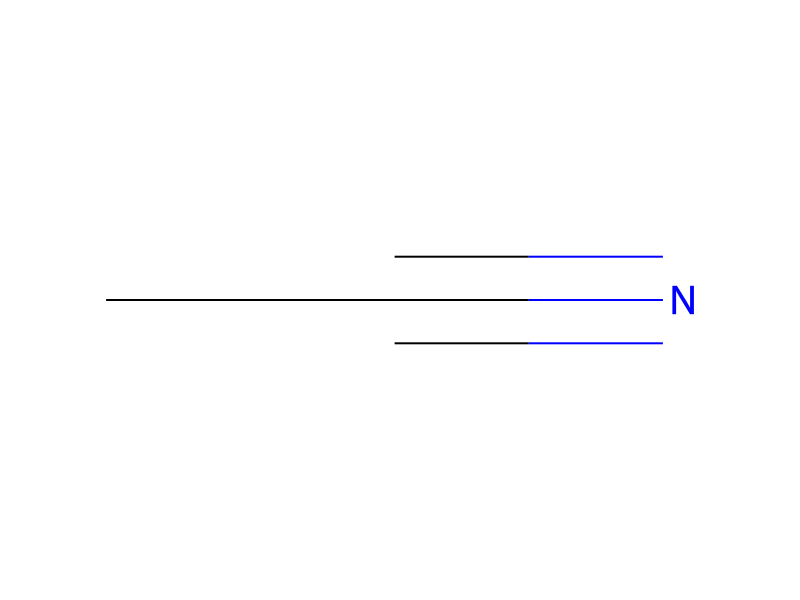
C(N(C(C)C)CC)(C)C.C1(P(Cl)(C2C=CC=CC=2)=O)C=CC=CC=1.[OH:25][C@@H:26]([C@H:28]1[C:48](=[O:49])[N:30]2[CH:31]([C:35]([O:37]CC3C=CC([N+]([O-])=O)=CC=3)=[O:36])[C:32](=O)[CH2:33][C@H:29]12)[CH3:27].[C:50]([C@@H:53]1[CH2:57][C@H:56]([SH:58])[CH2:55][N+:54]1([CH3:60])[CH3:59])(=[O:52])[NH2:51]>C(#N)C.C(OCC)C>[C:50]([C@@H:53]1[CH2:57][C@H:56]([S:58][C:32]2[CH2:33][C@@H:29]3[C@@H:28]([C@H:26]([OH:25])[CH3:27])[C:48](=[O:49])[N:30]3[C:31]=2[C:35]([O-:37])=[O:36])[CH2:55][N+:54]1([CH3:60])[CH3:59])(=[O:52])[NH2:51]Participants
Reactant 4


Product 1

Reagents, catalysts & solvents 2
Procedure
210 μl of diisopropylethylamine and 250 μl of diphenylphosphoryl chloride were simultaneously added, whilst ice-cooling, to a solution of 400 mg of 4-nitrobenzyl (5R, 6S)-6-[(1R)-1-hydroxyethyl]-2-oxo-1-carbapenam-3-carboxylate dissolved in 5 ml of dry acetronitrile, and the mixture was stirred for 1 hour, whilst ice-cooling. At the end of this time, a solution of 447 mg of the crude (2S, 4S)-2-carbamoyl-1,1-dimethyl-4-mercaptopyrrolidinium salt prepared as described in Example 1-(1) in 5 ml of dry acetonitrile was added to the mixture, whilst ice-cooling, and then the mixture was allowed to stand for 4 hours at the same temperature and then for 2 days in a refrigerator. The reaction mixture was then poured into diethyl ether and the resulting deposit was washed repeatedly by decantation. The crude product was dissolved in a mixture of 30 ml of tetrahydrofuran and 30 ml of a 0.1M phosphate buffer (pH 7.0) and hydrogenated at room temperature for 2.5 hours in the presence of 450 mg of 10% w/w palladium-on-charcoal. At the end of this time, insoluble materials were removed by filtration using a Celite filter aid. The aqueous layer was concentrated by evaporation under reduced pressure, and the residue was transferred to a column packed with Diaion HP-20AG (Mitsubishi Chemicals Industries, Ltd.). Fractions eluted with water were collected and lyophilized to afford the title compound as a powder. This was further purified using a Lobar column (Merck, LiChroprep RP-8 size B) and fractions eluted with a 5% by volume aqueous methanolic solution were collected and concentrated by evaporation under reduced pressure followed by lyophilization, to afford 208 mg of the title compound.
Workup
- dissolutiondissolved in 5 ml of dry acetronitrile
- temperaturecooling
- additionwas added to the mixture, whilst ice-
- temperaturecooling
- waitto stand for 4 hours at the same temperature
- waitfor 2 days in a refrigerator
- washthe resulting deposit was washed repeatedly by decantation
- dissolutionThe crude product was dissolved in a mixture of 30 ml of tetrahydrofuran and 30 ml of a 0.1M phosphate buffer (pH 7.0) and hydrogenated at room temperature for 2.5 hours in the presence of 450 mg of 10% w/w palladium-on-charcoal
- customAt the end of this time, insoluble materials were removed by filtration
- filtrationfilter aid
- concentrationThe aqueous layer was concentrated by evaporation under reduced pressure
- washFractions eluted with water
- customwere collected
Sources & evidence
- ORD record
- ord-86a7cfd3b625462386fd3ee3e7adacc5
- Source dataset
- uspto-grants-1993_09
- Patent number
- US05242914
Reaction notes
Loading…