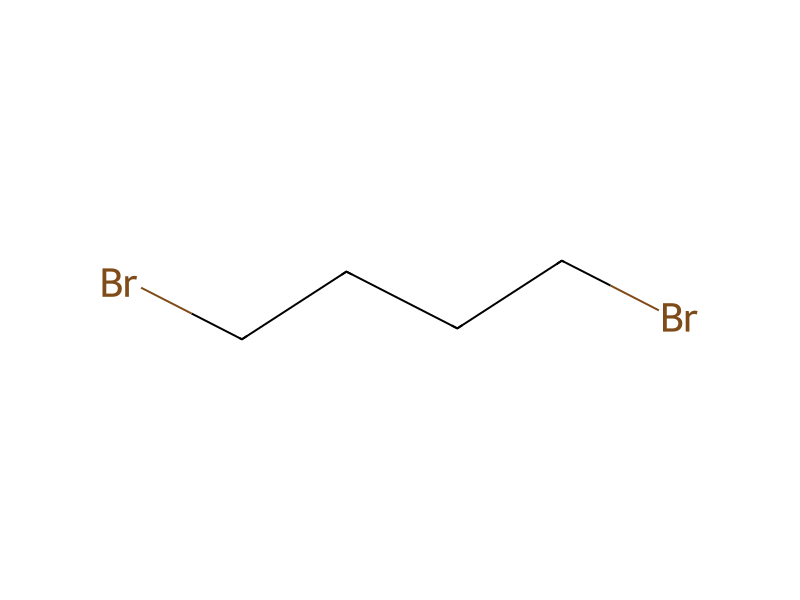
1,4-Dibromobutane → HCID 57467339, compound
Reaction equation

[Cl:1][C:2]1[CH:3]=[C:4]([CH:19]=[CH:20][CH:21]=1)[CH2:5][CH:6]1[C:15]2[C:10](=[CH:11][CH:12]=[C:13]([O:16][CH3:17])[CH:14]=2)[CH2:9][CH2:8][CH:7]1[NH2:18].Br[CH2:23][CH2:24][CH2:25][CH2:26]Br.C(N(CC)CC)C>C(#N)C>[Cl:1][C:2]1[CH:3]=[C:4]([CH:19]=[CH:20][CH:21]=1)[CH2:5][CH:6]1[C:15]2[C:10](=[CH:11][CH:12]=[C:13]([O:16][CH3:17])[CH:14]=2)[CH2:9][CH2:8][CH:7]1[N:18]1[CH2:26][CH2:25][CH2:24][CH2:23]1Participants
5
Reactant 3


Product 1

Reagents, catalysts & solvents 1

Procedure
1-(3-Chlorobenzyl)-7-methoxy-1,2,3,4-tetrahydronaphthalen-2-amine (6 g, 19.88 mmol) was dissolved in acetonitrile (150 mL). 1,4-Dibromobutane (2.61 mL, 21.87 mmol) and triethylamine (6.1 mL, 43.7 mmol) were added and the reaction mixture heated under reflux for 3 h. The reaction mixture was poured on ice and extracted with dichloromethane. The combined organic extracts were successively washed with water and brine, dried (MgSO4) and the solvent was evaporated in vacuo. The crude product (6.6 g) was used for the next step without further purification.
Workup
- temperaturethe reaction mixture heated
- temperatureunder reflux for 3 h
- additionThe reaction mixture was poured on ice
- extractionextracted with dichloromethane
- washThe combined organic extracts were successively washed with water and brine
- dry with materialdried (MgSO4)
- customthe solvent was evaporated in vacuo
- customThe crude product (6.6 g) was used for the next step without further purification
Sources & evidence
- ORD record
- ord-75c3d5b6f18f458f847332d24770d4e7
- Source dataset
- uspto-grants-2015_08
- Patent number
- US09096619B2
Reaction notes
Loading…