Phosgene → 2,4-Hexadienoic acid, anhydride, (all-E)-
反応式

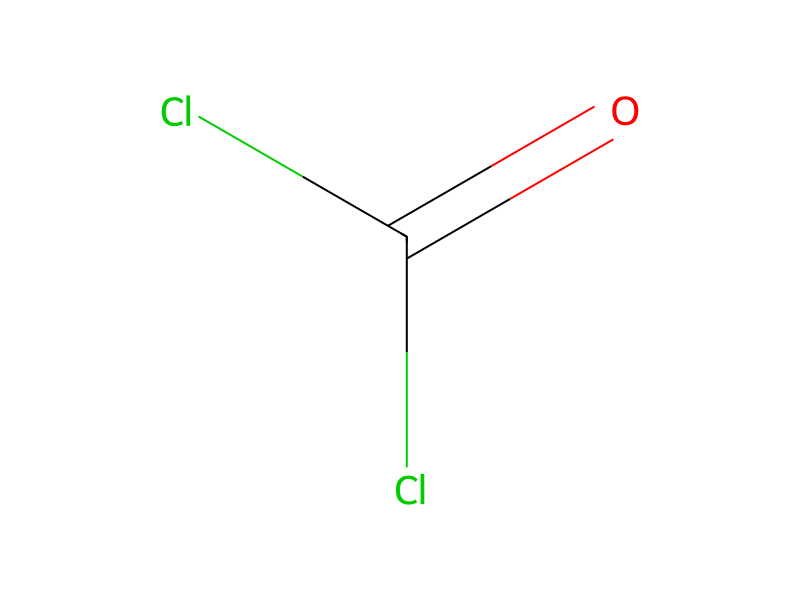
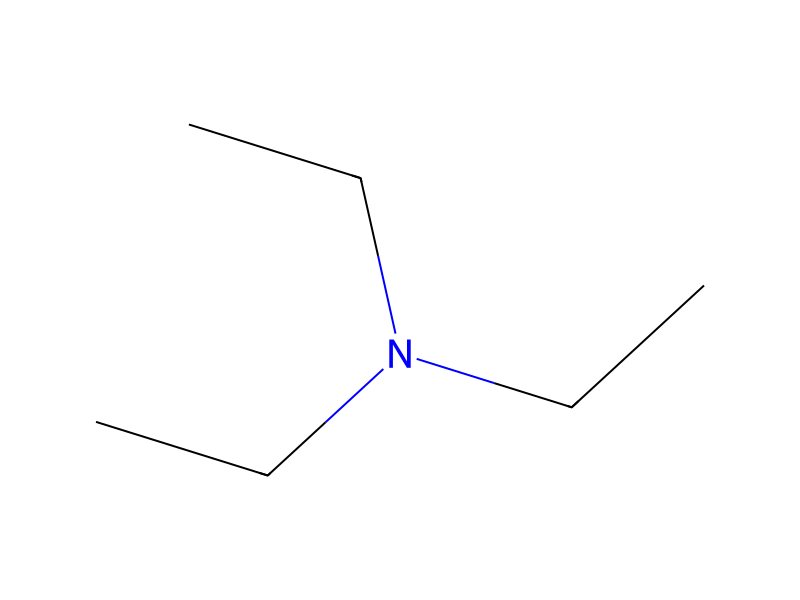
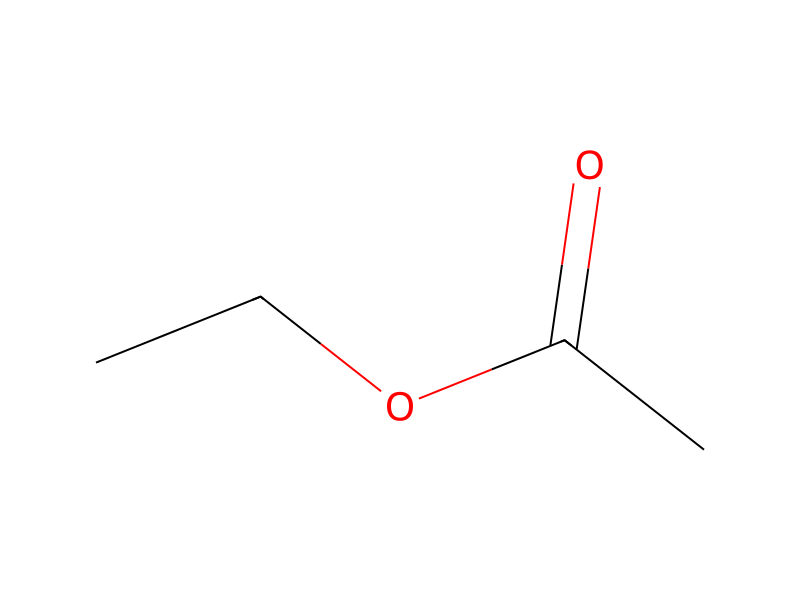
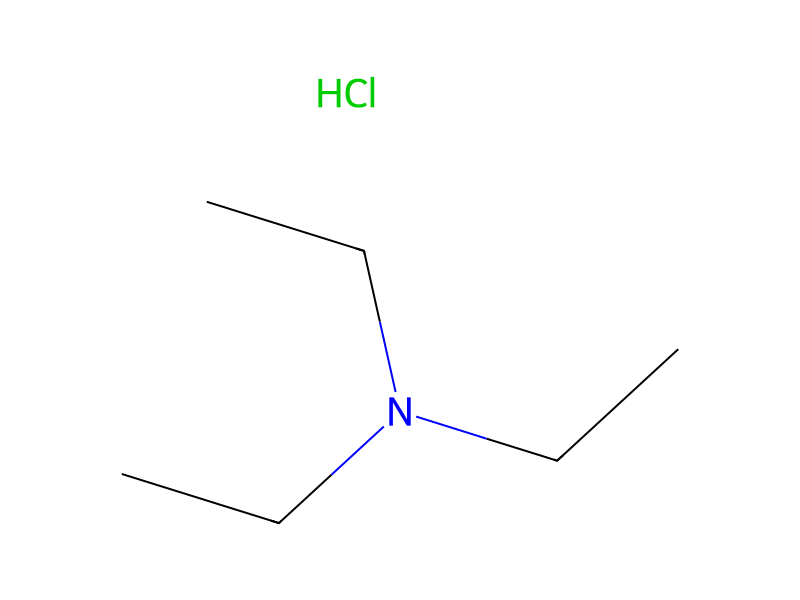
C(Cl)(Cl)=O.[C:5]([OH:12])(=[O:11])/[CH:6]=[CH:7]/[CH:8]=[CH:9]/[CH3:10].C(N([CH2:18][CH3:19])CC)C.Cl.C(N([CH2:26][CH3:27])CC)C.[C:28](OCC)(=[O:30])[CH3:29]>>[C:5]([O:12][C:28](=[O:30])/[CH:29]=[CH:26]/[CH:27]=[CH:18]/[CH3:19])(=[O:11])/[CH:6]=[CH:7]/[CH:8]=[CH:9]/[CH3:10]参加物


実験手順
In a 1000 ml four-neck flask, equipped with thermometer, intense cooler, submerged tube for phosgene and KPG agitator, 100 g (0.88 mol) of all-E-sorbic acid and 600 g of ethyl acetate are charged. To the resultant suspension are added 101.2 g (1 mol) of triethylamine, whereupon a clear yellow solution forms. The batch was then cooled using a cooling bath to 0-5° C. Then, in the course of 4 hours at 0-5° C., 50.7 g (0.51 mol) of phosgene were introduced, wherein the deposition of the triethylamine hydrochloride is immediately observed. After completion of phosgene metering, the batch was stirred overnight at RT. After examination for freedom from phosgene, the batch was filtered and the suction filter residue was washed with 200 ml of ethyl acetate. The resultant brownish-yellow filtrate was concentrated on a rotary evaporator in a vacuum. The resultant brown oil (90.7 g) was placed under nitrogen into a clear glass bottle and rapidly solidified at room temperature. A GC analysis gave a content of 85.9 weight % of all-E-sorbic anhydride; 9.13 weight % unreacted sorbic acid and 0.31% sorbyl chloride. In 1H-NMR, a content of 94.5 weight % anhydride and 2.9 weight % of triethylamine was observed. Isomerization was not observed. Based on the GC content, a yield of 85.6% of theory was determined, based on sorbic acid used.
後処理
- customIn a 1000 ml four-neck flask, equipped with thermometer, intense cooler
- additionare charged
- temperatureThe batch was then cooled
- customto 0-5° C
- filtrationAfter examination for freedom from phosgene, the batch was filtered
- filtrationthe suction filter residue
- washwas washed with 200 ml of ethyl acetate
- concentrationThe resultant brownish-yellow filtrate was concentrated on a rotary evaporator in a vacuum
- customrapidly solidified at room temperature
出典と根拠
- ORDレコード
- ord-43042d1e84c64483bc0e9b36b2b528f8
- 出典データセット
- uspto-grants-2015_08
- 特許番号
- US09102613B2
反応ノート
読み込み中…