Sulfuric Acid → (2,3-Dimethoxyphenyl)-[1-[2-(4-fluorophenyl)ethyl]piperidin-4-yl]methanol
Reaction equation

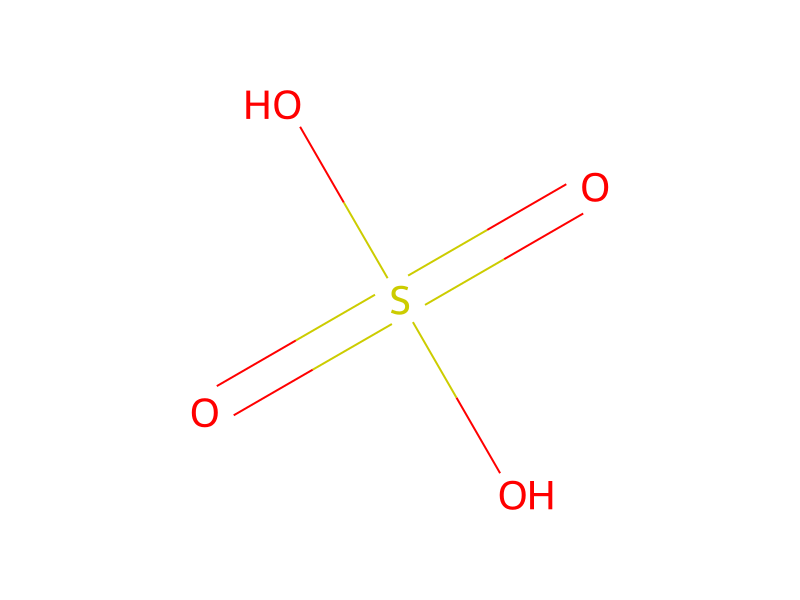
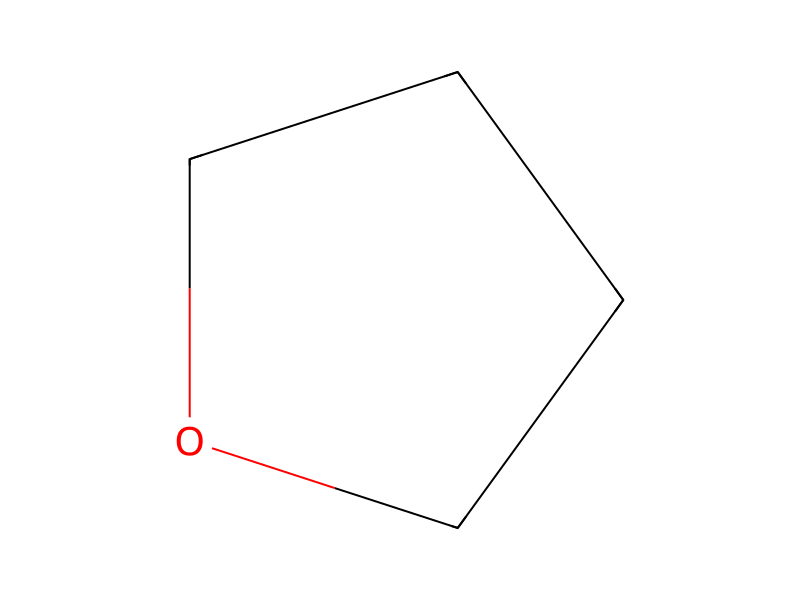
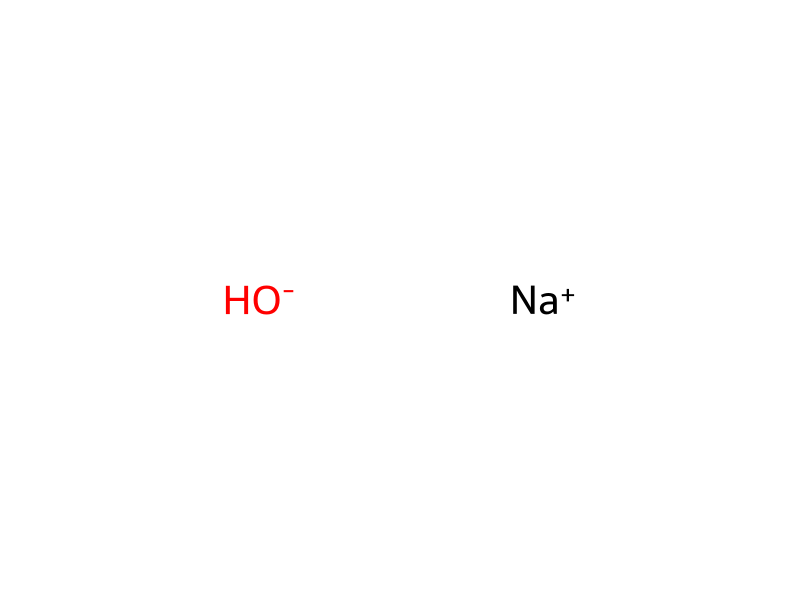
[CH3:1][O:2][C:3]1[C:8]([O:9][CH3:10])=[CH:7][CH:6]=[CH:5][C:4]=1[C@H:11]([CH:13]1[CH2:18][CH2:17][N:16]([CH2:19][CH2:20][C:21]2[CH:26]=[CH:25][C:24]([F:27])=[CH:23][CH:22]=2)[CH2:15][CH2:14]1)[OH:12].O1CCCC1.S(=O)(=O)(O)O.[OH-].[Na+]>O>[CH3:1][O:2][C:3]1[C:8]([O:9][CH3:10])=[CH:7][CH:6]=[CH:5][C:4]=1[CH:11]([CH:13]1[CH2:14][CH2:15][N:16]([CH2:19][CH2:20][C:21]2[CH:26]=[CH:25][C:24]([F:27])=[CH:23][CH:22]=2)[CH2:17][CH2:18]1)[OH:12]Participants
Reactant 4

Product 1

Reagents, catalysts & solvents 1
Procedure
In a 1-neck 500 mL glass round bottom flask equipped with a cold water condenser, magnetic stirrer and a nitrogen line, 97.5% pure (S)-α-(2,3-dimethoxyphenyl)-1-[2-(4-fluorophenyl)ethyl]-4-piperidinemethanol (3c) (20.43 g, 55 mmol), tetrahydrofuran (71.5 mL), water (35 mL) and sulfuric acid (19.27 g, 196 mmol) were combined. The solution was assayed initially and showed 14.7 wt % (20.4 g) (S)-α-(2,3-dimethoxyphenyl)-1-[2-(4-fluorophenyl)ethyl]-4-piperidinemethanol (3c) in solution. The solution was heated to reflux for 12 hours. The solution was cooled to room temperature and chilled in an ice bath for the neutralization. To the reaction solution, 50% NaOH (30.1 g, 0.38 mol) was added slowly. The addition was exothermic. The tetrahydrofuran was then removed by rotary evaporation. The residue was dissolved in toluene (72 mL). Excess water (30 mL) was added to the mixture to help keep the sodium salt dissolved. The phases were agitated and heated to 70° C. for 30 minutes. The phases were separated and the bottom aqueous phase was extracted a second time with toluene (37 mL). The organic phases were combined and assayed. The phase cut must be done warm to ensure that the α-(2,3-dimethoxyphenyl)-1-[2-(4-fluorophenyl)ethyl]-4-piperidinemethanol (5) stays in solution and the sodium sulfate salt remains dissolved in the aqueous phase. The assay of the top organic phases showed 16.8 wt % (19.6 g) α-(2,3-dimethoxyphenyl)-1-[2-(4-fluorophenyl)ethyl]-4-piperidinemethanol (5) in solution. There was no residual product left in the aqueous phase following the second extraction. The toluene solution was stripped to a white solid by rotary evaporation. The solid residue was dissolved in 2-propanol (25.5 g) to give a 30 wt % solution of α-(2,3-dimethoxyphenyl)-1-[2-(4-fluorophenyl)ethyl]-4-piperidinemethanol (5). The solution was heated to reflux and slowly cooled to room temperature. The solution crystallized and was chilled in an ice bath for 30 minutes. Isolation of the slurry was done by suction filtration. The wet cake was washed with 15 mL of chilled 2-propanol and then dried to a constant weight. Analysis of the mother liquors showed 9.0 wt % (5.71 g) α-(2,3-dimethoxyphenyl)-1-[2-(4-fluorophenyl)ethyl]-4-piperidinemethanol (5). The solution was then concentrated on the roto-vap to half its original weight and crystallized. The crystals were chilled in an ice bath and suction filtered through a coarse sintered glass funnel. The assay of the mother liquors from the second crop showed 4.0 wt % (1.11 g) α-(2,3-dimethoxyphenyl)-1-[2-(4-fluorophenyl)ethyl]-4-piperidinemethanol (5) in solution. The two crops of crystals were combined and dried to a constant weight. Isolation of the slurry gave 100% pure α-(2,3-dimethoxyphenyl)-1-[2-(4-fluorophenyl)ethyl]-4-piperidinemethanol (5) crystals in a 87.4% yield having an optical purity of 16.3% (S)-α-(2,3-dimethoxyphenyl)-1-[2-(4-fluorophenyl)ethyl]-4-piperidinemethanol (3c). Accounting for the weight left in the mother liquor, the yield was raised to 92.8%.
Workup
- customIn a 1-neck 500 mL glass round bottom flask equipped with a cold water condenser, magnetic stirrer
- temperatureThe solution was heated
- temperatureto reflux for 12 hours
- temperaturechilled in an ice bath for the neutralization
- additionThe addition
- customThe tetrahydrofuran was then removed by rotary evaporation
- dissolutionThe residue was dissolved in toluene (72 mL)
- additionExcess water (30 mL) was added to the mixture
- dissolutiondissolved
- temperatureheated to 70° C. for 30 minutes
- customThe phases were separated
- extractionthe bottom aqueous phase was extracted a second time with toluene (37 mL)
- temperatureThe phase cut must be done warm
- dissolutionthe sodium sulfate salt remains dissolved in the aqueous phase
- waitleft in the aqueous phase
- extractionthe second extraction
- customThe toluene solution was stripped to a white solid by rotary evaporation
- dissolutionThe solid residue was dissolved in 2-propanol (25.5 g)
Sources & evidence
- ORD record
- ord-8760f9230a2441c49b706cfe2a646371
- Source dataset
- uspto-grants-2004_03
- Patent number
- US06713627B2
Reaction notes
Loading…