Pyridine → Benzyl N-(4-hydroxybutyl)carbamate
Reaction equation

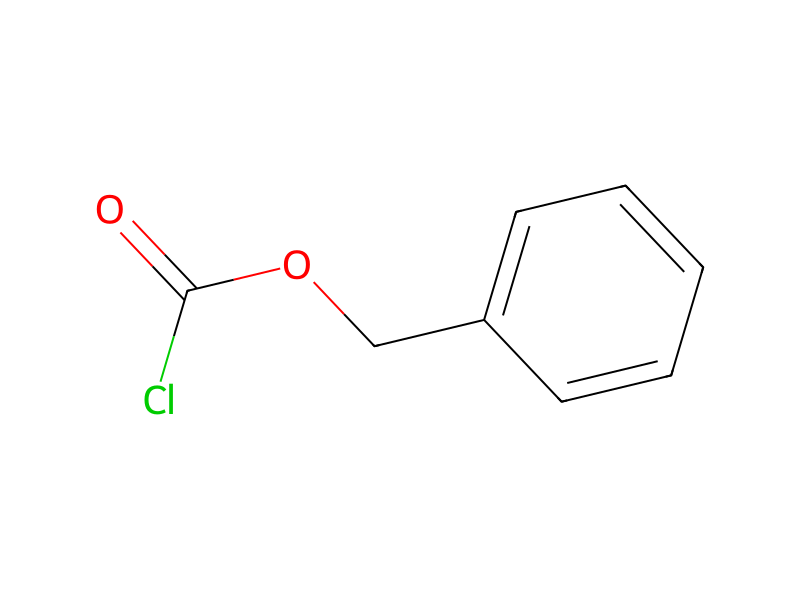
[NH2:1][CH2:2][CH2:3][CH2:4][CH2:5][OH:6].N1C=CC=CC=1.[CH2:13]([O:20][C:21](Cl)=[O:22])[C:14]1[CH:19]=[CH:18][CH:17]=[CH:16][CH:15]=1>ClCCl>[OH:6][CH2:5][CH2:4][CH2:3][CH2:2][NH:1][C:21](=[O:22])[O:20][CH2:13][C:14]1[CH:19]=[CH:18][CH:17]=[CH:16][CH:15]=1Participants
5
Reactant 3


Product 1

Reagents, catalysts & solvents 1

Procedure
A solution of 4-amino-1-butanol (7.68 g) and pyridine (7.00 g) in dichloromethane (100 mL) was chilled in an ice bath and a solution of benzylchloroformate (14.37 g) in dichloromethane (100 mL) was slowly added with stirring over a period of thirty minutes. The ice bath was removed and the reaction was stirred for an additional 16 hours. Hydrochloric acid (1.2 M, 200 mL) was added and phases were separated. The organic phase was dried (MgSO4), filtered and concentrated under reduced pressure. The resulting residue was recrystallized from toluene and dried under vacuum to provide 5.15 g of benzyl (4-hydroxybutyl)carbamate.
Workup
- customThe ice bath was removed
- stirringthe reaction was stirred for an additional 16 hours
- additionHydrochloric acid (1.2 M, 200 mL) was added
- customphases were separated
- dry with materialThe organic phase was dried (MgSO4)
- filtrationfiltered
- concentrationconcentrated under reduced pressure
- customThe resulting residue was recrystallized from toluene
- customdried under vacuum
Sources & evidence
- ORD record
- ord-9eb057dddaf64ecaaa387cad8408942b
- Source dataset
- uspto-grants-2015_08
- Patent number
- US09107958B2
Reaction notes
Loading…