5-Nitroindoline → HCID 86671002, compound
Reaction equation

[N+:1]([C:4]1[CH:5]=[C:6]2[C:10](=[CH:11][CH:12]=1)[NH:9][CH2:8][CH2:7]2)([O-:3])=[O:2].O=[C:14]1[CH2:19][CH2:18][N:17]([C:20]([O:22][C:23]([CH3:26])([CH3:25])[CH3:24])=[O:21])[CH2:16][CH2:15]1.[Na]>C(O)(=O)C>[N+:1]([C:4]1[CH:5]=[C:6]2[C:10](=[CH:11][CH:12]=1)[N:9]([CH:14]1[CH2:19][CH2:18][N:17]([C:20]([O:22][C:23]([CH3:26])([CH3:25])[CH3:24])=[O:21])[CH2:16][CH2:15]1)[CH2:8][CH2:7]2)([O-:3])=[O:2]Participants
5
Reactant 3

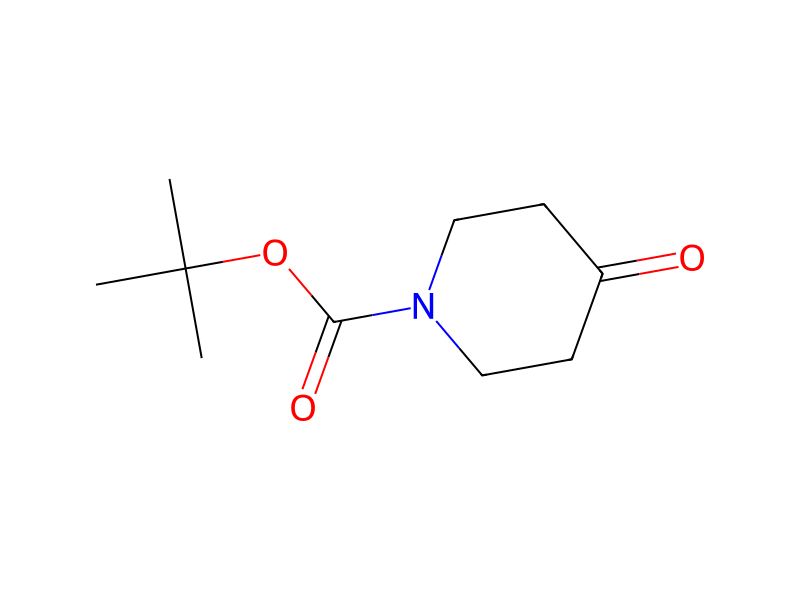

Product 1

Reagents, catalysts & solvents 1

Procedure
5-Nitroindoline (12.18 mmol, 2 g) was stirred in acetic acid (50 mL) in an ice bath. tert-Butyl 4-oxopiperidine-1-carboxylate (14.62 mmol, 2.91 g) was added, followed by the portionwise addition of sodium triacetoxyhydroborate (18.27 mmol, 3.87 g). The reaction mixture was stirred for 1 hour at room temperature. The reaction mixture was concentrated at reduced pressure. The resulting residue was taken up in ethyl acetate and washed with saturated sodium bicarbonate solution. The organic phase was concentrated at reduced pressure to afford the title compound (5.2 g).
Workup
- concentrationThe reaction mixture was concentrated at reduced pressure
- washwashed with saturated sodium bicarbonate solution
- concentrationThe organic phase was concentrated at reduced pressure
Sources & evidence
- ORD record
- ord-eba63af6ad8448449efa8d717f9ce57b
- Source dataset
- uspto-grants-2015_08
- Patent number
- US09108939B2
Reaction notes
Loading…