Potassium Carbonate → HCID 178479762, compound
Reaction equation

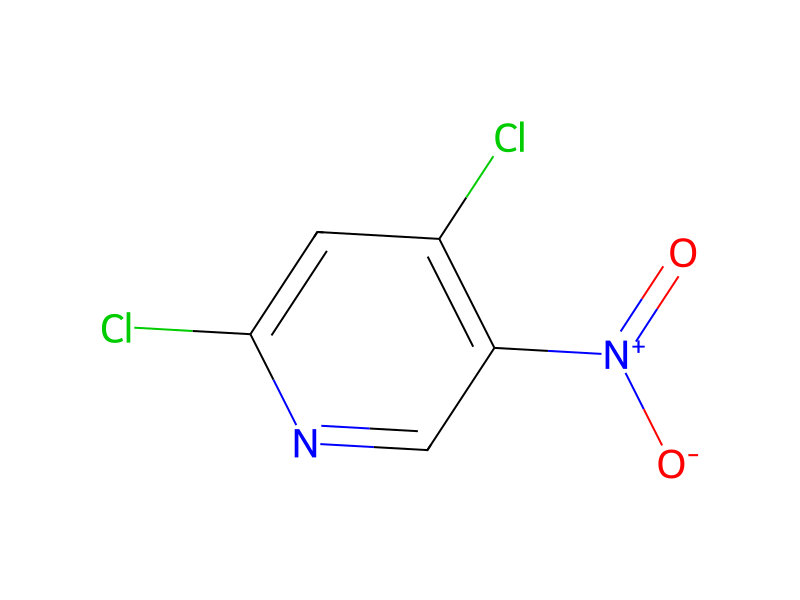
[NH2:1][C@H:2]1[CH2:7][CH2:6][C@H:5]([C:8]([OH:10])=[O:9])[CH2:4][CH2:3]1.C(=O)([O-])[O-].[K+].[K+].[Cl:17][C:18]1[CH:23]=[C:22](Cl)[C:21]([N+:25]([O-:27])=[O:26])=[CH:20][N:19]=1>O.O1CCOCC1>[ClH:17].[Cl:17][C:18]1[CH:23]=[C:22]([NH:1][C@H:2]2[CH2:7][CH2:6][C@H:5]([C:8]([OH:10])=[O:9])[CH2:4][CH2:3]2)[C:21]([N+:25]([O-:27])=[O:26])=[CH:20][N:19]=1Participants
6





Conditions
- Temperature
- 80 °C
Procedure
trans-4-Aminocyclohexanecarboxylic acid (5.01 g, 35.0 mmol) and potassium carbonate (4.83 g, 35.0 mmol) were dissolved in water (20 mL). 2,4-Dichloro-5-nitropyridine (6.75 g, 35.0 mmol) was added as a solution in dioxane (40 mL), and the reaction was stirred at 80° C. for 8 hours. The dioxane solvent was removed under vacuum. The remaining aqueous solution was acidified with aqueous 2N HCl (approx. pH 2-3), and the resulting precipitate was collected and washed with water, and then DCM. The solid was dried under high vacuum to yield trans-4-(2-chloro-5-nitropyridin-4-ylamino)cyclohexanecarboxylic acid hydrochloride as a yellow solid (8.79 g, 74.8% yield). MS m/z=300.0 [M+H], calc 299.71 for C12H14ClN3O4.
Workup
- customThe dioxane solvent was removed under vacuum
- customthe resulting precipitate was collected
- washwashed with water
- customThe solid was dried under high vacuum
Sources & evidence
- ORD record
- ord-7f343414996541d188b9c339b08141e9
- Source dataset
- uspto-grants-2015_08
- Patent number
- US09115127B2
Reaction notes
Loading…