Dimethylformamide → 2,6-Dibromo-4-fluorobenzaldehyde
Reaction equation

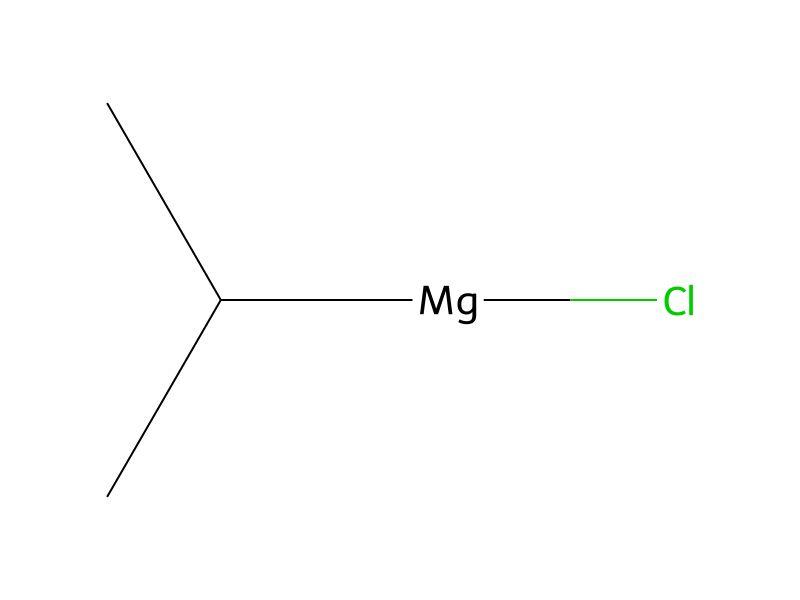
[Br:1][C:2]1[CH:7]=[C:6]([F:8])[CH:5]=[C:4]([Br:9])[C:3]=1I.C([Mg]Cl)(C)C.CN([CH:19]=[O:20])C>C1(C)C=CC=CC=1>[Br:1][C:2]1[CH:7]=[C:6]([F:8])[CH:5]=[C:4]([Br:9])[C:3]=1[CH:19]=[O:20]Participants
Reactant 3


Product 1

Reagents, catalysts & solvents 1

Conditions
- Temperature
- 10 °C
Procedure
To a solution of 1,3-dibromo-5-fluoro-2-iodobenzene (50 g, 132 mmol) in anhydrous toluene (300 mL) cooled at −35° C. was added a solution of isopropyl-magnesium chloride (84 mL, 171 mmol, 2.0M in Et2O) over 30 minutes while maintaining the internal temperature below −25° C. A clear brown solution was obtained and the stirring was continued for 1.5 h at −25° C. Then anhydrous DMF (34 mL, 436 mmol) was added over a period of 30 minutes. The reaction mixture was warmed to 10° C. (room temperature) over 1 h and stirred at this temperature for 1.5 h (hours). It was then quenched with 3.0M HCl and followed by the addition of ethyl acetate. The organic layer was separated and evaporated under reduced pressure. The residue was purified by silica-gel column chromatography eluting with petroleum ether/ethyl acetate (from 50:1 to 20:1) to give 104k as a white solid (20 g, 54%). 1H NMR (500 MHz, CDCl3) δ 10.23 (s, 1H), 7.48 (d, J=7.5, 2H).
Workup
- temperaturewhile maintaining the internal temperature below −25° C
- customA clear brown solution was obtained
- customIt was then quenched with 3.0M HCl
- additionfollowed by the addition of ethyl acetate
- customThe organic layer was separated
- customevaporated under reduced pressure
- customThe residue was purified by silica-gel column chromatography
- washeluting with petroleum ether/ethyl acetate (from 50:1 to 20:1)
Sources & evidence
- ORD record
- ord-a071b3cae08842348aff69cec55660fa
- Source dataset
- uspto-grants-2015_08
- Patent number
- US09115152B2
Reaction notes
Loading…