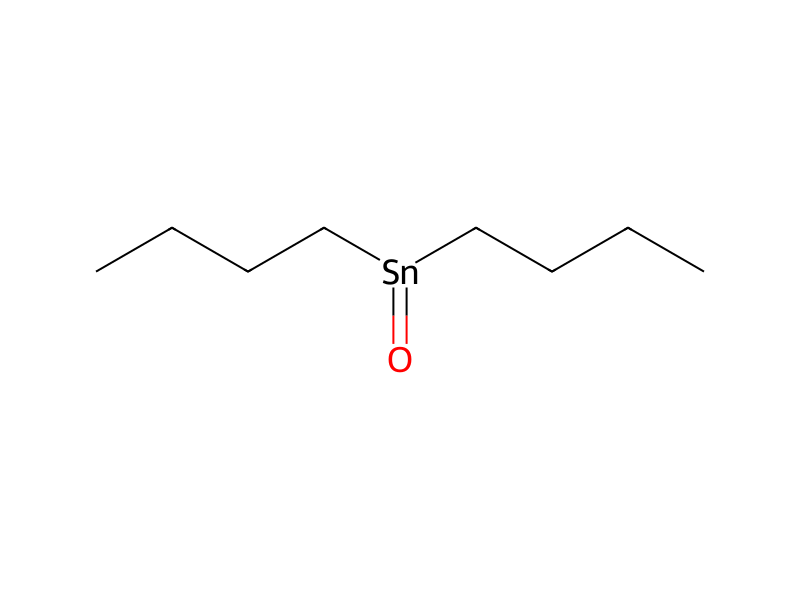
Dibutyltin oxide → HCID 178427402, compound
Reaction equation

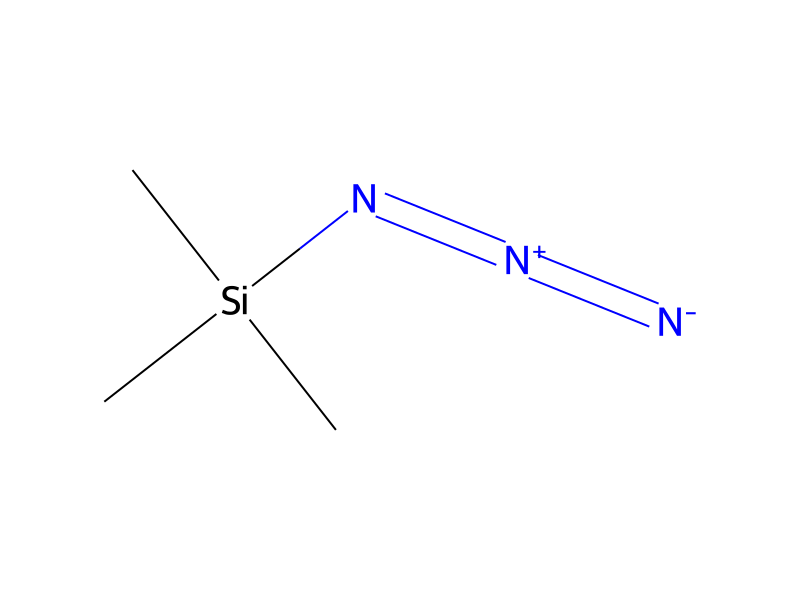
[Br:1][C:2]1[CH:3]=[C:4]([C:21]#[N:22])[C:5]2[CH:6]=[N:7][N:8]([S:11]([C:14]3[CH:19]=[CH:18][C:17]([CH3:20])=[CH:16][CH:15]=3)(=[O:13])=[O:12])[C:9]=2[CH:10]=1.C[Si]([N:27]=[N+:28]=[N-:29])(C)C.C([Sn](=O)CCCC)CCC>C1(C)C=CC=CC=1>[Br:1][C:2]1[CH:10]=[C:9]2[C:5]([CH:6]=[N:7][N:8]2[S:11]([C:14]2[CH:15]=[CH:16][C:17]([CH3:20])=[CH:18][CH:19]=2)(=[O:13])=[O:12])=[C:4]([C:21]2[NH:29][N:28]=[N:27][N:22]=2)[CH:3]=1Participants
5
Reactant 3

Product 1

Reagents, catalysts & solvents 1

Procedure
A stirred solution of 6-bromo-1-[(4-methylphenyl)sulfonyl]-1H-indazole-4-carbonitrile (0.79 g, 2.1 mmol), trimethylsilyl azide (0.484 g, 4.20 mmol) and dibutyltin oxide (0.105 g, 0.420 mmol) in toluene (10 ml) was heated at 110° C. for 1 h in the microwave (biotage initiator). The resulting cream coloured solid was collected by filtration, washed with toluene and dried in vacuo at 65° C. to give the title compound as a near colourless solid (0.3 g). The mother liquor was evaporated and the residue triturated with cyclohexane (10 ml) to give a further quantity of the title compound as a pale yellow solid (0.38 g).
Workup
- filtrationwas collected by filtration
- washwashed with toluene
- customdried in vacuo at 65° C.
Sources & evidence
- ORD record
- ord-d3d8073d00454c3bb6c3576a12978787
- Source dataset
- uspto-grants-2016_05
- Patent number
- US09326987B2
Reaction notes
Loading…