Ethyl Acrylate → HCID 11300104, compound
Reaction equation

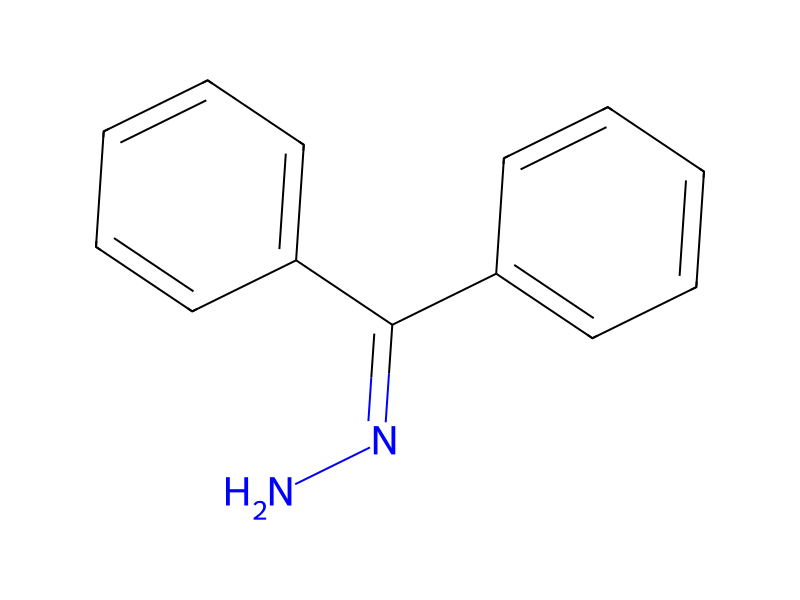
[C:1]1([C:7](=NN)[C:8]2[CH:13]=[CH:12][CH:11]=[CH:10][CH:9]=2)[CH:6]=[CH:5][CH:4]=[CH:3][CH:2]=1.C1(C(C2C=CC=CC=2)=[N+]=[N-])C=CC=CC=1.[C:31]([O:35][CH2:36][CH3:37])(=[O:34])[CH:32]=[CH2:33]>[Hg]=O>[CH2:36]([O:35][C:31]([CH:32]1[CH2:33][C:7]1([C:8]1[CH:13]=[CH:12][CH:11]=[CH:10][CH:9]=1)[C:1]1[CH:6]=[CH:5][CH:4]=[CH:3][CH:2]=1)=[O:34])[CH3:37]Participants
Reactant 3


Product 1

Reagents, catalysts & solvents 1

Procedure
Diphenylketone hydrazone (3.92 g, 20 mmol) was mixed with yellow mercury oxide (4.33 g, 20 mmol) in 40 mL petroleum. The mixture was stirred at the temperature less than 20° C. for 16 hours. The deep red solution of diphenyl diazomethane in petroleum was added into ethyl acrylate (6.0 g, 60 mmol) at 50° C. in ten minutes. When the red colour fade off the solvent and excess of ethyl acrylate were removed under reduced pressure and the crude product obtained was further purified over silica chromatography to furnish 2,2-diphenylcyclopropanyl carboxylate ethyl ester 5.11 g (96% yield) as a pale yellow oil. 1H NMR (400 MHz, CDCl3): 7.36-7.17 (10H, m), 4.00-3.83 (2H, m), 2.54 (1H, dd, J=8.3, 6.0 Hz), 2.17 (1H, dd, J=1H, dd, 6.0, 4.8 Hz), 1.59 (1H, dd, J=8.3, 4.8 Hz), 1.01 (3H, t, J=7.1 Hz).
Workup
- customWhen the red colour fade off the solvent and excess of ethyl acrylate were removed under reduced pressure
- customthe crude product obtained
- customwas further purified over silica chromatography
Sources & evidence
- ORD record
- ord-fc20cde3c79a425da148d39b58d89f1c
- Source dataset
- uspto-grants-2016_05
- Patent number
- US09328074B2
Reaction notes
Loading…